The oil market closed the week of June 11, 2026, with Brent trading between $92 and $93 per barrel, a correction of almost five dollars from the high of $97.68 recorded on June 3, according to Reuters data. The drop reflects that traders are recalibrating risk: commercial flows through the Strait of Hormuz have not completely stopped, although the geopolitical premium remains embedded in the price.
Traders and analysts from three major investment banks agree that structural uncertainty prevents a deeper correction.
Oil Market: Goldman Sachs Sets Q4 Target at $90 with Upside Risk
Goldman Sachs maintains its fourth-quarter price target at $90 per barrel, although it warns that any further escalation in the strait could push prices back towards $100. Barclays, in contrast, raised its annual forecast to $100 and estimates that the supply deficit attributable to the partial blockade of Hormuz reaches 6.6 million barrels per day, representing the largest imbalance in physical markets since the pandemic. Bank of America and JPMorgan quantify the current geopolitical premium at between $15 and $20 per barrel, a figure that would not dissipate until there are concrete signs of a diplomatic agreement.
Iran’s Stance and Continued Flows Through the Strait
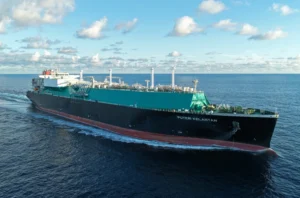
Tehran maintained its threatening stance on transit in the Strait throughout the week, albeit without implementing a formal blockade. Commercial vessels—including LNG carriers and oil tankers—continued to circulate in both directions under war insurance and, in some cases, with naval escort. The cargoes that have managed to exit the Persian Gulf total 12 LNG units since the start of the crisis, a fact that markets interpret as a sign that the corridor is not sealed.
Oil Market: Geopolitical Premium Resists Transit Data
Crude oil prices will remain under pressure as long as there are no concrete signs of an agreement on Hormuz.
warned a senior analyst at Energy Intelligence in statements reported by Reuters on June 11.
The reference to the Brent surge to $97 recorded on June 3 illustrates the speed with which markets can react to any new incident. Implied volatility in 30-day Brent options was above 40% at the close of June 11, the highest level since the 2022 invasion of Ukraine.
Impact on Oil Markets: Supply Deficit
The structure of the Brent futures curve has entered a moderate contango for longer-dated contracts, a sign that traders anticipate an eventual normalization of flows, but not immediately. Barclays’ estimated physical deficit of 6.6 million barrels per day is equivalent to approximately 6.5% of global consumption, a percentage sufficient to keep OECD inventories below the seasonal average. The drop in Brent below $100 after signs of a possible agreement showed that the market does discount diplomatic news, although each pullback has found support above $90.
Outlook: Oil Markets Await Diplomatic Signal
The oil market will remain the key indicator of geopolitical pressure in the coming weeks. The base scenario of the three banks contemplates Brent in a range of $88–95 for July, provided that flows through Hormuz remain partially open. A total closure would push the price above $120 in days, according to International Energy Agency stress models. OPEC production at a two-decade low due to the Hormuz blockade adds pressure on an already tight supply before the start of the conflict.
Sources: Reuters | Energy Intelligence