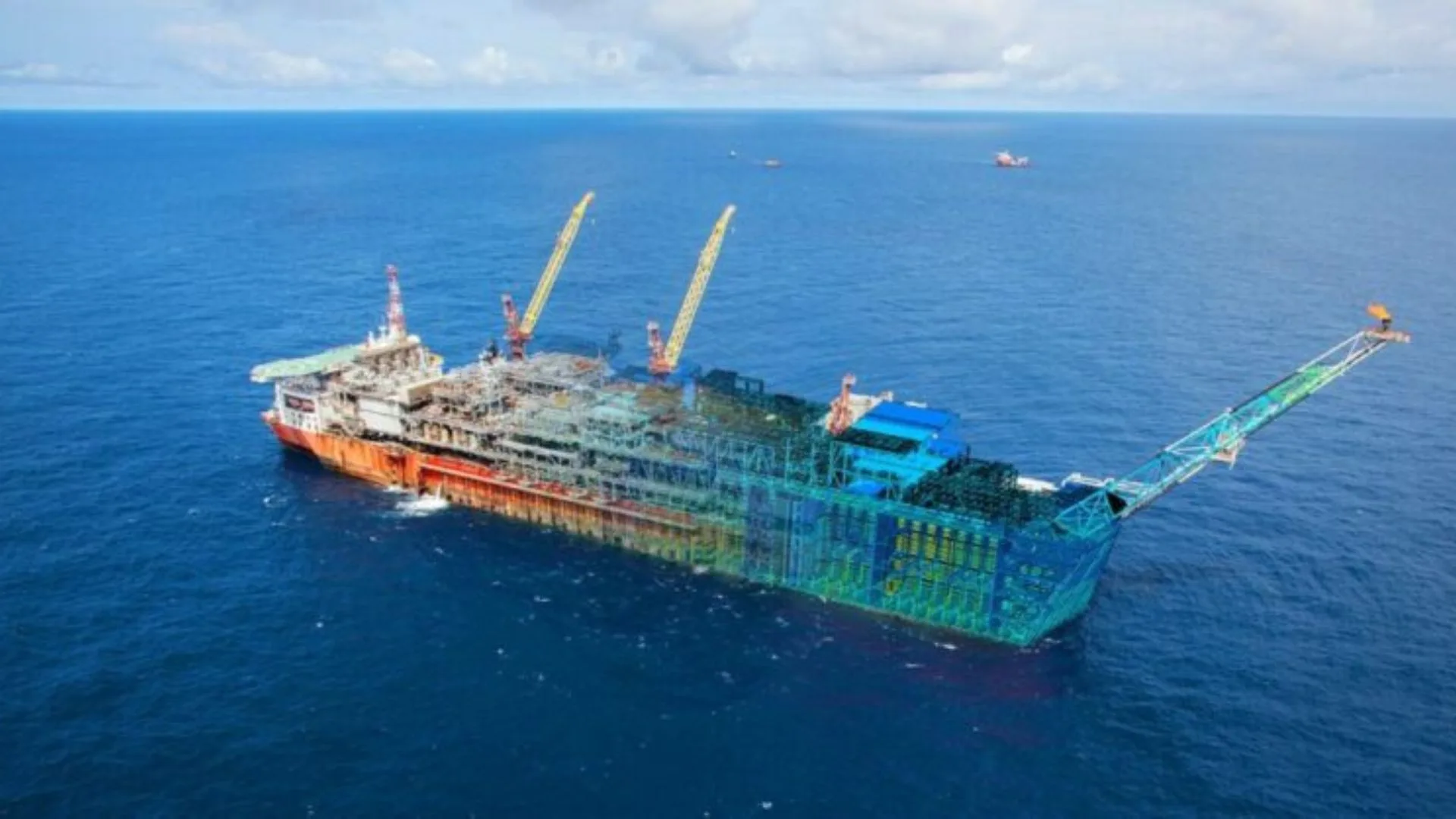
Oil and gas projects deepwater projects could receive up to $50 billion in new investments after Nigeria approved tax incentives to revive stalled or unfunded developments.
The president Ahmed Tinubu Ball it gave the green light to the reform with the aim of restoring competitiveness to the country’s offshore sector and offering greater certainty to companies evaluating capital-intensive developments.
The measure also changes the way Nigeria negotiates these investments; instead of setting specific conditions for each development, the government proposes common rules to determine which projects can access tax incentives.
Oil and gas projects promote investment in deep waters
For years, some of the largest oil resources offshore Nigerian companies have faced difficulties in advancing their commercial development. High costs, tax conditions, and uncertainty regarding investment rules have weighed on company decisions.
Now, the 2026 Deepwater Oil and Gas Project Incentive Order (Tax Exemption) it seeks to change that scenario through defined eligibility criteria and more predictable implementation procedures.
The strategy aims to mobilize up to $50 billion in investments and accelerate projects capable of expanding the country’s oil and gas production.
Furthermore, the government wants a greater proportion of the spending associated with these developments to remain within Nigeria. This includes engineering, manufacturing, maritime logistics, technical services, and project management.
Bonga South West leads the projects that could move forward
Among the developments that could benefit from the new scheme are Welcome South West a project valued at around 10 billion dollars.
The development represents one of the most important opportunities to revive activity in deep waters and could become a first test for the new investment framework.
The reform also establishes an opportunity for existing concessions to reach a final investment decision before the December 31, 2029 and can access the full standard incentive provided for by the order.
In this context, the state oil company NNPC it will be able to proceed with the necessary modifications to the production participation contracts eligible to apply the new conditions.
Shell enters the context of offshore reform
Furthermore, the decision comes after a meeting between Tinubu and Wael Sawan shell’s chief executive. Following that meeting, the president ordered the development of new measures aimed at stimulating investment in deepwater projects.
The Government ultimately chose to turn that initiative into a framework applicable to different categories of projects instead of establishing a specific solution for a single investment.
This change is relevant for international companies that need to evaluate multi-billion dollar projects under fiscal and contractual conditions that can extend over decades.
Tinubu specifically defended regulatory certainty as an essential condition for attracting long-term capital and maintaining Nigeria’s competitiveness against other producers.
Tax incentives linked to local content
Likewise, the scheme seeks to link the arrival of capital with the development of the Nigerian supply chain.
Olu Arowolo-Verheijen, special advisor to the president in Oil and Gas he noted that eligible projects should optimize their implementation within Nigeria where commercially and technically feasible.
The proposal aims to increase the participation of national companies in engineering, manufacturing, maritime services and technical activities related to oil and gas projects.
With this, Nigeria seeks to ensure that the revival of offshore investment has a broader effect on skilled employment and the country’s industrial capabilities.
Nigeria competes for offshore oil and gas capital
The reform comes as large deep-water projects compete globally for capital; in these types of developments, companies must commit high investments before obtaining commercial production and need stable fiscal rules to calculate their returns.
Nigeria aims to reduce this uncertainty through a system based on pre-established rules and criteria.
If the scheme succeeds in accelerating final investment decisions, deepwater projects could once again play a relevant role in the growth of Nigerian production and in attracting international capital for the oil and gas sector.
At the same time, the policy’s success will depend on whether the new fiscal conditions translate into commercially viable projects and effective investments. The first major indicator will be the progress of developments like Bonga South West under the new framework.
Source: Offshore Energy
Photo: Akselos