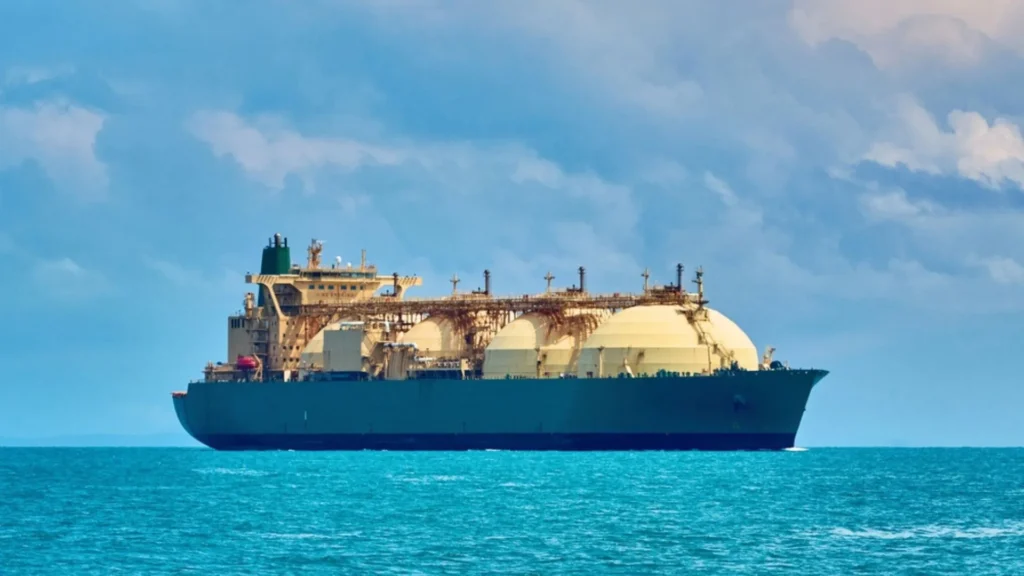
A liquefied natural gas (LNG) tanker operated by ADNOC has been detected near the west coast of India after several weeks without a signal, suggesting it may have passed through the Strait of Hormuz amidst regional conflict.
Transit through the Strait of Hormuz revives market attention
According to maritime tracking data from platforms such as MarineTraffic, ICIS LNG Edge, and LSEG, the vessel crossed the strait, considered one of the most strategic points for global energy trade. This passage connects the Persian Gulf with the Indian Ocean and channels a significant portion of global hydrocarbon exports.
If confirmed, this would be the first LNG-laden tanker to successfully cross this route since the start of the Iran-linked war on February 28.
Reappearance after weeks without a signal
The vessel, with a capacity exceeding 130,000 cubic meters of LNG, was last seen in late March within the Gulf. Its recent location off the coast of India suggests it sailed without transmitting data for part of its journey.
This behavior is not isolated. In recent weeks, multiple vessels have resorted to evasive tactics such as disabling their AIS systems or using false identifiers (MMSI) to reduce the risk of attack or detention.
Data uncertainty and operational risks
Despite the tracking evidence, market analysts caution that there is still no official confirmation of the vessel’s position. Tracking systems can be affected by signal errors or even by spoofing practices among ships.
Likewise, energy sector experts point out that, although this crossing could be interpreted as a positive sign for the gas market , it does not guarantee an immediate normalization of maritime traffic in the area.
Impact on the global LNG market
The Strait of Hormuz remains a key bottleneck for global energy supplies. Disruption or risk to this waterway directly impacts exports from countries such as Qatar, the United Arab Emirates, and Oman.
Recent attempts by other tankers, including Qatari vessels, have failed to complete the crossing, reflecting the level of operational risk in the region. In contrast, some empty vessels have managed to pass through the strait, although with less impact on supply.
In this context, every successful transit is closely watched by the markets, which react to any signal that may anticipate changes in the stability of international energy trade.
Source: Reuters
Photo: Shutterstock