Table of Contents
- Offshore HVDC platforms become essential for large-scale projects
- BalWin5 represents a new generation of offshore infrastructure
- The offshore supply chain is becoming increasingly global
- Transmission infrastructure will become as important as offshore wind farms
- Offshore HVDC platforms will shape the future of power transmission
The rapid expansion of offshore wind energy is transforming the electrical infrastructure required to transmit large volumes of electricity from wind farms located increasingly farther from the coast. In this context, offshore HVDC platforms have become one of the most strategic components for the development of large-scale projects by enabling more efficient transmission of renewable electricity to onshore power grids.
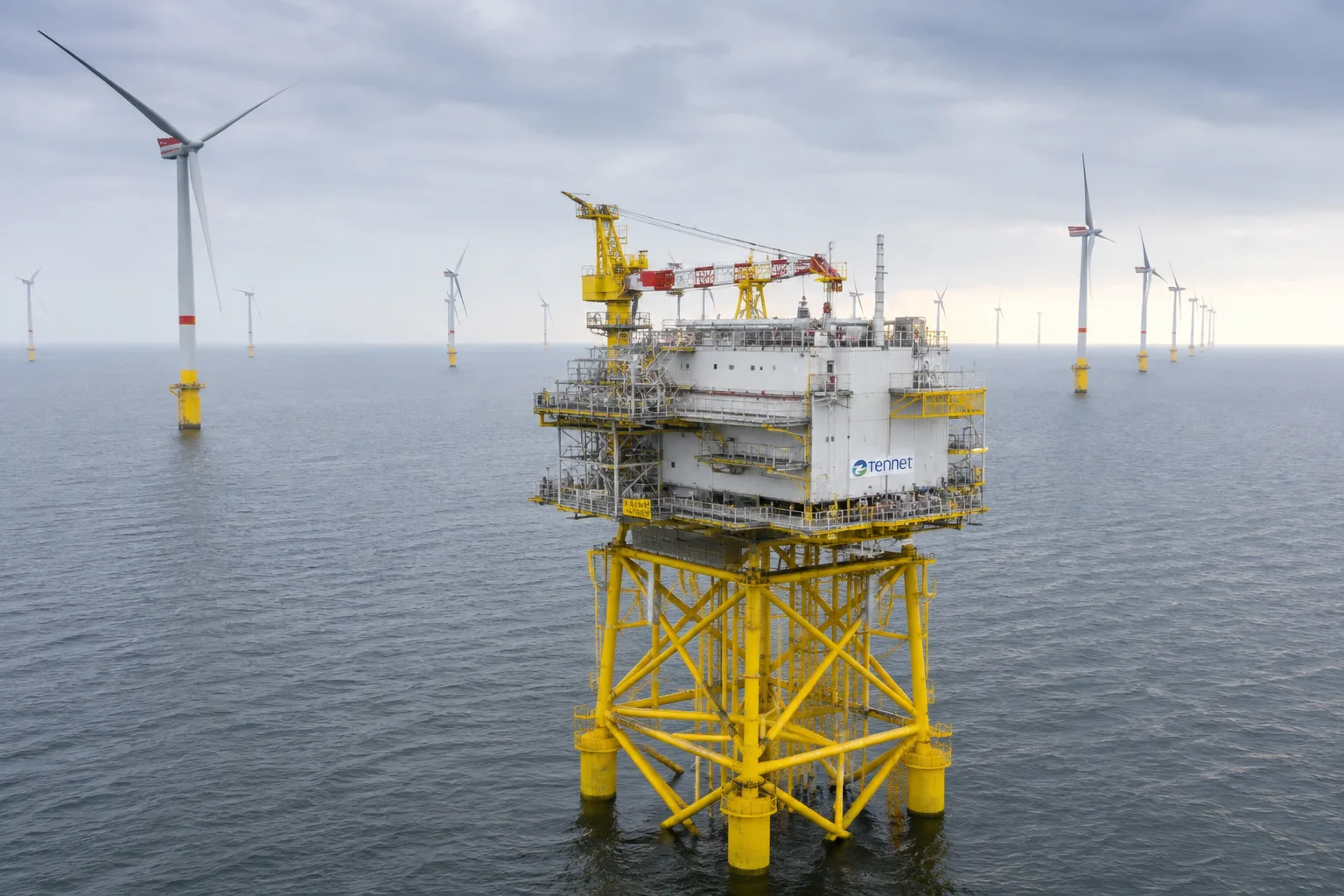
This trend has once again been highlighted by the contract awarded to South Korean company SK Oceanplant to manufacture the substructure for the BalWin5 project, a 2.2 GW offshore converter platform that will become part of TenneT’s transmission network in the German North Sea. Beyond the contract’s estimated value of approximately $110 million, the award reflects a broader trend: the growing internationalization of the HVDC infrastructure supply chain and the increasingly important role that manufacturers from different regions are playing in Europe’s energy transition.
Offshore HVDC platforms become essential for large-scale projects
The growth in installed offshore wind capacity is driving a technological transformation in power transmission systems. While early offshore developments relied on conventional alternating current (HVAC) connections, today’s projects require solutions capable of transmitting large amounts of electricity over long distances with lower transmission losses.
In this context, offshore HVDC platforms perform a critical role. These facilities receive the alternating current generated by offshore wind turbines, convert it into direct current using high-voltage equipment, and transmit it to shore through specialized subsea cables. Once onshore, another converter station performs the reverse process to integrate the electricity into the national power grid.
The use of High Voltage Direct Current (HVDC) technology is particularly efficient when offshore wind farms are located tens or even hundreds of kilometers from the coastline, a situation that is becoming increasingly common across Europe as developers seek stronger wind resources and face space constraints in nearshore areas.
BalWin5 represents a new generation of offshore infrastructure
The BalWin5 project is part of TenneT’s offshore transmission network expansion program, developed by the transmission system operator responsible for a significant portion of the electrical infrastructure in Germany and the Netherlands.
The future grid connection will have the capacity to transmit up to 2.2 GW of electricity generated by North Sea offshore wind farms, enough to supply renewable power to approximately 2.75 million households once it enters operation, currently scheduled for 2033.
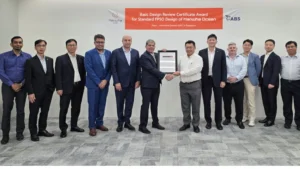
As part of the project, GE Vernova will provide the HVDC technology and converter equipment, while Seatrium will be responsible for the design, construction, transportation, and installation of the offshore converter platform. The contract awarded to SK Oceanplant includes the fabrication of the jacket foundation and skirt piles, the structural components that will support the entire offshore converter platform on the seabed.
The South Korean company stated that this is the first full substructure supply contract for a European HVDC offshore converter platform awarded to a South Korean manufacturer, marking an important milestone that highlights the growing international competitiveness in the supply of specialized offshore infrastructure.
The offshore supply chain is becoming increasingly global
The evolution of the offshore wind market is reshaping the industry’s traditional structure. For many years, much of the manufacturing of offshore substations, jackets, and foundations was concentrated among European companies. However, the sustained growth in offshore wind projects has encouraged the participation of Asian manufacturers capable of providing industrial capacity, expertise in marine structures, and highly specialized production capabilities.
The involvement of companies such as SK Oceanplant reflects this transformation. Major project developers no longer rely exclusively on local suppliers but instead turn to an international network of manufacturers to meet increasingly demanding project schedules and satisfy the growing demand for large-scale offshore components.
This trend is also helping diversify the supply of critical infrastructure for the energy transition by reducing potential bottlenecks associated with the manufacturing capacity available in Europe.
Transmission infrastructure will become as important as offshore wind farms
The growth of offshore wind energy no longer depends solely on the installation of new wind turbines. The ability to transmit the electricity generated to consumption centers has become one of the main challenges facing developers and transmission system operators.
HVDC offshore converter platforms, subsea cable systems, and new electrical interconnections are becoming just as important as the wind turbines themselves. Without sufficiently robust transmission infrastructure, even the largest offshore wind farms could face limitations in delivering their full power output to the electrical grid.
For this reason, transmission system operators such as TenneT continue to invest billions of dollars in strengthening Germany’s offshore transmission network and developing the infrastructure required to integrate the next generation of North Sea offshore wind projects.
Offshore HVDC platforms will shape the future of power transmission
The contract awarded to SK Oceanplant goes beyond the scope of a specific industrial supply agreement. It represents an example of how the energy transition is driving new international partnerships, expanding the global supply chain, and accelerating the development of technologies that are essential for large-scale electrification.
As Europe increases its renewable energy targets and moves new offshore wind farms farther from the coastline, offshore HVDC platforms will continue to play a decisive role in ensuring the efficient, secure, and reliable transmission of electricity.
The BalWin5 project illustrates this technological evolution and confirms that the growth of offshore wind energy will depend not only on the ability to install new wind turbines but also on the development of electrical infrastructure capable of transmitting that energy efficiently to consumers. In this context, offshore converter platforms, offshore substations, and HVDC transmission systems are becoming some of the most strategic assets for the next phase of Europe’s energy transition.
Sources: TGS 4C Offshore / GE Vernova