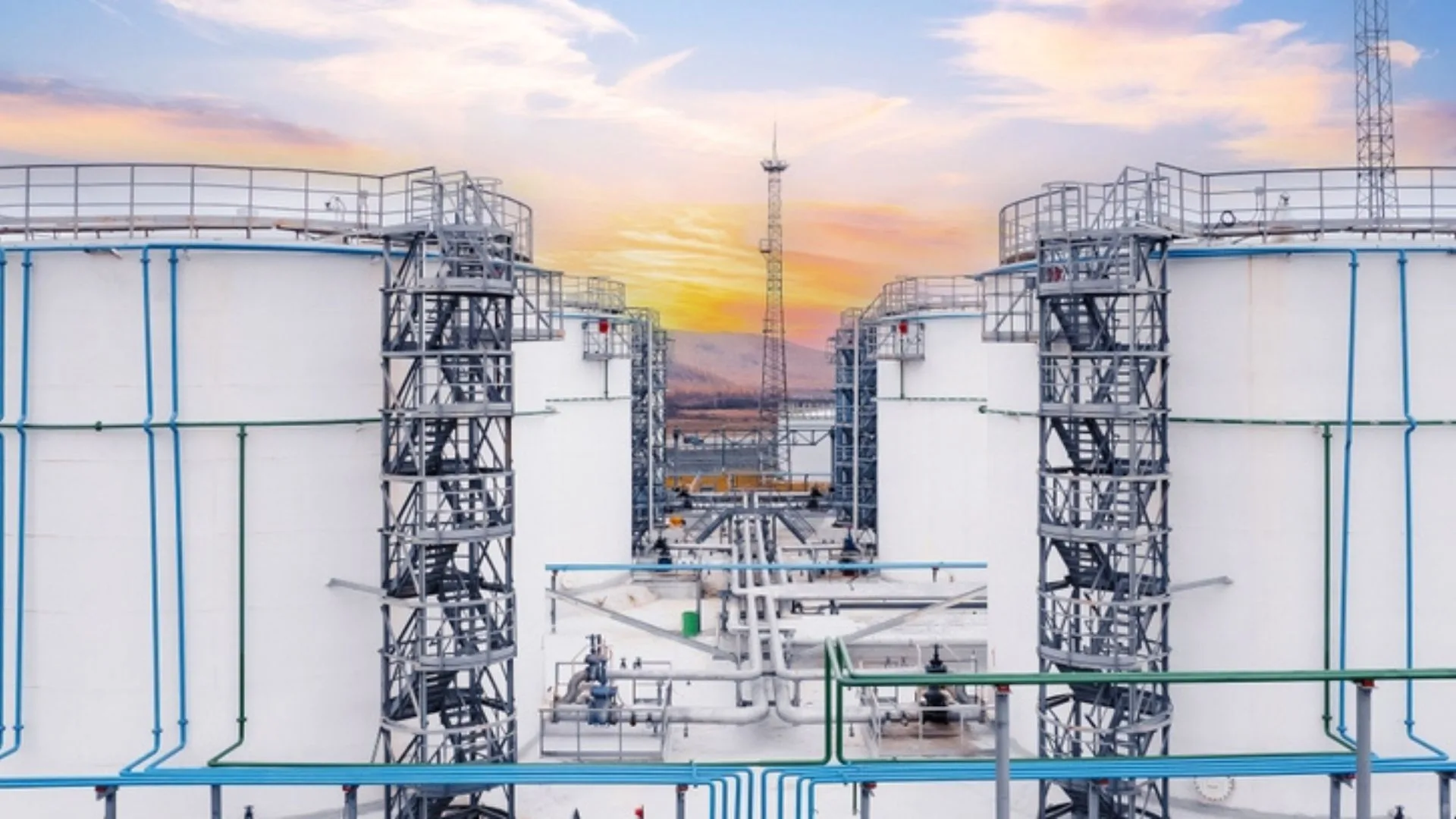
The German Government considers that it does not need to intervene in the market to accelerate gas storage before next winter. The Ministry of Economy estimates that available reserves, together with imports via pipelines and liquefied natural gas (LNG) terminals, will allow it to meet forecast demand.
Currently, the situation presents a significant difference between physical availability and economic pressure. Berlin acknowledges that high international prices may increase gas market volatility. However, it considers that this scenario does not in itself amount to a physical supply shortage.
Gas storage in Germany between 60% and 70%
According to the Ministry of Economy’s assessment, entering winter with gas storage facilities between 60% and 70% of their capacity would be sufficient to cover expected consumption if other import routes remain available.
The forecast is relevant because reserves are well below the levels observed in recent years. As of September 1, Germany’s underground gas storage facilities stood at 53% of their capacity, according to data from the industry association INES.
That percentage represents the lowest level recorded for that date in 15 years. In addition, the smaller storage cushion increases attention on temperature trends and imports over the coming months.
LNG terminals expand supply options
On the other hand, Germany faces next winter with a different supply infrastructure from that available during the 2022 energy crisis. The country can currently draw on LNG terminals in addition to pipeline imports.
This diversification reduces direct dependence on underground storage facilities. Supply can come from Norway, neighboring countries, and LNG cargoes arriving on the European market.
Likewise, the Government keeps variables such as reserve levels, LNG availability, imports, infrastructure, and demand trends under surveillance. A particularly cold winter or new supply disruptions could modify the assessment.
High prices reduce incentive to store gas
Meanwhile, market behavior is making it difficult to fill storage facilities. Energy companies and operators typically purchase and inject gas during summer to use it when consumption increases during winter.
However, the price increase associated with the war in Iran has reduced the economic attractiveness of this strategy. For some operators, it may be more profitable to sell gas directly than to keep it stored for several months.
The Ministry of Economy therefore warns of a possible scenario of high prices and greater volatility. Berlin insists on differentiating this commercial pressure from a physical shortage of gas available to consumers.
Berlin keeps intervention option ready
For now, the German Government considers that early intervention could disrupt normal market functioning. A state purchase aimed at rapidly filling storage facilities could raise demand and exert additional pressure on prices.
In addition, the authorities consider that preparation for winter remains primarily the responsibility of suppliers and operators, who are responsible for securing the necessary volumes for their customers.
However, the position may change if supply security worsens. The Ministry of Economy keeps mechanisms ready that could be activated if reserves, imports, or LNG availability evolve unfavorably.
In this way, Germany enters the pre-winter period with exceptionally low gas reserves but with more import routes than during the 2022 crisis. The balance will now depend on weather, international gas flows, and price trends.
Source: Pipeline & Gas Journal
Photo: Shutterstock