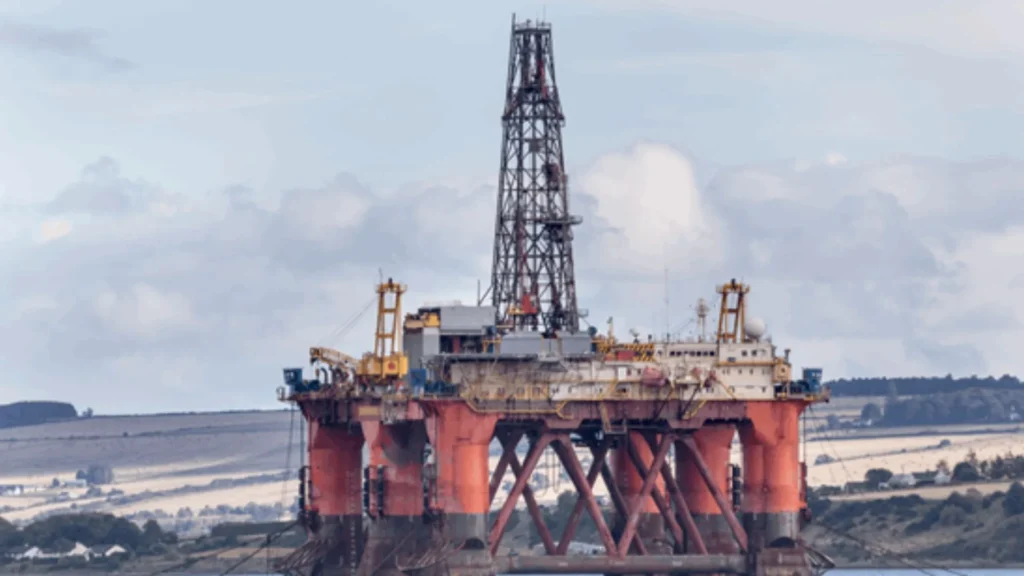
Offshore Energies UK Organization (OEUK) has requested that UK Prime Minister Andy Burnham make an urgent visit to North Sea operators in Scotland and energy supply chain companies in northeast England. The initiative aims to open a direct dialogue with the industry about the future of domestic oil and gas production and the role it will play during the energy transition.
Likewise, the organization believes that a meeting with workers, engineers and companies in the sector would allow them to learn firsthand about the challenges facing an industry that continues to be crucial for Britain’s energy supply.
OEUK promotes domestic production over imports
David Whitehouse, chief executive of OEUK, stated that the UK will continue to need oil and gas for decades to come and argued that the priority should be to produce as much as possible domestically.
According to the executive, increasing domestic production would help strengthen energy security, maintain specialized jobs, and reduce dependence on imported fuels, especially liquefied natural gas (LNG), whose share of the supply could be significantly reduced through regulatory and fiscal reforms.
The organization also noted that energy policy must be built together with North Sea communities and workers, whose experience has been crucial to the development of the British energy system for more than half a century.
The industry is proposing a more competitive regulatory framework
OEUK argues that an update to the tax and regulatory regime could unlock up to £50 billion in additional investment in oil and gas projects.
According to their estimates, this scenario would boost around £26 billion in new capital investment over the next decade and allow for an increase in tax revenue of more than £13 billion, as well as supporting tens of thousands of jobs across the offshore supply chain.
The organization adds that early reform would allow the UK to cover approximately half of its oil and gas needs through domestic production until 2050.
Energy security and transition: compatible objectives
OEUK argues that the debate should not be framed as a choice between fossil fuels and clean energy, but as a decision about where to produce the energy that the country will continue to need during the energy transition.
In this context, Whitehouse indicated that supporting North Sea production can be developed in a way that is compatible with climate objectives, provided there is a planned transition and stable rules to attract investment.
The new government will have to define its energy strategy
OEUK’s request comes just days after Andy Burnham became Prime Minister, during his first official speech, he announced the development of a ten-year national plan to define the UK’s economic and energy future.
Meanwhile, the Department for Energy Security and Net Zero Emissions (DESNZ), the British Treasury and the Cabinet Office had not yet issued comments on the request made by the organization.
Source and photo: Rigzone