Oceaneering is expanding its reach beyond subsea operations through a comprehensive offering of inspection, engineering, and asset integrity management services for offshore and onshore facilities.
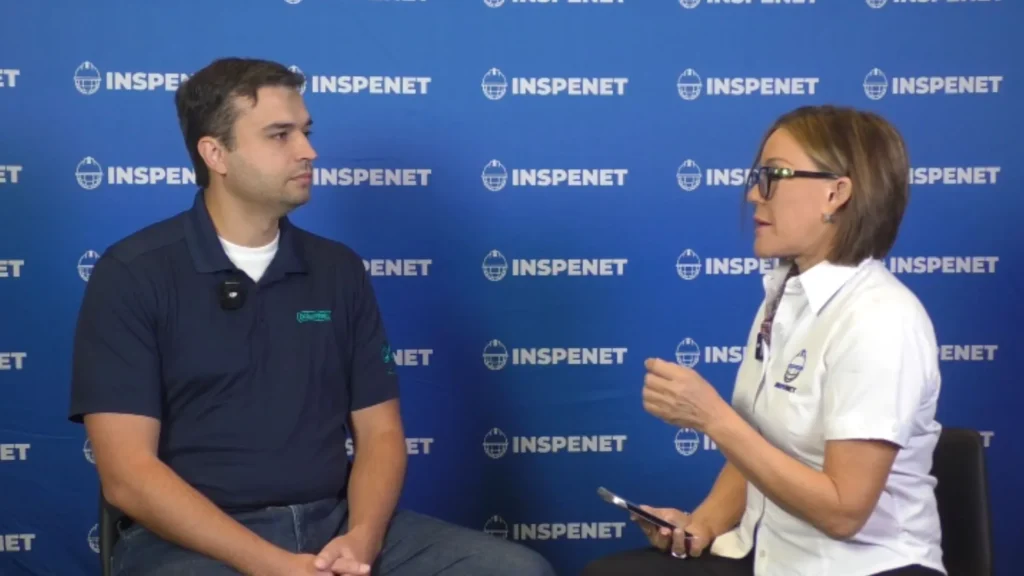
This was explained by Adam Haavisto, Integrity Manager for North America, during an interview in which he highlighted the role of digitalization, artificial intelligence, robotics, and drones in the evolution of industrial inspections.
Although the company is widely recognized for its work on the seabed, Haavisto noted that Oceaneering also provides services in refineries, upstream production facilities, and midstream systems.
We are a full-service asset integrity management company, so we can provide support wherever it is needed.
The executive pointed out.
Integrated data to assess asset integrity
One of Oceaneering’s main focuses is to bring inspection data together in digital integrity dashboards. These platforms can also incorporate operational information from other systems, such as production logs, temperature measurements, and level indicators.
Integrating these variables provides a more complete view of how a facility is operating from the standpoint of corrosion, operational performance, and the overall condition of the assets.
According to Haavisto, using more frequently updated datasets helps integrity teams collaborate with production and operations to determine how operational changes affect the infrastructure.
This model reduces reliance on monthly or quarterly assessments and makes it possible to analyze certain changes almost in real time.
Artificial intelligence for faster decision-making
Oceaneering is also expanding the use of artificial intelligence to process larger volumes of information and speed up decision-making.
Combining current production data with inspection histories makes it possible to identify changes in a facility’s conditions and better understand how its integrity evolves over time.
This information not only benefits specialized engineers. It can also help operations teams and executives responsible for allocating budgets, prioritizing investments, and planning maintenance interventions.
According to Haavisto, when engineers have access to consolidated information, they can communicate the risks, needs, and priorities of an asset more clearly to the different areas of the organization.
Drones and robots for hard-to-reach areas
The executive warned that some operators still do not fully take advantage of the new technologies available to inspect areas that have traditionally been difficult to reach.
Robotics and drones make it possible to access spaces that previously could be left out of conventional inspection programs due to physical constraints, risks to personnel, or operational difficulties.
These tools can provide more detailed information on a plant’s overall condition, reduce human exposure to certain hazards, and expand the coverage of integrity assessments.
However, Haavisto acknowledged that rapid technological evolution poses a challenge for companies, as new equipment, drones, and robotic solutions continually emerge.
Oceaneering seeks to support its clients in evaluating and adopting these technologies to obtain more accurate information and improve their inspection strategies.
Digitalization will shape the future of inspections
For Haavisto, the future of asset integrity will be closely tied to the ability to integrate information, automate analyses, and use digital tools to detect changes more quickly.
The convergence of inspection, engineering, artificial intelligence, software, drones, and robotics is transforming how companies assess the condition of their facilities and make decisions on maintenance, safety, and investment.
Source and photo: Inspenet