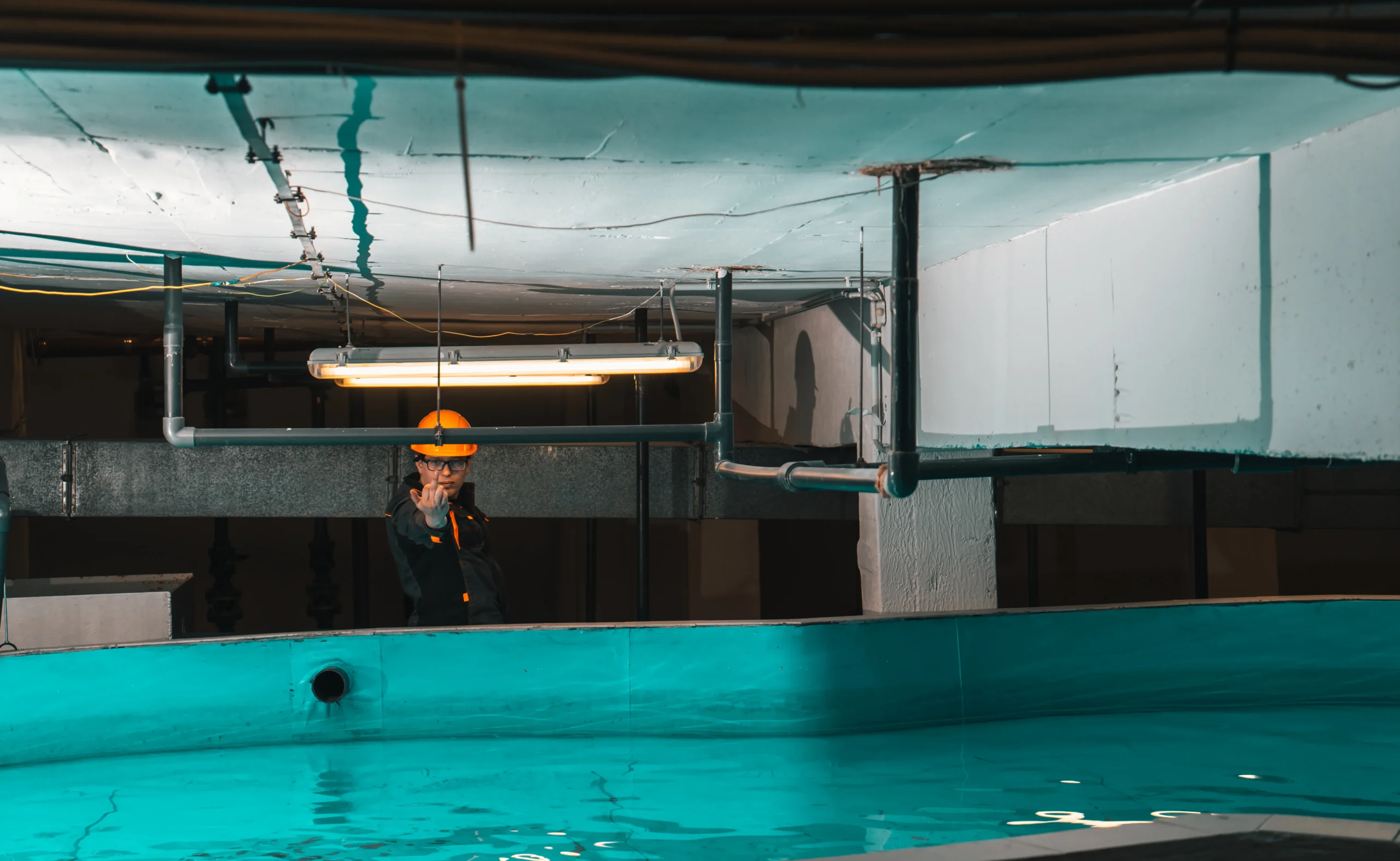
J+S Subsea invested nearly £140,000 in two test benches designed to validate electrical and hydraulic connections for offshore projects.
J+S Subsea Limited opened a new center underwater testing at its Aberdeen headquarters to expand its manufacturing, testing and validation capabilities for equipment intended for the offshore energy sector.
The company allocated almost 140,000 pounds sterling to the project; the investment was backed by Energy Transition Zone Ltd through its business support fund.
The new infrastructure has two test benches capable of operating at pressures up to 30,000 psi this capability will allow for the evaluation of advanced electrical and hydraulic connection systems before their installation in marine environments.
High-pressure testing for underwater systems
Specifically, the facilities were designed to subject the components to conditions similar to those that may be encountered during the underwater operations.
The tests will verify the strength, watertightness, and functionality of connections used to transmit power and signals between offshore equipment. This process aims to reduce technical risks and provide greater confidence in the performance of the systems before deployment.
Likewise, the center will support the quick-connect system developed by J+S Subsea for marine energy applications.
The company will be able to manufacture, test, and validate a greater quantity of equipment within its own facilities. This reduces dependence on external centers and facilitates more direct control over each stage of the technical process.
Underwater testing in oil, renewables and CO₂ capture
Although J+S Subsea maintains extensive experience in oil and gas, the new testing capability is also geared towards markets associated with the energy transition.
The planned applications include the marine renewable energies, carbon capture and storage and the decommissioning of offshore infrastructure.
Test benches can also be used for asset support projects in the final phase of their useful life, in this area, the validation of connections and control systems is crucial for maintaining safe operations as equipment is decommissioned.
The company seeks to leverage its expertise in underwater control systems to participate in projects where reliable connections under high pressures are required.
ETZ supports J+S Subsea’s diversification
The project received support from Energy Transition Zone Ltd, an organization that promotes investments aimed at strengthening the energy supply chain in northeast Scotland.
Neil Young, deputy chief executive of ETZ Ltd, noted that the support enables industrial companies to invest in new capabilities, accelerate their entry into other markets and expand their growth opportunities.
Phil Reid, CEO of J+S Subsea, explained that the investment is part of the company’s sustainable growth plan. He also linked the project to the company’s move to larger facilities in Dyce at the end of 2024.
According to Reid, expanding the portfolio will allow the application of experience gained in traditional markets to new opportunities linked to the renewable energies.
Greater capacity for the offshore energy market
The installation reinforces J+S Subsea’s image as a provider of subsea control systems and engineering solutions for offshore assets.
In addition, the increased capacity could support a future expansion of the company’s team; J+S Subsea has a staff of around 32 people at its Dyce headquarters.
With the new test benches, the company will be able to serve traditional oil and gas projects while developing services for marine renewables, carbon storage and decommissioning.
The investment also reflects the evolution of the subsea supply chain in Aberdeen, with companies in the region adapting technical expertise from the oil and gas sector to meet new energy market needs.
Source: OEUK
Photo: Shutterstock