Aker BP made a new gas discovery in the North Sea, about 25 km north of the Duva field. Recoverable resources could reach 15 million barrels of oil equivalent.
Norwegian company Aker BP confirmed the presence of gas in the Alpehumle prospect after drilling wells 36/4-2 and 36/4-2 A. The operation falls under production licence 1153 on the Norwegian continental shelf.
According to preliminary calculations, the discovery contains between 0.15 and 2.4 million standard cubic metres of recoverable oil equivalent. This amount is approximately equivalent to between 1 and 15 million barrels of oil equivalent.
Aker BP and its partners must now analyse the data obtained to determine whether the resources found can be developed commercially.
Aker BP finds a gas column in the Agat Formation
During the exploration campaign, the main objective of well 36/4-2 was to confirm the presence of hydrocarbons in Lower Cretaceous rocks belonging to the Agat Formation.
The well encountered a 10 m gas column. The entire interval consisted of sandstone layers with reservoir quality considered very good. However, operations did not allow the hydrocarbon-water contact to be determined.
Meanwhile, the sidetrack well 36/4-2 A aimed to delineate the discovery and obtain more information on that contact. Drilling encountered four metres of very good-quality sandstone in the same formation, although the reservoir proved to contain water.
Despite this result, both wells enabled an extensive data acquisition and sampling programme to study the area’s characteristics.
The gas find in the North Sea opens up a new opportunity
The discovery is located in production licence 1153, awarded in the 2021 Awards in Predefined Areas (APA) round. 36/4-2 was the first exploration well drilled within this licence.
Aker BP operates the project and holds a 40% stake. Inpex Idemitsu holds another 30%, OKEA has 20%, and Harbour Energy controls the remaining 10%.
Likewise, Alpehumle’s location about 25 km from the Duva field places the discovery close to other operations in the North Sea. Proximity to existing infrastructure will be one of the factors that may be considered during studies of a potential development.
For now, the breadth of the estimated resource range shows that further study of the results will still be required before establishing the discovery’s definitive commercial potential.
Scarabeo 8 drilled the exploration wells
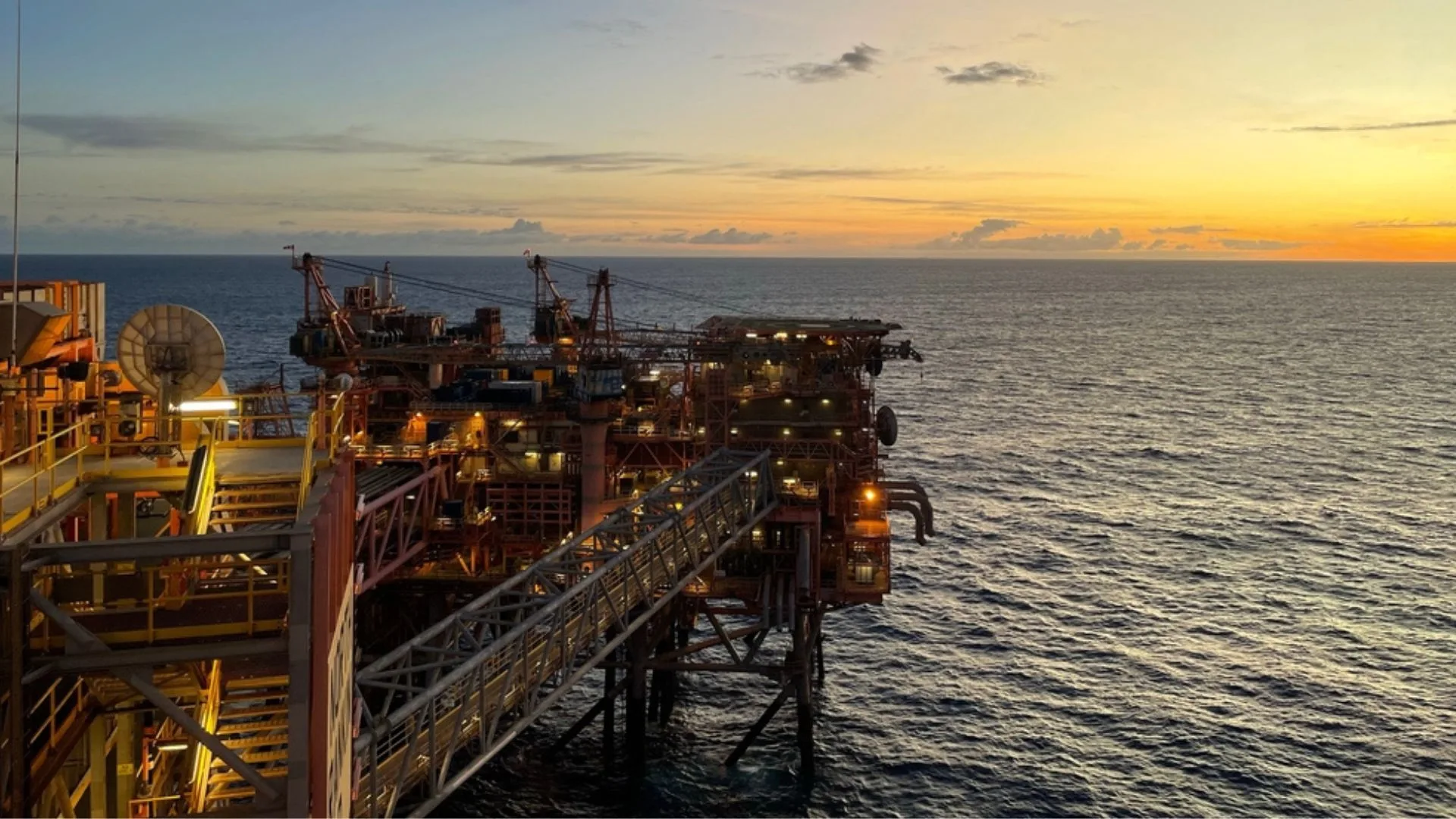
The campaign was carried out using Scarabeo 8, a semisubmersible rig operated by Saipem. The unit worked in an area with approximately 255 m of water depth.
Well 36/4-2 reached a vertical depth of 2,250 m below sea level and terminated in basement rock. Meanwhile, 36/4-2 A reached a vertical depth of about 2,320 m below sea level.
Scarabeo 8 can accommodate up to 140 people and can drill to depths of up to 35,000 ft, equivalent to about 10,668 m. Saipem recently secured an extension of its contract with Aker BP, keeping the rig working for the company until 2028.
Once operations at Alpehumle are completed, the two wells will be permanently plugged and abandoned.
Aker BP to assess the gas discovery’s commercial viability
The next step will be to determine what portion of the identified resources can support a potential development. Aker BP and the other licence holders will analyse the data obtained and the potential for further delineation operations.
The current estimate of between 1 and 15 million barrels of recoverable oil equivalent still leaves considerable uncertainty over the discovery’s final size.
Accordingly, the technical evaluation will need to define more precisely the available volume and the options for monetising the gas found at Alpehumle. The results of these studies will determine whether Aker BP’s new discovery in the North Sea can move forward to a future development phase.
Source: Norwegian Offshore Directorate
Photo: Shutterstock