The Iraq-Turkey Pipeline has returned to the center of the regional energy landscape following the signing of a temporary agreement between the two countries to keep this critical infrastructure operational for another year. While the deal ensures the continued transportation of crude oil as negotiations proceed toward a long-term treaty, it also revives the discussion about the pipeline’s strategic role in Iraq’s oil exports and the Mediterranean’s energy supply.
Beyond the renewal of the agreement, the decision reflects both governments’ commitment to preserving infrastructure considered essential for the international hydrocarbon trade and for strengthening energy cooperation between the Middle East and Europe.
Iraq-Turkey Pipeline returns to the center of regional energy strategy
The new agreement was signed by Turkey’s state-owned pipeline operator BOTAS and Iraq’s State Organization for Marketing of Oil (SOMO) and North Oil Company (NOC). The arrangement extends the operation of the pipeline system for twelve months while negotiations continue on a broader long-term cooperation framework.
According to Turkey’s Minister of Energy, Alparslan Bayraktar, the agreement provides for a transportation capacity of 750,000 barrels per day. However, Ankara’s objective is to fully utilize the system’s potential and assess future expansion opportunities that would allow greater volumes of Iraqi crude oil to reach international markets.
Iraq-Turkey Pipeline: A key infrastructure for oil exports
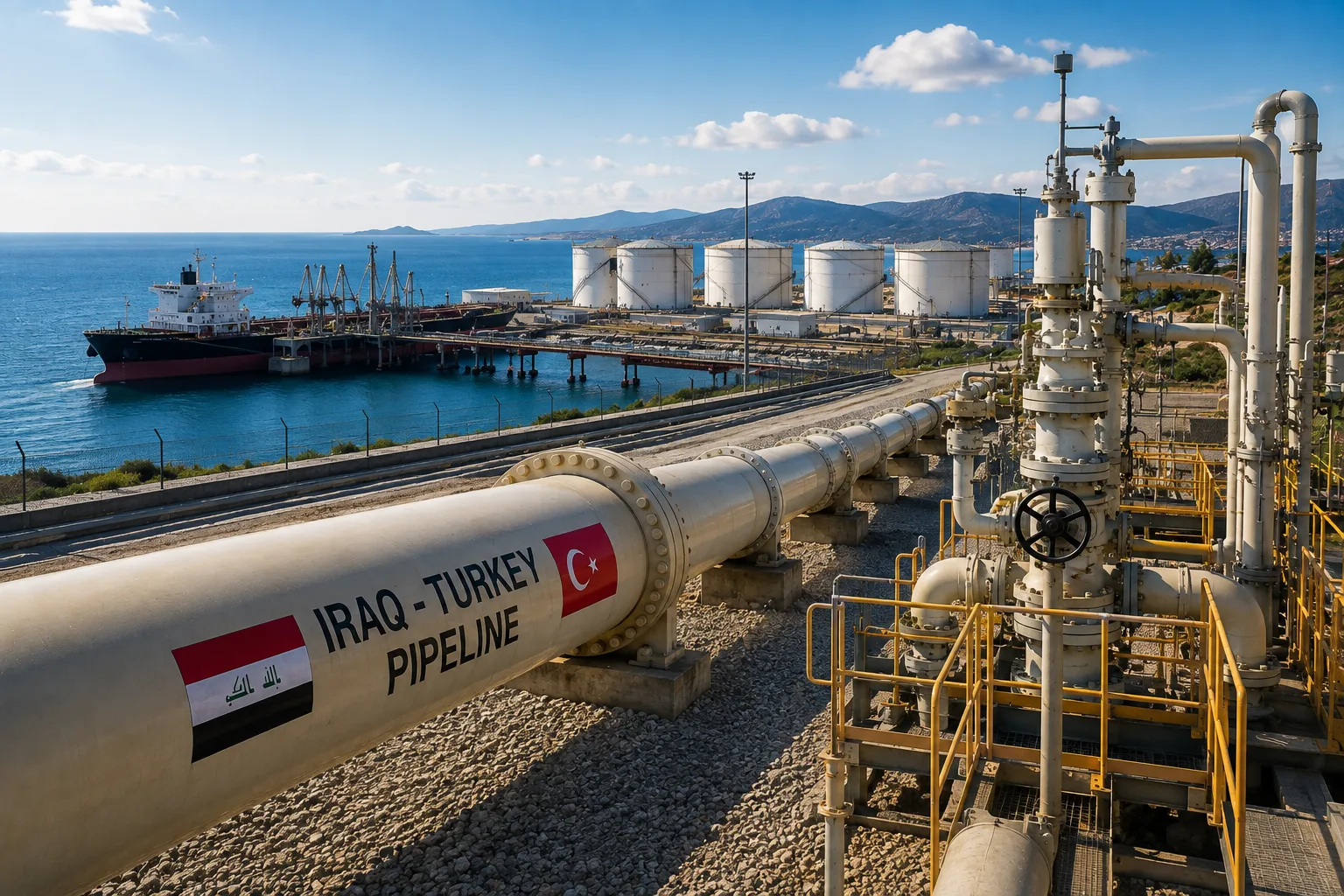
The Iraq-Turkey Pipeline is a critical piece of infrastructure connecting northern Iraq’s oil fields to the Turkish port of Ceyhan, one of the region’s main export terminals for crude oil bound for international markets.
The pipeline currently transports approximately 170,000 barrels per day, significantly below its estimated technical capacity of 1.5 million barrels per day. This gap highlights the substantial potential to increase export volumes if new commercial agreements are finalized and additional connections to other producing regions of Iraq are developed.
For Iraq, maintaining this export route provides an opportunity to diversify its crude oil logistics, while for Turkey it reinforces the country’s position as a strategic energy corridor linking the Middle East with Europe.
Beyond its commercial importance, the Iraq-Turkey Pipeline also plays a vital role in strengthening the resilience of the region’s energy infrastructure. The availability of alternative export routes reduces dependence on a single logistics corridor, enhances supply flexibility for international markets, and improves the ability to respond to operational disruptions or shifts in global demand. In an increasingly uncertain geopolitical environment, assets such as this pipeline remain essential to the stability of the international hydrocarbon trade.
Available capacity creates opportunities for the oil market
The continued operation of the Iraq-Turkey Pipeline is particularly significant at a time when energy security and the diversification of supply routes have become strategic priorities for both producing and consuming nations.
Greater utilization of this infrastructure could increase crude oil availability in the Mediterranean, enhance the logistical flexibility of Iraqi exports, and strengthen the competitiveness of one of the region’s most important energy corridors.
In addition, Turkey has expressed interest in evaluating future extensions of the pipeline network to connect with oil fields in southern Iraq, an initiative that could significantly increase transported volumes over the coming years.
The future of the Iraq-Turkey Pipeline depends on a long-term agreement
Although the renewed agreement ensures the pipeline’s continued operation over the next twelve months, the real challenge will be reaching a long-term arrangement that allows the system’s installed capacity to be fully utilized.
For both countries, a stable cooperation framework would facilitate new infrastructure investments, improve the corridor’s reliability, and strengthen the role of the Iraq-Turkey Pipeline within the global energy market.
At a time when energy security, the modernization of transportation networks, and the diversification of hydrocarbon export routes have become strategic priorities, this infrastructure has the potential to regain part of the prominence it historically held as one of the Middle East’s most important oil links to the Mediterranean.
Sources: Reuters / enerji.gov.tr / botas.gov.tr