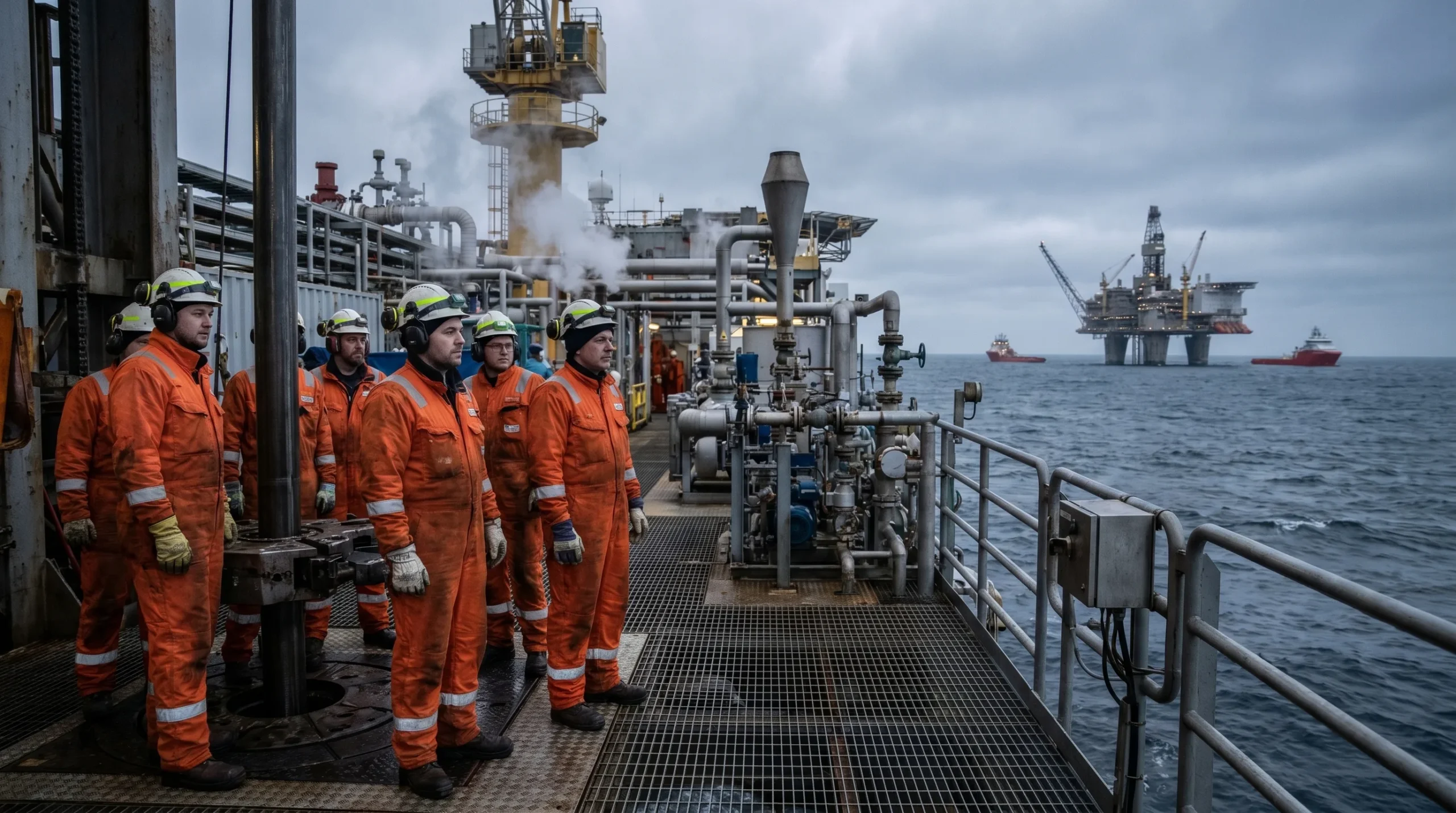
Norway Offshore Strike: Workers Threaten Walkout Starting June 5
Nearly 617 workers in Norway’s offshore oil sector would initiate this Norway offshore strike on June 5, 2026, if state-mediated wage negotiations fail to reach an agreement, according to data released Monday by labor unions. The action could escalate and affect approximately 8,100 members affiliated with offshore production, equivalent to nearly 8% of the sector’s workforce.
The three unions involved in the Norway offshore strike—Styrke (the largest), Lederne, and Safe—are demanding wage increases that exceed inflation, in addition to modifications to their collective agreements. The negotiations cover the majority of workers employed on platforms and floating production units in the Norwegian North Sea.
Norway Offshore Strike: Uncertainty Over Production Impact
Norway produces more than four million barrels of oil equivalent per day. It is Europe’s largest natural gas supplier—providing approximately one-third of the continent’s annual consumption—and covers around 15% of European crude oil demand.
An Offshore Norge spokesperson noted that “it remains uncertain how a potential Norway offshore strike could influence production levels in the fields.” This context carries greater weight at a time when Equinor expands offshore projects alongside Aker BP with new capital commitments.
Global Energy Context Adds Pressure
The international energy market is experiencing a period of elevated prices. Any disruption to Norwegian production would amplify tensions in the European energy market.
Precedent exists. A technical failure at the Hammerfest LNG plant demonstrated how a Norwegian disruption can strain continental supply, as documented in Equinor halts Hammerfest LNG plant due to technical failure.
Tor-Arne Solberg, former Safe representative, has emphasized: “When workers do not feel their conditions reflect the risk they assume at sea, turnover increases and experience is lost.”
Production Under Scrutiny in a Year of Record Investment
The potential Norway offshore strike occurs at a time when the industry is driving its largest investment cycle in years. Equinor invests 17 billion in drilling and the government has reaffirmed its strategy: Norway will increase oil and gas exploration and production. A prolonged strike would test that projection.
State mediation has until June 5 to reach an agreement. Failing that, Norway would face its first major offshore strike in several years.
The Norway offshore strike scheduled for June 5, 2026, represents one of the largest labor challenges in the Scandinavian energy sector in recent years. The Styrke, Lederne, and Safe unions have presented their demands to the state mediator, who has until that date to achieve an agreement that prevents the walkout.
According to analysis by energy sector experts, an offshore strike in Norway could temporarily reduce daily oil and gas production by more than 300,000 barrels of oil equivalent. The impact on the European gas market would be significant, given that Norway covers approximately one-third of the continent’s total consumption. The 2026 wage mediation in Norway is shaping up to be decisive for the sector’s immediate future.
Negotiations between the unions and operators—among which Equinor offshore platform and other sector companies stand out—have been marked by demands for better working conditions and wage increases that compensate for the rising cost of living. Norway’s offshore workers argue that their wages have not kept pace with inflation recorded in recent years.
Sources: Reuters | World Energy News