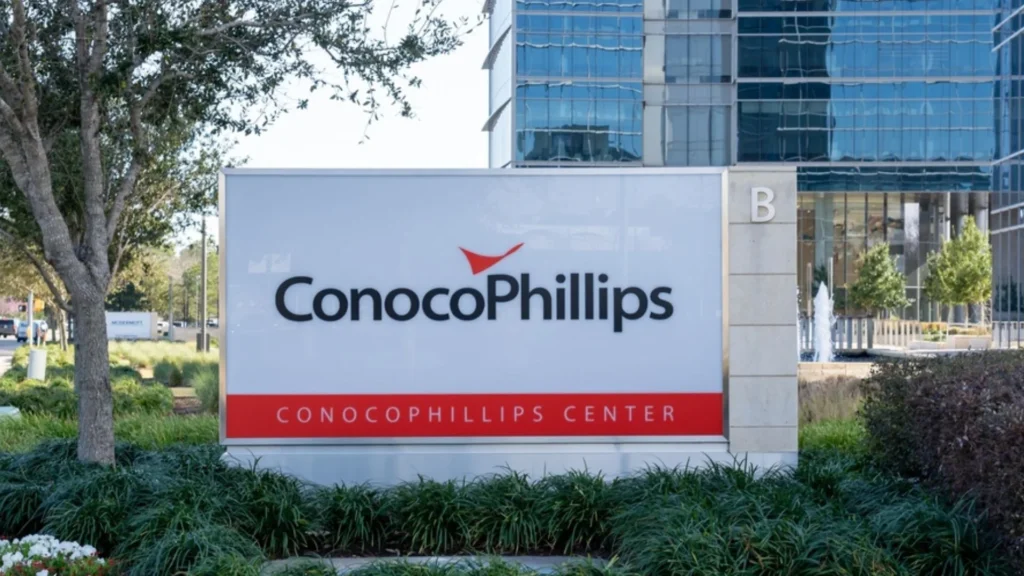
Gas production in Syria could be significantly reactivated following an agreement that ConocoPhillips is reportedly close to signing with the Syrian government, according to the Financial Times on June 15, 2026. The company, the first U.S. major to return to Syria’s energy sector since the conflict, would focus its efforts on developing existing gas fields and exploring new reserves alongside the Syrian Petroleum Company.
Reuters confirmed that the agreement includes the participation of the Syrian Petroleum Company in the development and exploration projects, establishing a legal framework for ConocoPhillips’ operations in Syrian territory. The signing would mark a historic milestone by representing the return of a major U.S. company to the country after more than a decade of absence.
ConocoPhillips agreement to reactivate gas production in Syria
The agreement ConocoPhillips is preparing with Syria prioritizes the development of already identified gas fields and the exploration of new reserves in the Syrian subsurface. The participation of the Syrian Petroleum Company as a local partner ensures compliance with national regulatory requirements and facilitates the transfer of technical know-how.
According to Reuters, the contract would include specific clauses on production sharing and the investment terms associated with the new gas projects. Industry analysts estimate that the committed investment could exceed $1 billion in the first phase of operations.
The reactivation of gas production in Syria has direct implications for the country’s economic recovery, given that before the conflict the energy sector represented a substantial source of tax revenue and foreign currency. The Syrian Petroleum Company would act as the technical and regulatory counterpart in the projects developed by ConocoPhillips.
Precedent: TotalEnergies and QatarEnergy sign agreement for offshore block in May 2026
ConocoPhillips’ move does not occur in a vacuum: on May 12, 2026, TotalEnergies, QatarEnergy, and ConocoPhillips had already signed a joint agreement to review an offshore block in Syria, Reuters confirmed. That tripartite agreement established a cooperation framework to assess the potential of offshore reserves in Syrian waters and define the terms of possible exploration operations.
QatarEnergy’s participation in that agreement underscores Gulf countries’ interest in Syria’s energy potential, while TotalEnergies would contribute its expertise in deepwater offshore operations and large-scale project management.
The May 2026 offshore agreement, together with the contract ConocoPhillips is now preparing for the development of onshore fields, sets the stage for a multisector energy reactivation that could transform Syria’s hydrocarbons sector in the coming years. For additional context on the region’s energy security challenges, see the energy security analysis published on Inspenet.
Implications for EPC, upstream exploration, and Syria’s energy recovery
Signing the ConocoPhillips agreement will generate significant demand for EPC services to rehabilitate gas production infrastructure damaged during the conflict and to build new processing and transportation facilities. Companies specializing in asset management and energy infrastructure integrity will see opportunities in the technical assessment of existing assets.
In the upstream exploration segment, ConocoPhillips’ return could encourage other international companies to reassess their positions in Syria, especially in areas with potential for unconventional gas or unexplored deep reserves. The participation of technical partners such as the Syrian Petroleum Company would reduce entry barriers for new operators interested in the country.
Syria’s energy recovery would have multiplier effects on related sectors such as power generation and public finances. To delve deeper into the technical standards applicable to asset management in these types of projects, it is recommended to review Inspenet’s article on asset management and integrity API RP 584. The agreement positions Syria as a relevant case of post-conflict reconstruction with an energy dimension.
Source: Reuters
Photo: shutterstock