Oil logistics infrastructure has become one of the most important assets for ensuring the continuity of the global crude oil supply in an environment marked by growing geopolitical tensions. As regional conflicts, maritime restrictions, and navigation risks affect some of the world’s main energy corridors, companies with diversified transportation, storage, and export networks possess a competitive advantage that goes beyond production capacity.
This scenario was reflected in Saudi Aramco’s financial results for the second quarter, during which the company reported a significant increase in adjusted net income despite the operational challenges caused by restrictions on vessel traffic through the Strait of Hormuz. The company attributed part of this performance to the strength of its domestic infrastructure, which was able to maintain the flow of exports through alternative routes and strategic assets distributed across the Kingdom.
Oil logistics infrastructure reduces exposure to risk
For decades, the development of the oil industry was primarily focused on increasing production capacity. However, the evolution of the energy market has demonstrated that producing large volumes of crude oil is not enough if the infrastructure responsible for moving that oil to international markets lacks the flexibility to respond to unexpected events.
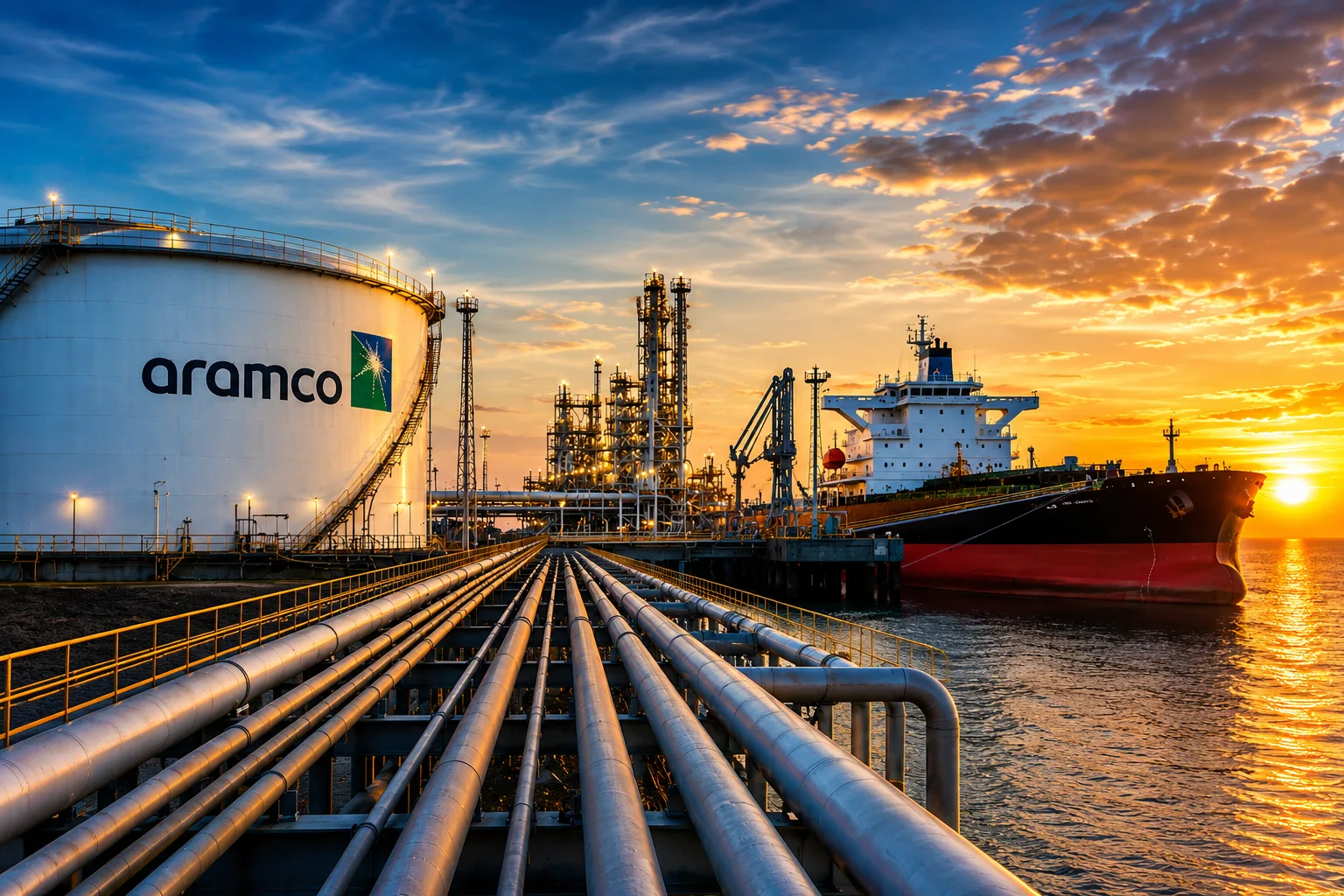
High-capacity pipelines, marine terminals, storage facilities, and distribution networks now form an integrated system that enables operational continuity even when certain export routes experience temporary disruptions.
Growing uncertainty in strategic areas such as the Persian Gulf, the Red Sea, and the Bab el-Mandeb Strait has increased the value of these assets, making oil logistics infrastructure an essential component for preserving the stability of international energy trade.
Aramco demonstrates the importance of diversifying export routes
One of the main factors that enabled Aramco to sustain its exports was the availability of alternative infrastructure within Saudi Arabia. The use of the East-West Pipeline, which connects the country’s eastern oil fields to the Yanbu terminal on the Red Sea coast, reduced the company’s operational dependence on the Strait of Hormuz during periods of heightened uncertainty.
This ability to redirect part of its crude oil flows prevented significant disruptions to international deliveries and allowed the company to continue supplying its customers while adapting its operations to a changing geopolitical environment.
The existence of additional export terminals, storage facilities, and a logistics network designed to operate under different scenarios is the result of decades of planning and investment aimed at strengthening the resilience of Saudi Arabia’s energy system.
Energy logistics directly influences financial performance
The ability to maintain exports not only protects global energy supply security but also has a direct impact on the financial performance of producing companies.
During the second quarter of 2026, Aramco benefited from higher international oil prices and a stronger average realized price for each barrel sold. However, these factors would have had a much more limited impact if logistical constraints had prevented the company from delivering that production volume to international markets.
The combination of robust infrastructure and operational response mechanisms made it possible to minimize disruptions, maintain export revenues, and preserve sufficient cash flow to support the company’s dividend policy and the execution of strategic projects.
This performance demonstrates that logistics infrastructure is no longer merely an operational asset but has also become a determining factor in the financial stability of major energy companies.
Logistics resilience will shape the future of the oil market
Recent developments in the international energy market confirm that energy security will increasingly depend on the ability to ensure resilient supply chains capable of withstanding regional conflicts, extreme weather events, and changes in global trade routes.
Investments aimed at expanding pipelines, developing new export terminals, increasing storage capacity, and diversifying maritime corridors will continue to occupy a priority position within the strategies of the world’s leading hydrocarbon producers.
In this context, Aramco’s experience demonstrates that competitiveness no longer depends exclusively on the size of reserves or production efficiency. The ability to maintain exports through flexible logistics infrastructure capable of responding to highly uncertain scenarios represents a strategic factor for ensuring supply continuity and safeguarding the stability of the global energy market.
Beyond the Saudi company’s quarterly financial results, this experience highlights a trend that is likely to strengthen in the coming years: companies capable of integrating production, storage, transportation, and exports within a resilient network will be better positioned to operate in an energy environment characterized by increasing volatility.
Source: Oil Price.