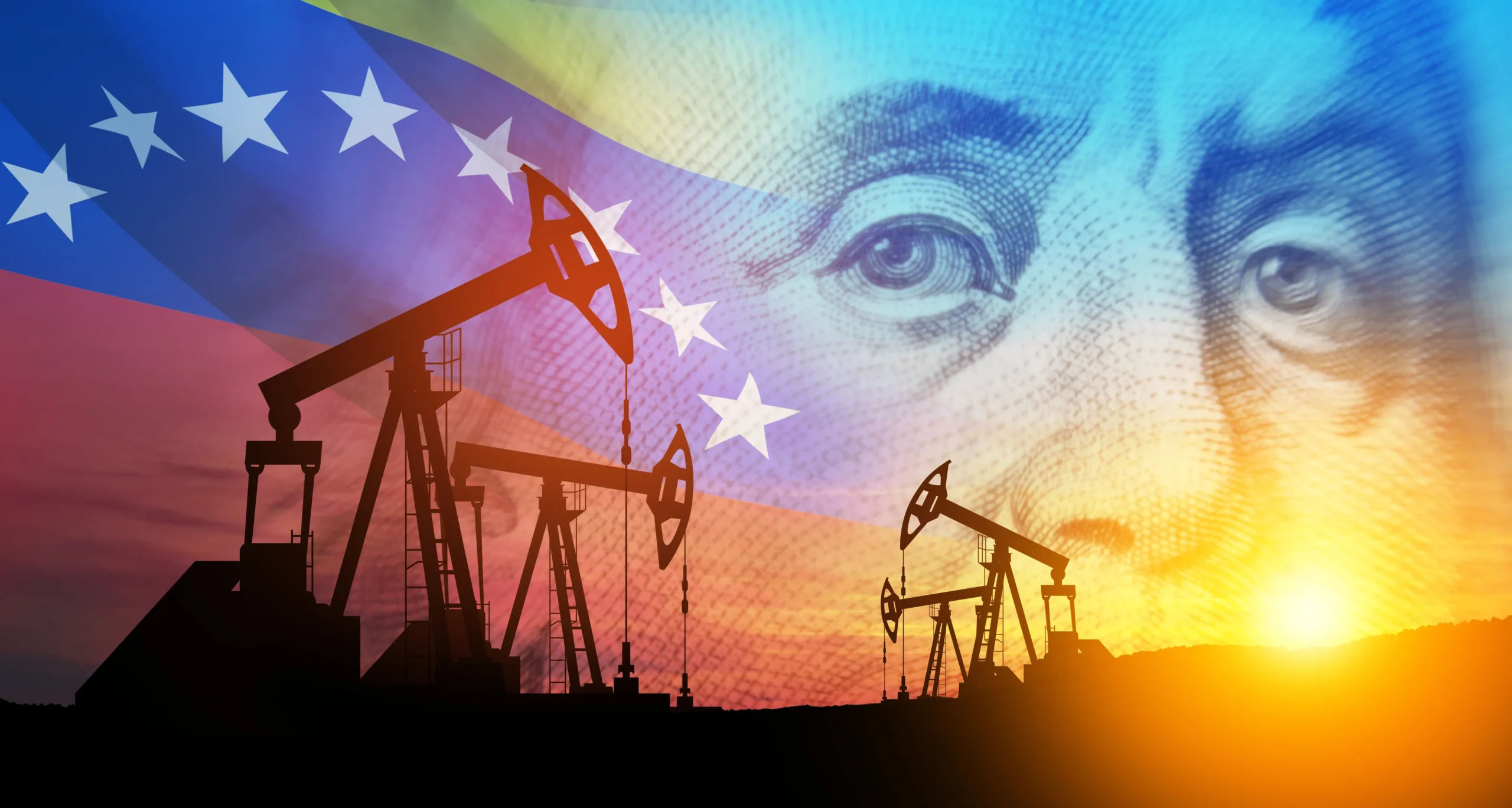
United States and Venezuela they are holding talks about possible US involvement in important Venezuelan oil fields with a formula that could include leasing several fields for a period of up to 100 years, according to information published by Bloomberg.
Negotiations remain open and their terms could change, if finalized, the agreement would give Washington a long-term presence over assets linked to the world’s largest proven oil reserves and would open more space for US companies within the Venezuelan energy sector.
The US is considering a 100-year lease in Venezuela
According to sources cited by Bloomberg, representatives from both countries are analyzing different mechanisms to structure the United States’ participation in the oil fields from Venezuela.
Among the alternatives discussed is a possible 100-year lease on several fields; the final scope of the agreement is not yet finalized and talks are ongoing.
Axios, for its part, reported that the negotiations would cover stakes in more than a dozen oil fields that are currently in production.
This point is relevant because the eventual agreement would not necessarily imply US access to all of Venezuela’s proven reserves. The focus would be on specific oil assets capable of contributing to production and expanding reserves under US participation.
Venezuela’s oil reserves gain strategic importance
Venezuela holds approximately 300 billion barrels of oil proven oil reserves however, having huge volumes underground does not mean having the same amount of crude oil immediately available for the market.
For years, the Venezuelan oil industry has operated below its historical levels due to deteriorating infrastructure, financial constraints, and difficulties in maintaining sustained investments in exploration, production, and field recovery.
In this scenario, a greater presence of US companies could direct capital and technical expertise toward currently productive fields. The potential operation would thus have a clearly upstream component, related to the exploitation and development of the deposits.
Washington seeks to expand its access to Venezuelan oil
Furthermore, the talks are part of a broader US strategy toward Venezuela’s oil sector, Washington has eased sanctions to allow US companies and contractors to return to the country.
The Trump Administration seeks to increase US access to Venezuelan crude oil and strengthen its influence over the marketing of these energy resources.
Participation in oil fields could also increase U.S. oil reserves, according to Axios, the proposed plan could substantially increase them and could more than double them, depending on the assets ultimately acquired.
The oil market increases the importance of the agreement
Meanwhile, the negotiations are taking place against a backdrop of international oil volatility, tensions in the Middle East, and difficulties for commercial transport across the Strait of Hormuz they have increased attention to alternative sources of supply.
Venezuela acquires special importance within this scenario due to the size of its reserves and its geographical proximity to the US market.
A sustained recovery in Venezuelan production could add barrels to the market and alter regional crude oil flows. Achieving this would require rebuilding infrastructure and maintaining investments capable of increasing the capacity of oil fields.
The oil deal is still under negotiation
Likewise, any US involvement in Venezuelan oil fields will depend on the final terms reached by both governments. The White House declined to comment on the talks cited by Bloomberg, while Venezuelan officials also initially offered no details about the potential lease.
For now, the key element is that Washington and Caracas are studying a long-term formula for certain oil assets. A potential 100-year lease would make these fields strategic components of the energy relationship between the United States and Venezuela and could accelerate the entry of US companies into the country’s crude oil production.
Source: World Oil
Photo: Shutterstock