Table of Contents
- From inspecting equipment to understanding risk
- RBI: Prioritizing where inspection adds the most value
- Advanced NDT: Better measurement does not mean more measurement
- AI and digital platforms: From data to decision
- Corrosion: Intervene before operating margin is lost
- Preserving knowledge also protects assets
- From an inspection finding to an integrity decision
- Conclusions
- References
- Frequently Asked Questions
Equipment management based solely on rigid schedules becomes less precise as asset condition and risk change.
An industrial failure does not begin on the day a leak, crack, or loss of containment becomes visible. Before that point, there are often signs of degradation, inspection results, and changes in equipment condition that need to be interpreted in time. Mechanical integrity depends on relating this information to damage mechanisms, asset history, operating conditions, and associated risk.
RBI, advanced NDT, corrosion management, artificial intelligence, and digital platforms are expanding this analytical capability. These tools make it possible to identify trends, prioritize interventions, and support decisions with greater traceability while there is still time to act on deterioration.
From inspecting equipment to understanding risk
A robust program begins by defining which equipment must retain its intended function, which damage mechanisms can affect it, and which limits must not be exceeded. Pressure vessels, piping, tanks, relief systems, pumps, and instrumentation require clear inspection, testing, maintenance, and acceptance criteria.
Inspection provides evidence of physical condition, but an isolated data point loses value unless it is related to service conditions, materials, temperature, pressure, repair history, and expected degradation. Two similar wall-thickness losses may require different decisions because of their location, rate of progression, or potential consequence.
Asset integrity broadens the question. It is not enough to know whether a component contains an indication; it is necessary to determine how that condition affects risk, remaining life, reliability, and operational continuity. This relationship prevents inspection from operating separately from the rest of the plant.
For facilities covered by Process Safety Management, OSHA requires procedures to maintain the ongoing integrity of equipment, inspections and tests in accordance with accepted good engineering practices, documentation of results, and correction of deficiencies outside acceptable limits. Inspection must lead to control of asset condition.
RBI: Prioritizing where inspection adds the most value
Inspecting every piece of equipment at the same frequency does not guarantee better risk control. Each asset has different damage mechanisms, consequences, and degradation rates. Risk-based inspection makes it possible to rank these differences and direct resources toward equipment where a loss of integrity would have the greatest impact.
API RP 580 establishes the elements for developing, implementing, and maintaining an RBI program, while API RP 581 provides a methodology for evaluating probability and consequence of failure.
A reliable assessment that reflects actual asset condition must be supported by sound technical information, including:
- Active or potential damage mechanisms.
- Inspection history and the evolution of findings.
- Operating conditions that may accelerate degradation.
- Quality and effectiveness of inspection data used in the analysis.
When these elements are incomplete or outdated, the model may provide apparent precision that does not reflect the physical condition of the equipment. For this reason, results from new inspections, operating changes, repairs, and monitoring activities should be incorporated periodically into the assessment.
The greatest advantage appears when risk-based inspection is no longer treated as a static study and instead functions as a continuously updated process. In this way, mechanical integrity can move from rigid inspection schedules toward priorities defined by risk, observed degradation, and asset evolution.
The following video explains how RBI, supported by reliable data, can keep inspection priorities current and turn risk assessment into a continuous process. It also addresses the use of AI to integrate information, detect changes in asset condition, and support integrity decisions with greater traceability.

Advanced NDT: Better measurement does not mean more measurement
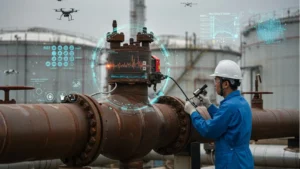
Non Destructive Testing has expanded the ability to inspect components without removing them from service. Advanced ultrasonics, digital radiography, guided wave testing, electromagnetic methods, robotics, and vision systems can increase coverage, preserve inspection evidence, and access areas where conventional inspection is limited.
The value of nondestructive testing does not depend on using the most sophisticated technique. Selection should respond to the expected damage mechanism, geometry, material, and access conditions. A high-resolution technique applied to the wrong problem can produce large volumes of data while leaving the relevant degradation insufficiently characterized.
In asset integrity, digitalization also changes the value of an inspection campaign. Images, corrosion maps, ultrasonic signals, and three-dimensional models can be retained and compared over time. This makes it possible to assess trends and avoids treating each inspection as an isolated snapshot with no connection to the asset’s history.
The evolution of NDT has also introduced new validation requirements. ASNT emphasizes that AI applications in digital radiography should consider image quality, training data, validation, workflow integration, human review, and acceptance responsibility. Automating a task does not eliminate technical oversight.
AI and digital platforms: From data to decision
Most organizations already hold large volumes of integrity information, but it is often distributed across spreadsheets, PDF reports, images, and historical databases that do not always communicate with one another. The problem is no longer the absence of data, but the difficulty of quickly reconstructing the technical history of an asset.
Digital inspection platforms can link equipment, measurement locations, damage mechanisms, NDT results, repairs, recommendations, and upcoming actions. With consistent data, an engineer can follow the progression of a condition and understand why an earlier decision was made.
Artificial intelligence can be integrated into inspection processes to classify images, recognize patterns, prioritize reviews, and automate repetitive tasks. ASNT has documented applications of automated defect recognition in digital radiography, together with the need to validate models and retain human review in the acceptance process.
The most important opportunity for mechanical integrity lies in integrating information. A corrosion alert, an NDT result, or a process variation gains value when it can be related to risk, historical data, and operating limits to trigger an assessment, additional inspection, or justified intervention.
Corrosion: Intervene before operating margin is lost
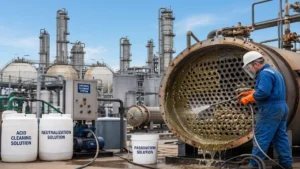
Corrosion remains one of the most widespread degradation mechanisms affecting piping, pressure vessels, tanks, and structures. Managing it requires understanding where it can develop, which variables accelerate attack, and how materials, coatings, the environment, and service conditions influence damage progression.
Corrosion under insulation (CUI) is a representative example of the limitations associated with inspecting metallic surfaces hidden beneath insulation systems. The presence and retention of moisture at the insulation-to-metal interface can create favorable conditions for localized corrosion, including wall-thickness loss and pitting. Effective corrosion management therefore requires an integrated consideration of:
- Moisture control and potential water ingress points.
- Condition of coatings, insulation, and external jacketing.
- Identification of susceptible circuits and expected damage mechanisms.
- Risk-based inspection and selection of appropriate techniques.
- Comparison of historical results to identify degradation trends.
Waiting until damage becomes evident shifts corrosion management toward repair. AMPP recommends combining preventive measures, risk-based inspection, and timely maintenance to reduce the possibility of deterioration progressing without being identified.
Corrosion management is also becoming increasingly digital. Papers presented at AMPP 2025 include digital documentation, non-intrusive monitoring, and programs that integrate information for reliability and asset integrity. Technology provides continuity when data forms part of a technical process for follow-up and decision-making.
Preserving knowledge also protects assets
The quality of an assessment depends heavily on accumulated experience. Recognizing an atypical signal, questioning a data point that does not match the expected mechanism, or identifying that a repair has changed the geometry requires knowledge developed through years of inspection and analysis.
Staff turnover and the departure of experienced professionals can cause that knowledge to leave with them. ASNT has identified workforce availability, demographic changes, and the evolution of AI among the issues affecting the future capability of inspection and infrastructure integrity.
Technical records become more valuable when they preserve more than the final result. Within digital inspection platforms, original images, acquisition parameters, evaluation criteria, finding location, and the rationale behind a decision make it possible to reconstruct the technical reasoning and compare future conditions against the same basis.
Remote collaboration connects specialists with field inspectors and accelerates the review of complex cases, but preserving knowledge requires procedures, competencies, and documentation discipline. A platform can store thousands of records; turning them into knowledge requires preserving how a conclusion was reached.
From an inspection finding to an integrity decision
A weakness in many programs appears after an indication has been detected: managing correctly what happens from that point forward. An inspection finding requires classification, validation, and linkage to the damage mechanism before its impact on equipment condition can be determined.
Based on that assessment, the response may include different actions:
- Monitor the condition and review its progression during the next inspection campaign.
- Expand inspection coverage or apply other nondestructive testing methods.
- Perform a fitness-for-service assessment when required.
- Execute a repair or modify operating conditions.
- Adjust inspection intervals according to the identified risk.
To avoid open recommendations with no clear priority, each finding should be linked to risk, an assigned responsible party, a required completion date, and a closure criterion. A low-severity anomaly may require only monitoring, while another finding of limited dimensions may require high priority if it affects an essential barrier or is associated with a higher-consequence service.
Mechanical integrity is strengthened when inspection results influence actual decisions about the asset. The industry now has advanced sensors, NDT methods, risk models, digital platforms, and artificial intelligence. The task is to connect these capabilities around a common question: What do we really know about the condition of the asset, and what action can reduce risk in a verifiable way?
Conclusions
Digital capabilities are expanding how asset condition is understood and managed. Their importance becomes clear when inspection, risk, corrosion, and data are integrated to establish priorities and relate the physical condition of equipment to operational needs.
Risk-Based Inspection (RBI) directs resources toward higher-risk equipment, advanced NDT improves damage characterization, and digital platforms provide traceability. AI can support specific analyses, provided that professional validation remains part of the process.
Strengthening mechanical integrity requires connecting these capabilities with known damage mechanisms, technical experience, and clear intervention criteria. Anticipating degradation makes it possible to act before asset condition limits the available options.
References
- American Petroleum Institute (API). API RP 580: Elements of a Risk-Based Inspection Program.
- American Petroleum Institute (API). API RP 581: Risk-Based Inspection Methodology.
- Occupational Safety and Health Administration (OSHA). 29 CFR 1910.119: Process Safety Management of Highly Hazardous Chemicals, Mechanical Integrity section.
- American Society for Nondestructive Testing (ASNT). AI for NDT Professionals: Improving Accuracy, Speed, and Reliability. 2025.
- Association for Materials Protection and Performance (AMPP). Understanding Corrosion Under Insulation (CUI): Causes, Detection, and Prevention. 2025.
Frequently Asked Questions
What is the difference between mechanical integrity and asset integrity?
Mechanical integrity focuses on keeping equipment and systems within safe operating conditions. Asset integrity extends this management to the asset life cycle, risk, reliability, maintenance, and performance.
How does RBI contribute to mechanical integrity?
RBI uses probability and consequence of failure to prioritize equipment and inspections, allowing resources to be directed toward assets and damage mechanisms associated with the highest risk.
What do AI and digital platforms contribute to inspection?
They help organize large volumes of information, identify trends, preserve historical records, and support specific analyses. Integrity decisions still require professional validation and technical judgment.
Why should corrosion management be integrated with inspection data?
Because comparing damage mechanisms, historical measurements, and operating conditions makes it possible to identify trends and act before material loss compromises the asset’s fitness for service.