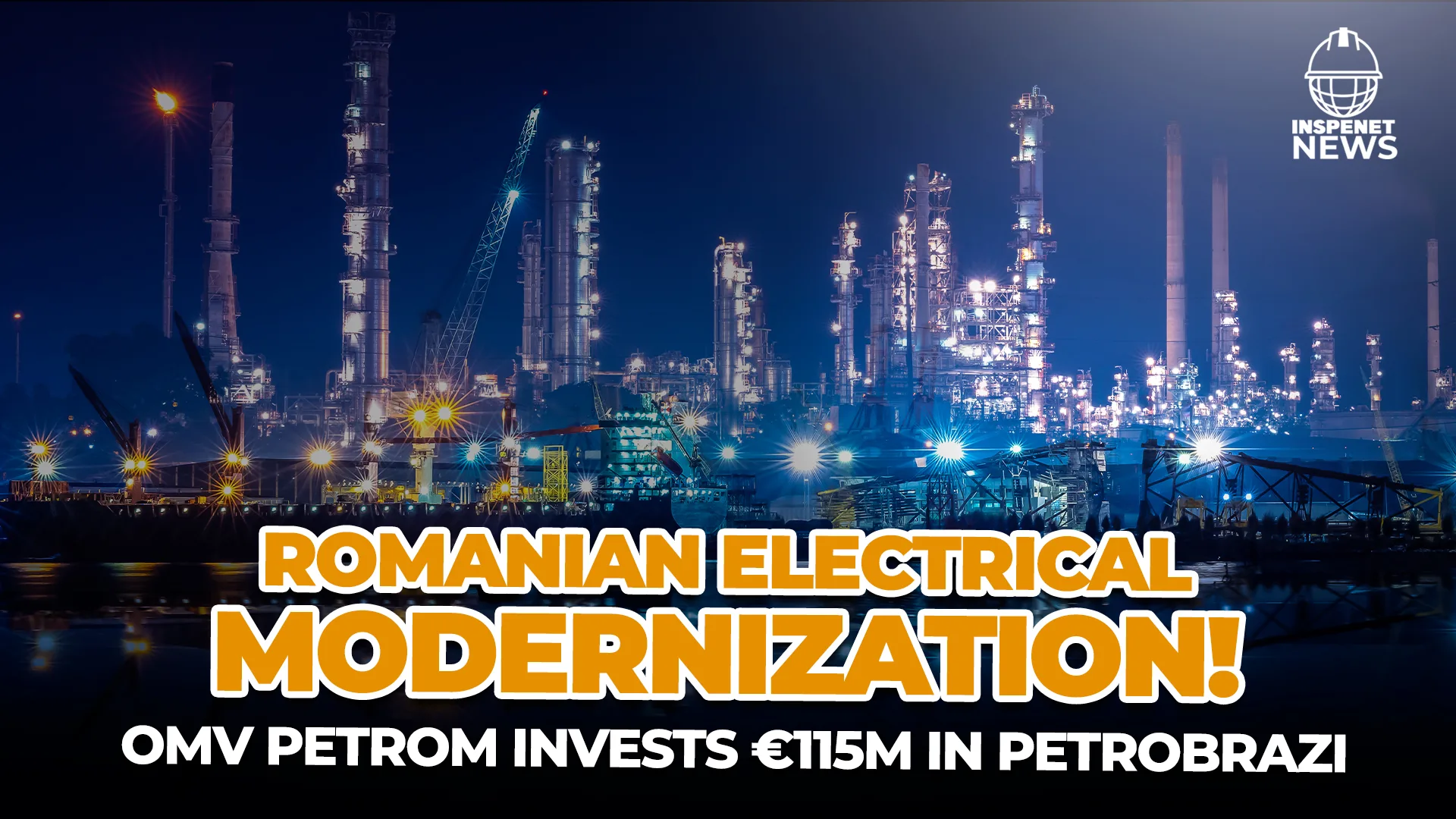
OMV Petrom strengthens Petrobrazi with an investment of 115 million euros
OMV Petrom has invested approximately €115 million (US$133.5 million) in modernizing the electrical infrastructure of the Petrobrazi refinery in Romania. The project is part of the transformation program the company is undertaking at this industrial complex.
With this investment, the company aims to strengthen the electricity supply necessary to maintain Petrobrazi's current operations. In turn, the new infrastructure will allow for the incorporation of production capacities currently under development at the refinery.
These include projects aimed at producing sustainable aviation fuel (SAF), hydrotreated vegetable oil (HVO), and green hydrogen. These initiatives are part of OMV Petrom's plans to adapt its operations to the evolving needs of the energy market.
OMV Petrom modernizes Petrobrazi's electrical infrastructure
Specifically, the project included the construction of a high-voltage power line directly connected to the Transelectrica substation. It also included a new-generation electrical substation and another facility designed to distribute power within the complex.
OMV Petrom also incorporated Blue GIS technology into the new infrastructure; it is an electrical switching system designed to offer a lower environmental impact.
The modernization will provide a network prepared to meet the consumption needs of both the existing facilities and the units that will be incorporated during the transformation of Petrobrazi.
According to Radu Căprău, OMV Petrom's executive board member responsible for Refining and Marketing, having a modern electrical infrastructure is essential for the proper functioning of a refinery.
The executive also noted that the investment will support current operations and new capabilities related to SAF, HVO and green hydrogen.
Petrobrazi is preparing to produce SAF and renewable diesel.
Furthermore, the electrical infrastructure takes on special relevance in light of the projects that OMV Petrom is developing within Petrobrazi.
The company began construction in 2025 of a unit to produce SAF and HVO at the refinery. According to the plans announced by the company, these facilities will have a combined capacity of approximately 250,000 tons per year.
Commercial production is planned to begin in 2028. The project will allow Petrobrazi to expand its activity towards fuels intended for sectors where reducing emissions presents greater difficulties, including aviation.
In this context, the SAF will be especially important for air transport. Meanwhile, the HVO will allow for the production of renewable diesel through the processing of bio-based raw materials.
The availability of a higher-capacity electrical infrastructure facilitates the integration of these units into the overall operation of the refinery.
Green hydrogen is part of OMV Petrom's plans
Furthermore, OMV Petrom is developing green hydrogen production capabilities at Petrobrazi. This fuel will play a direct role in the processes associated with the production of fuels with a lower carbon footprint.
The company is thus working on various projects that are gradually modifying the refinery's production profile. The new electrical infrastructure provides a foundation for supplying power to these facilities and facilitating their integration with existing units.
The commitment to green hydrogen complements the planned production of SAF and HVO. Together, these projects demonstrate how OMV Petrom is directing part of its investments toward new energy sources and fuels as part of its energy transition strategy.
A 7 MW photovoltaic project will expand the electricity supply
7 megawatt (MW) photovoltaic project is being built within Petrobrazi.
Currently, the refinery has its own power generation unit, which covers virtually all of its electricity needs. The addition of solar capacity will expand the available energy sources within the complex.
In this way, Petrobrazi will combine its own generation capacity with a renewed electrical infrastructure and a high-voltage connection. This configuration will facilitate the necessary supply for the industrial projects that OMV Petrom has underway.
Petrobrazi maintains a relevant role in the Romanian market
Petrobrazi is one of OMV Petrom's main industrial assets in Romania; the refinery has a processing capacity of approximately 4.5 million tons of crude oil per year.
Furthermore, its operations have a considerable impact on the supply of fuels and other petroleum products to the Romanian market.
Since 2005, OMV Petrom has invested over €2 billion in the modernization of Petrobrazi. These investments have enabled the upgrading of existing facilities and prepared the refinery to incorporate new technologies and production lines.
Petrobrazi's transformation is progressing with new investments
Finally, the 115 million euros allocated to electrical infrastructure are part of a broader industrial program.
green hydrogen projects and new photovoltaic capacity show the different areas in which OMV Petrom is involved in Petrobrazi.
With these actions, the company seeks to maintain the refinery's operational capacity while adapting part of its production to the changes resulting from the energy transition.
The new electricity grid will play a cross-cutting role in this process. Its capacity will allow for the connection of projects requiring a stable supply and will facilitate Petrobrazi's gradual incorporation of new forms of energy production.
News of additional interest
DNV and Fassmer make progress on autonomous naval vessels
DNV and the German shipbuilder Fassmer have signed an agreement to collaborate on the development and classification of autonomous and remotely operated vessels for naval and government clients. The work will apply DNV's AROS standards to Fassmer's unmanned projects and will examine areas such as navigation, engineering, operations, and safety.
The collaboration includes evaluating new technologies and defining pathways for certifying these vessels. The companies will seek to advance toward possible Approval in Principle under the AROS framework. These standards, available since 2025, cover everything from remotely controlled vessels to fully autonomous systems. DNV and Fassmer also expect to contribute their findings to the development of international standards for this sector.
Energy Vault secures 275 MW for AI centers
Energy Vault secured 275 MW of power generation capacity with Rolls-Royce MTU engines to support large artificial intelligence and high-performance computing campuses. The equipment will be delivered between the second half of 2027 and the first half of 2028. The company also obtained financing from Eagle Point Credit Management to cover the acquisition without using large amounts of corporate capital before allocating it to projects.
The generators will be part of Powered Land, Energy Vault's platform for delivering power directly to data center sites. The company plans to combine this generation with batteries, electrical systems, and advanced controls. The 275 MW will support discussions for multi-gigawatt projects and can be deployed gradually as the needs of each campus increase.
US searches for hidden geothermal energy using algorithms
The U.S. Department of Energy announced $300,000 for the GEMS Award , a competition that seeks to improve the detection of geothermal resources hidden underground. Participants will be required to develop and test algorithms capable of analyzing geophysical data and identifying faults and other structures related to potential geothermal energy deposits.
The competition will have two rounds with prizes ranging from $15,000 to $100,000 and will accept proposals until December 3, 2026. The models will work with real data to generate more accurate geological maps. The government hopes these tools will reduce uncertainty during exploration and facilitate the discovery of commercially viable resources.
Anthropic proposes to put a stop to the advance of AI
Anthropic CEO Dario Amodei has proposed slowing the pace at which the capabilities of advanced artificial intelligence models are increasing. His proposals include incorporating external evaluators within companies to test their security measures and review potential incidents. Anthropic has pledged to allow this type of oversight and has called on other leading companies to do the same.
Amodei also proposes that large companies agree on common standards to control the development of advanced models with the support of the U.S. government. Internationally, he suggests seeking agreements with China and other countries to limit uses considered dangerous, such as the creation of biological weapons. At the same time, he advocates for restrictions on chips and technology to maintain the United States' advantage over Chinese development.