TotalEnergies and AMNI approved the investment to develop the Ima gas field, which will begin supplying gas to Nigeria LNG from 2028.
The French company and its Nigerian partner have made the final investment decision (FID) to develop the Ima gas field, located off the coast of Nigeria. The project will have a planned production capacity of 350 million cubic feet of gas per day and will be used to supply the Nigeria LNG liquefaction plant.
TotalEnergies will operate the development with a 40% stake, while AMNI will retain the remaining 60%. The field lies between offshore licenses OML 112 and OML 117.
The Ima gas field will begin production in 2028
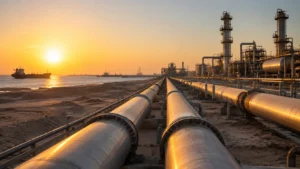
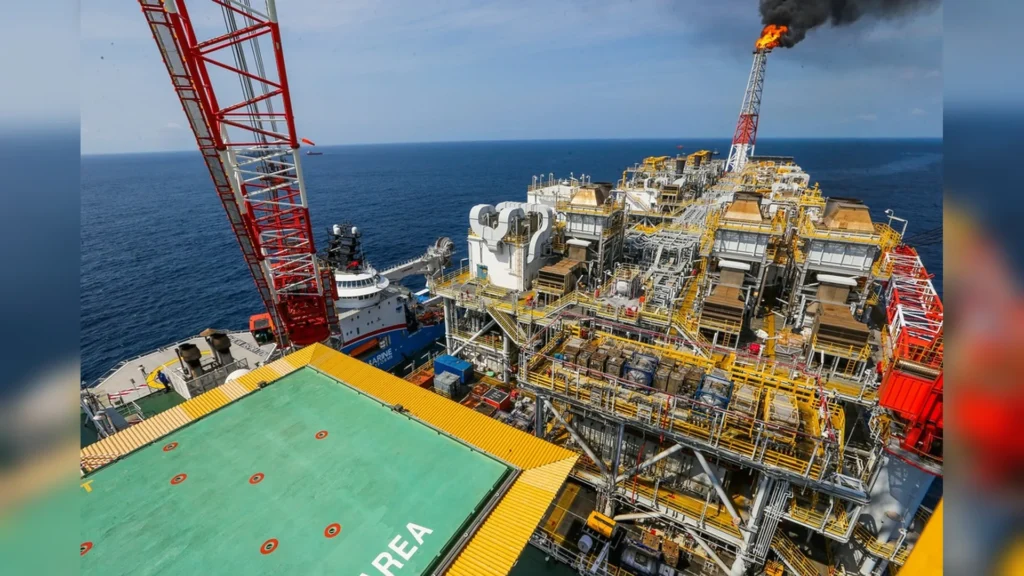
The project will be developed in shallow waters near Bonny Island, the planned infrastructure includes an offshore platform connected by a 22-kilometer gas pipeline with the facilities of Nigeria LNG.
According to the announced schedule, production will begin in 2028 and subsequently reach a plateau of 350 million cubic feet per day. This volume is equivalent to more than 60,000 barrels of oil equivalent per day.
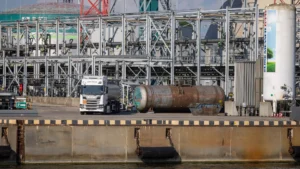
One of the advantages of the project will be the use of existing gas infrastructure, which will allow offshore production to be directly connected to liquefaction facilities.
Ima will supply gas to Nigeria LNG Train 7 project
A significant portion of the gas produced in Ima will be used to support Train 7 the Nigeria LNG expansion project. It is estimated that the field will cover around one third of the gas supply needs associated with this expansion.
Train 7 will allow Nigeria LNG liquefaction capacity to increase from approximately 22 million to 30 million tons annually. TotalEnergies it also participates in Nigeria LNG with a 15% stake.
In this way, Ima will directly connect upstream gas production with the country’s LNG infrastructure, incorporating new volumes into the plant’s supply system.
An offshore platform with power supplied from land
From a technical point of view, TotalEnergies presents Ima as a development aimed at maintaining low operating costs and reducing emissions associated with production.
The design includes a simplified platform that will receive electricity from the ground reducing the need for self-generated electricity at offshore facilities.
Furthermore, the project will be operated without routine gas flaring and will have permanent systems designed to detect and monitor the methane emissions.
These measures are part of TotalEnergies strategy to develop new non-associated gas resources in Nigeria, using existing infrastructure where possible.
Nigerian companies will participate in the development of Ima
The project will also have significant local involvement, the main development contracts will be awarded to Nigerian companies, and around 60% of the workforce during the construction and development phase it will come from the host communities.
AMNI will maintain a majority stake of 60%, while TotalEnergies will be the operator of the project with the remaining 40%. Nicolas Terraz, president of Exploration and Production at TotalEnergies, noted that the investment decision is part of the integrated gas strategy that the company is developing in Nigeria.
The company expects that Ima will help strengthen Nigeria’s LNG supply and generate value for both its partners and the country.
TotalEnergies expands its gas projects in Nigeria
Ima joins the Ubeta gas project, whose investment was approved in 2024, both developments aim to incorporate new sources of supply into Nigeria’s LNG infrastructure.
TotalEnergies has maintained a presence in the country for more than six decades and has more than 1,800 employees distributed across different business areas.
During 2025, Nigeria contributed approximately 188,000 barrels of oil equivalent per day to the company’s total hydrocarbon production.
With the development of Ima, TotalEnergies and AMNI are preparing a new source of offshore gas intended to reinforce Nigeria LNG supply, while also advancing the expansion of its liquefaction capacity through Train 7.
Source: TotalEnergies
Foto: Shutterstock