The UK seeks to regain support for the energy transition
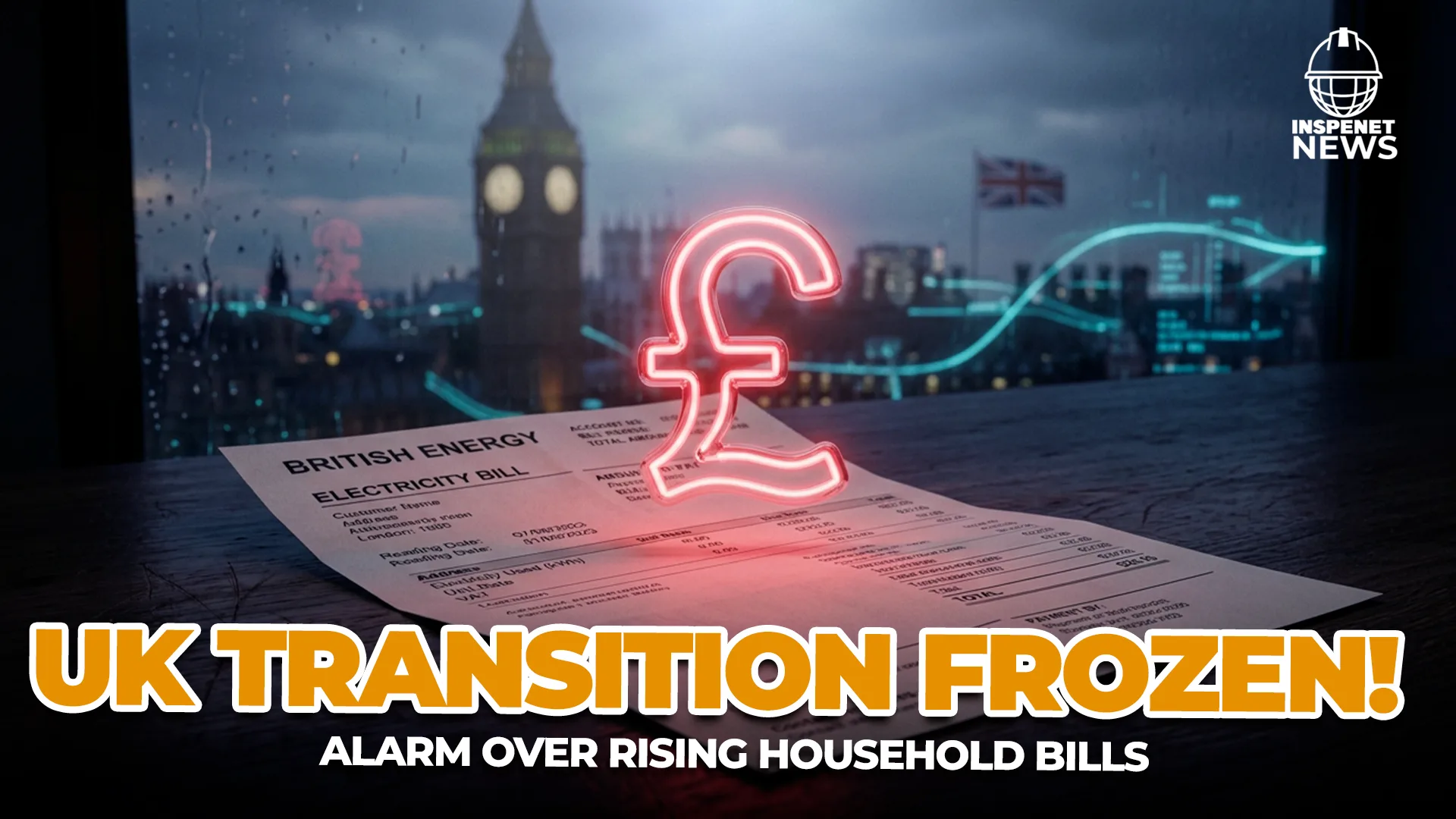
Support for the energy transition in the UK is showing signs of weakening; a parliamentary report warns that costs to consumers and the way the government communicates its policies are making it difficult for some of the population to perceive its benefits.
The House of Commons Energy Security and Net Zero Committee published the report on September 17. The document analyzes how the government can gain greater support from households and businesses during changes in energy generation and consumption.
Costs are a factor in supporting the energy transition
The Committee believes that generating economic benefits for consumers and businesses is the main measure the Government can take to strengthen support for the energy transition .
Economic concerns thus occupy a significant part of the debate; the Committee also calls for the implementation of previously put recommendations to reduce electricity prices and improve the competitiveness of British companies.
This situation puts the cost of energy at the heart of British politics; the transition to lower-emission sources will have to move forward while households and businesses pay attention to the impact the measures may have on their expenses.
Energy security is gaining importance in the United Kingdom
On the other hand, energy security appears as one of the arguments used to explain the benefits of transforming the British energy system.
Dependence on international fossil fuel markets can expose the country to price fluctuations and external stresses. For this reason, the Committee welcomes the Government's increased focus on energy security as one of the reasons for accelerating the transition.
In this scenario, increasing the presence of renewable energy can be part of a strategy aimed at reducing that exposure. The message thus shifts the focus from emissions targets to issues that directly affect supply and the economy.
Households want to improve their energy efficiency
Likewise, households' interest in reducing their consumption represents another part of the challenge; three-quarters of households are interested in making energy efficiency improvements, according to data collected in the report.
However, the cost of these actions and a lack of awareness about available aid can prevent this interest from turning into concrete investments.
This gives insulation and heating system measures an economic dimension in addition to an environmental one. Explaining the cost of these improvements, the available support, and the benefits households can gain can influence their adoption.
The impact on vulnerable households is a cause for concern.
At the same time, the report pays attention to how the costs associated with decarbonization are distributed.
The charges added to electricity bills can have a disproportionately greater impact on low-income households. Therefore, the Committee argues that policies should avoid harming those living in energy poverty or at risk of falling into it.
This issue broadens the debate on zero emissions . The challenge is not only about changing the sources used to produce energy. It also includes deciding how the process is financed and how its costs are distributed between consumers and businesses.
SMEs and installers can play a larger role
The Committee considers it necessary to involve small and medium-sized enterprises; among its recommendations is the development of a specific strategy to facilitate the participation of SMEs in the energy transition .
Professionals who work directly with heating, insulation, and other home improvements can act as sources of information for consumers.
Therefore, strengthening the training and support available to installers would complement institutional campaigns with advice related to the decisions made by households.
The UK rethinks how it communicates the energy transition
The report also questions a communication strategy that is overly focused on emissions targets. The Committee specifically investigated whether the Government is effectively explaining the goals and benefits of the energy transition to the public.
The proposal suggests giving more weight to the immediate consequences for citizens. These include energy costs, the country's resilience, and other economic and social effects associated with energy policies.
In this way, communication could present the energy transition through results that consumers can relate to their bills, their homes and the availability of energy.
The term “net zero emissions” is losing prominence
On the other hand, the Committee proposes reducing the reliance on the expression "net zero emissions" when communicating these policies.
The parliamentary inquiry was launched against a backdrop of growing public opposition to net zero.and the political consensus surrounding the issue had weakened. Their objective was to study whether the population was receiving sufficient information to understand the goals and benefits of the transition.
The proposed change involves shifting part of the debate from a long-term environmental goal to more concrete effects. Energy security , the cost of electricity, and reduced dependence on fossil fuels can thus gain greater prominence in the government's message.
Disinformation is also a concern for Parliament
Finally, the Committee includes false information about the climate and the energy transition among the issues that require attention.
The report calls for new actions to respond to the rise in misinformation, and also recommends raising the public profile of national academies in order to broaden access to expert sources.
The discussion is thus shifting to how to gain public support while changing the energy system. Consumer costs, renewable energy , security of supply, and how policies are communicated are emerging as some of the main issues the government will have to address.
News of additional interest
National Fuel is studying what to do with its $5 billion business
National Fuel Gas is exploring options for its natural gas production business, valued at approximately $5 billion. The company is considering a full or partial sale, a merger with another U.S. producer, or spinning off the unit to be listed independently. The review includes Seneca Resources and National Fuel Gas Midstream and was prompted by an expression of interest earlier this year.
The decision would have significant repercussions for National Fuel. Seneca produces approximately 1.1 billion cubic feet of natural gas per day and, together with its associated infrastructure, generates about 69% of the company's adjusted EBITDA. Therefore, divesting the business would require restructuring a substantial portion of its revenue streams. In return, National Fuel could obtain resources to reduce debt and expand its regulated utility operations.
MDL recovers underwater infrastructure in Brazil
Maritime Developments Ltd. completed a campaign to remove subsea infrastructure attached to a decommissioned FPSO in the Campos Basin, Brazil. The work was carried out approximately 250 kilometers east of Rio de Janeiro and included the retrieval of flexible flow lines, umbilicals, and connectors from a vessel chartered by the field operator.
To carry out the operations, MDL installed portable equipment on the vessel, including a wheeled horizontal laying system and a 110-metric-ton tensioner. This configuration allowed for the handling of recovery loads of up to 105 metric tons. Before setting sail, the company also studied the vessel's capacity, the layout of the equipment on deck, and the structural requirements necessary to perform the work.
Transocean adds $80 million contract in Africa
Transocean has secured a new contract for its Deepwater Conqueror drilling rig to operate off the coast of Equatorial Guinea. The agreement involves drilling two wells over approximately 170 days and will add nearly $80 million to the company's contract portfolio. The drilling campaign is scheduled to begin in 2027 with an operator yet to be identified.
The Deepwater Conqueror , built in 2016, can drill to depths of up to 12,192 meters and operate in waters up to 3,658 meters deep. Its arrival in Africa is scheduled after completing its current operations in the Gulf of Mexico, where it recently received an extension to drill two more wells through January 2027. Transocean had a backlog of contracts worth approximately $6.7 billion as of August 5, 2026.
Chile is studying the use of ethanol to alleviate gasoline costs.
Chile is considering adding 10% ethanol to its gasoline to reduce its reliance on imported oil and alleviate fuel-related expenses. A proposal from the Ministry of Energy estimates that adopting the E10 blend could generate savings of approximately US$107 million annually. The plan comes as rising international crude oil prices put increasing pressure on public finances and Chile's price stabilization mechanism.
The change would also allow for the gradual replacement of MTBE, which Chile currently uses to increase gasoline octane. According to the cited information, ENAP would need to invest approximately US$10.8 million to adapt refineries, terminals, and storage facilities. The transition could proceed gradually, reaching ethanol blends of between 10% and 15% by 2030. One challenge is that Chile lacks sufficient domestic production, meaning it would have to rely heavily on external supplies.