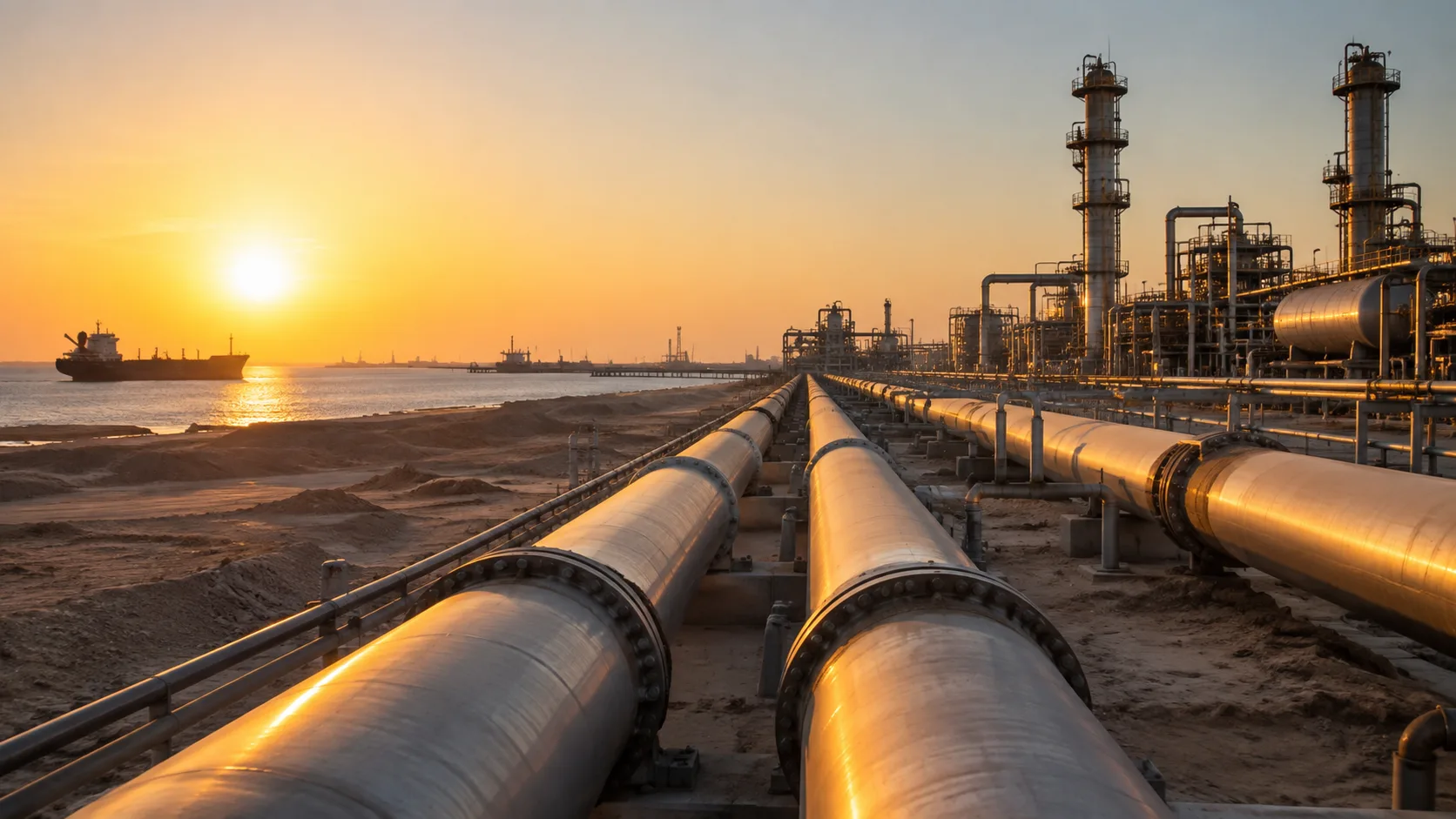
The Saudi Arabia East West Pipeline restarted operations after remaining out of service following drone attacks that disrupted this strategic route to the Red Sea. The system began pumping at a low rate, while Saudi Aramco seeks to restore approximately 4 million barrels per day (bpd) and resume crude loadings from the port of Yanbu.
The recovery represents progress for Saudi oil logistics at a time when difficulties transporting hydrocarbons through the Strait of Hormuz have increased the importance of alternative routes. The return of the pipeline also triggered an immediate market reaction: Brent crude futures fell by more than US$2 per barrel after the resumption of supply became known.
Saudi Arabia East West Pipeline resumes crude transportation
The system had been taken out of operation after drone attacks forced transportation to stop and halted oil loadings from Yanbu.
The situation raised concerns because of the volume Saudi Arabia had been moving toward the Red Sea. Amid disruptions affecting flows through the Strait of Hormuz, the country had been using this infrastructure to reroute around 4 million bpd, equivalent to approximately 4% of global oil supply.
The restart, however, does not mean that the system immediately recovered its previous operational level. Sources cited by Reuters indicated that it was initially pumping at a reduced rate and that Aramco intends to progressively increase the flow to approximately 4 million bpd. A full recovery could still take several weeks.
The development also confirms the scenario outlined during repairs to the Saudi East West Pipeline, when the possibility of partially restoring transportation before all work was completed was being considered.
Why is the East West Pipeline strategic for Saudi Arabia?
Its importance lies primarily in its ability to transport oil from the eastern producing regions of Saudi Arabia to the Red Sea coast, providing a logistical alternative to the maritime routes that cross the Strait of Hormuz.
This function becomes particularly relevant when transit through Hormuz faces disruptions. The recent deterioration in navigation conditions had already caused a sharp reduction in traffic and increased pressure on oil export routes in the Middle East.
The availability of the East West corridor therefore provides greater flexibility to distribute Saudi flows between terminals in the Persian Gulf and the Red Sea.
Yanbu could resume oil loadings
The recovery of the pipeline also makes it possible to progressively restore supply to Aramco refineries located on the Red Sea coast. One of the first signs of normalization could occur precisely in Yanbu. According to sources consulted by Reuters, a cargo was scheduled to load crude at the terminal that same Tuesday, with China as its destination.
Market operators also began reorganizing maritime logistics. Trading sources said tankers were being moved toward Port Said in Egypt for ship to ship transfers, as well as toward Sidi Kerir.
These movements show that the restart of land based infrastructure can quickly affect terminals, tankers, and maritime routes located hundreds of kilometers away.
Pipeline restart puts pressure on oil prices
The market reacted quickly to the prospect of recovering a route capable of moving millions of barrels per day. Brent crude futures fell by more than US$2 per barrel, reaching their lowest level since September 8, after the resumption of supply triggered selling in the oil market.
The reaction reflects the importance Saudi infrastructure currently has for perceptions of global crude availability. During the disruption, market participants had warned that a prolonged shutdown could put volumes equivalent to approximately 4% of global supply at risk. Therefore, even a partial recovery changes expectations regarding the amount of oil that could return to international routes.
Oil infrastructure gains importance amid Hormuz disruptions
The episode demonstrates that security of supply does not depend exclusively on how much oil a country can produce. It also depends on its ability to transport that oil to terminals from which it can reach buyers.
Saudi Arabia has a strategic advantage in having infrastructure that connects its eastern producing regions with the Red Sea. However, the recent attacks also highlight the vulnerability of land based facilities that become increasingly important when other energy routes face restrictions.
The progressive recovery of the Saudi Arabia East West Pipeline restores a critical route for the kingdom oil flows. The next point of attention will be how quickly Aramco can increase pumping from initial levels to approximately 4 million bpd and normalize export operations from Yanbu.
Source: Reuters