The company FMC Wellhead Equipment, a subsidiary of the specialized group TechnipFMC, has received the formal award of an iEPCI contract granted by Petronas Carigali for the integrated execution of the Limbayong deepwater development, located off the coast of the state of Sabah in Malaysia.
The benefits of the iEPCI model in Petronas’ Limbayong project
According to financial information provided by the subsea solutions provider, the economic value of this contract is estimated to be between $75 and $250 million. The operational assignment covers integrated engineering, procurement of industrial supplies, fabrication of specialized structures, and the subsequent installation of systems on the seabed.
The signing of the agreement represents operational consolidation following the formal approval of the final investment decision issued by Petronas at the beginning of this fiscal year. The Limbayong field is a greenfield development project focused on the extraction of oil and non-associated natural gas under complex geological conditions.
Regarding the geographic location of the works, the energy reserves are located approximately 120 kilometers off the coast of Sabah. The water depth in this area of the Pacific Ocean reaches between 900 and 1,200 meters, a factor that demands the use of advanced subsea technology.
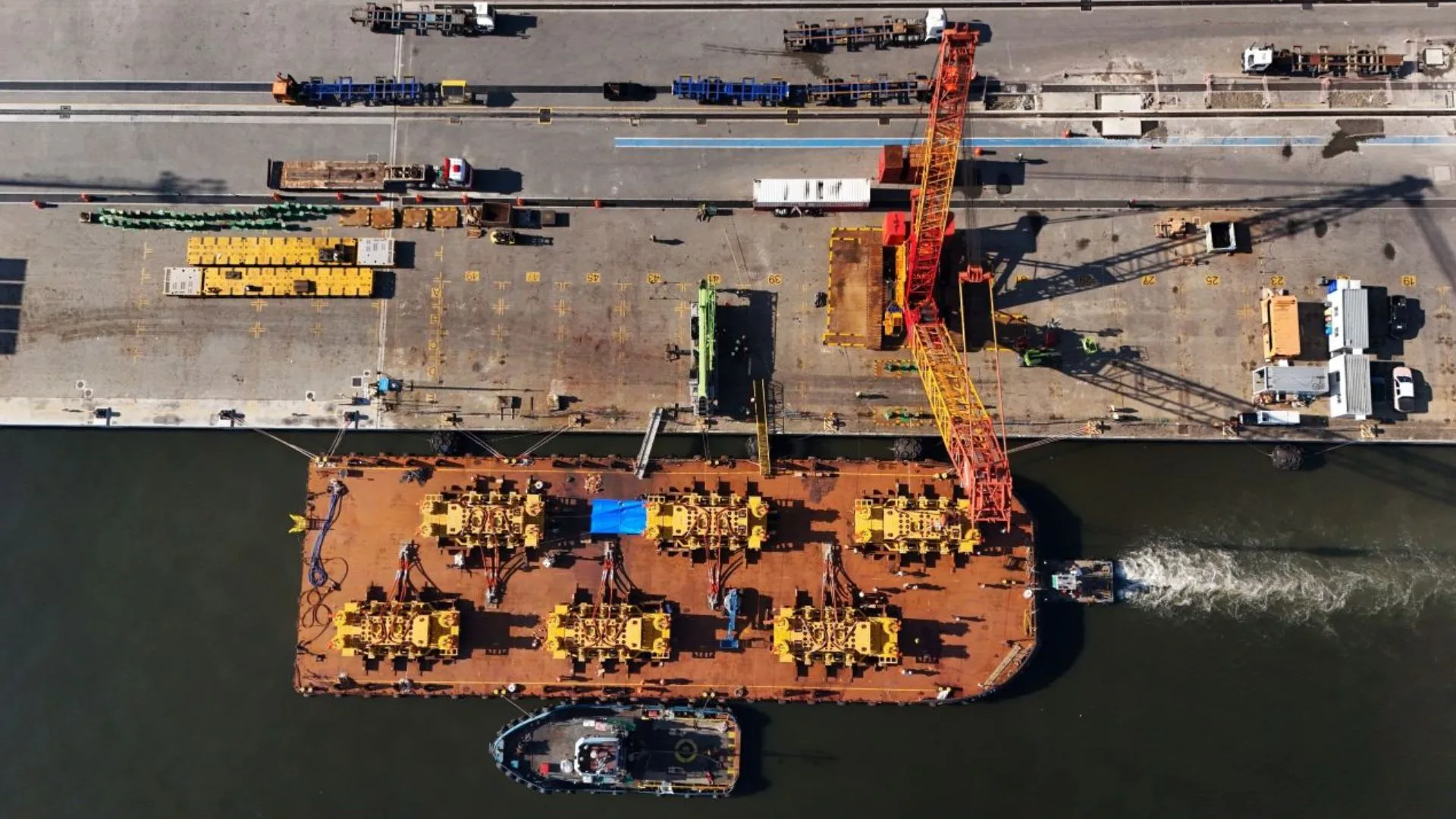
The technical scope of the Subsea 2.0 industrial platform
Consequently, the project will utilize the configure-to-order Subsea 2.0 industrial platform developed by the multinational company. This modular technology aims to standardize the architecture of seabed components, shortening delivery cycles and increasing the efficiency of the installation process.
In this regard, the executive leadership of the organization’s subsea segment highlighted the commercial relevance of this award in strengthening the corporate presence in Southeast Asia. Jonathan Landes, President of Subsea at TechnipFMC, stated that the combination of the integrated iEPCI model and the Subsea 2.0 technology platform will optimize the financial performance of offshore energy activities.
In this sense, the iEPCI methodology allows for the unification of engineering, procurement, construction, and installation stages under a single main contractor. This approach reduces friction between suppliers, eliminates operational redundancies, and minimizes risks associated with execution timelines in large-scale offshore projects.
For its part, the activation of the Limbayong block is part of Petronas Carigali’s strategies to increase national hydrocarbon production in Malaysia. The entry into the development phase of this subsea asset will contribute to guaranteeing the supply of energy resources and will reactivate heavy industrial activity in the state of Sabah.
Likewise, the standardization of components through preconfigured solutions promotes the economic sustainability of offshore operations. Reduced complexity in fabrication tasks allows for capital budget control and enhances operational safety during intervention phases on the ocean floor.
Technology platform projection and industry impact
The award of this operational scope reinforces the international deployment of TechnipFMC’s latest generation modular solutions. Recently, the technology firm achieved a significant milestone by supplying Chevron with its first seven-inch Subsea 2.0 tree for its extraction assets in Australia.
Undoubtedly, the preference for integrated schemes and standardized platforms marks a clear methodological trend in the global oil industry. Companies dedicated to ultra-deepwater exploration are opting for systems that guarantee greater operational predictability in the face of global energy market volatility.
Additionally, the development of activities will require close coordination between the contractor’s global engineering centers and local operational subsidiaries in Malaysian territory. The transfer of technical capacity will strengthen the local supplier network near the Port of Sabah.
Furthermore, the incorporation of state-of-the-art measurement and control infrastructure on the seabed will ensure constant monitoring of the flow of extracted resources. Subsea manifolds and pipelines will feature remote sensing systems designed to prevent environmental contingencies and extend the field’s lifespan.
In this way, the deepwater market in Asia-Pacific is accelerating its transformation through the adoption of turnkey contracts and simplified engineering. The strategic alliance between Petronas and TechnipFMC sets the stage for future developments in the Malaysian Basin under parameters of maximum productivity.
Finally, the initial engineering and procurement phases will begin immediately to meet the installation schedule set by the state operator. The startup of Limbayong will position the region as a technical benchmark in the efficient extraction of hydrocarbons in deepwater fields in the Pacific.
Source and photo: TechnipFMC