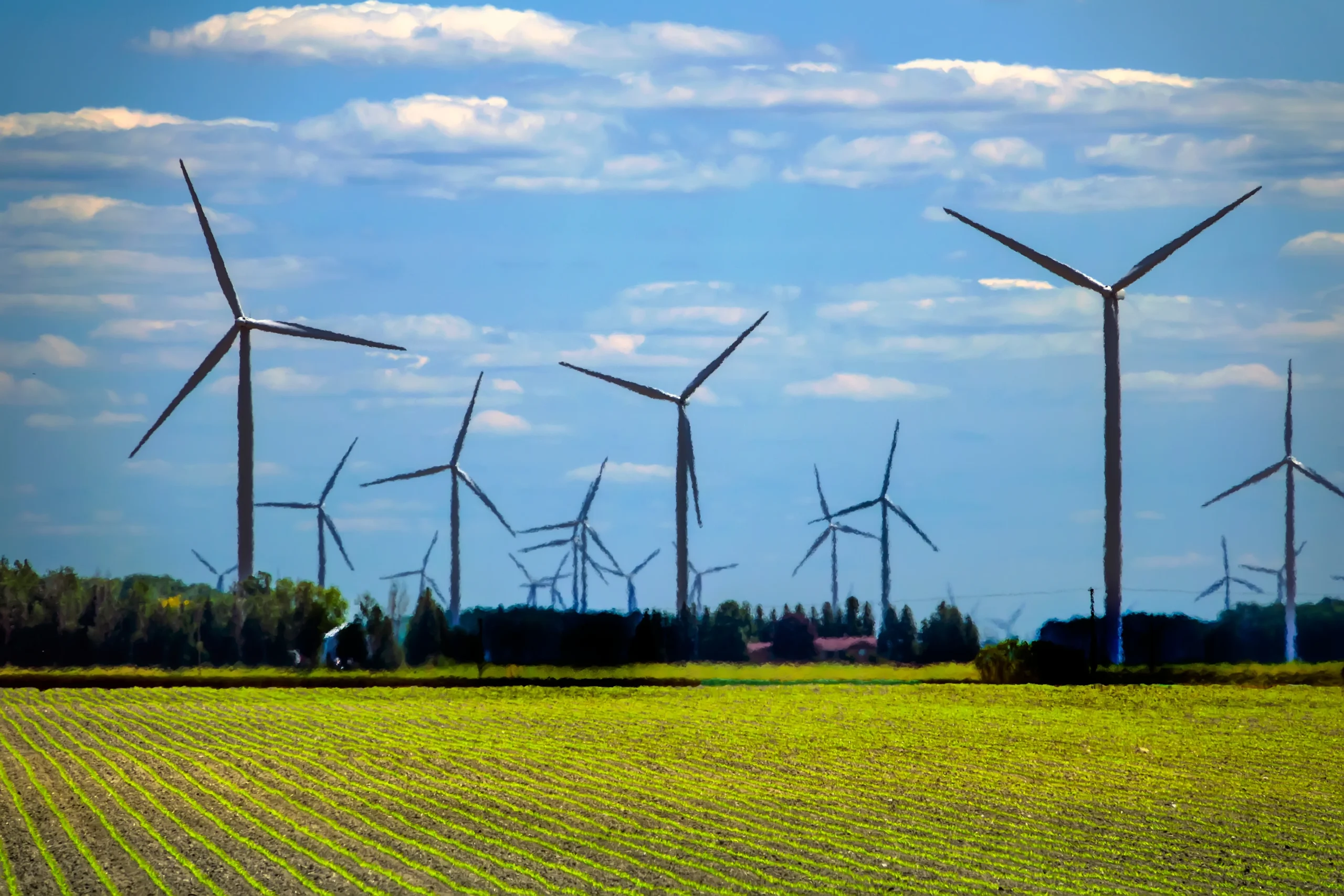
The SunZia wind farm, developed by Pattern Energy in New Mexico, is scheduled to begin commercial operations this month and set a new record for renewable energy in the United States. With a net generating capacity of 3,650 megawatts (MW) this summer, the facility will be the largest wind farm in the country and one of the largest in the world.
Currently, SunZia far surpasses other US wind farms; its capacity is more than three times greater than that of Alta Wind in California and Great Prairie in Texas, two of the projects that until now were among the largest in the sector.
A project developed over almost two decades
Pattern Energy began construction of SunZia in 2023 after a lengthy planning, permitting, and assessment process that spanned nearly twenty years.
The complex is spread across three counties in New Mexico and has a total of 916 wind turbines. The northern section, located in San Miguel and Lincoln counties, comprises 242 turbines. The southern section, situated between Lincoln and Torrance counties, incorporates 674 units.
During April 2026, several turbines were already generating electricity as part of the operational tests prior to the official start of commercial activities.
New Mexico’s wind power capacity will grow significantly
The commissioning of SunZia will transform the state’s energy landscape; prior to this project, New Mexico had a net wind power generation capacity of 3,997 MW during the summer.
With the addition of SunZia’s 3,650 MW, the total wind power capacity will rise to 7,647 MW, as a result, wind power will account for approximately 45% of the state’s total electricity generation capacity.
Solar energy will occupy second place with 19%, followed by natural gas with a similar share. These figures reflect the growing importance of renewable sources within the regional energy mix.
A crucial transmission line for exporting renewable energy
In addition to the construction of the wind farm, Pattern Energy developed the SunZia Transmission Project, a fundamental infrastructure for transporting the electricity generated to the main consumption centers of the southwestern United States.
The high-voltage direct current (HVDC) transmission line extends approximately 885 kilometers between central New Mexico and south-central Arizona. This infrastructure has a transmission capacity of 3,021 MW.
Of that total, around 2,131 MW will be supplied to Southern California via the Palo Verde substation, allowing a significant portion of the electricity produced by SunZia to reach markets with high energy demand.
Impact on the electrical grid of the western United States
The project’s generation is monitored by the California Independent System Operator (CAISO), the entity responsible for managing much of the state’s electrical grid.
As the turbines began their testing, the effects were already being reflected in renewable energy generation indicators. On May 15, 2026, CAISO recorded 7,122 MW of hourly wind power generation, a figure that exceeded the previous annual record reached in 2024 by 20%.
Likewise, the full operation of SunZia will strengthen the integration of renewable energy in the western United States and contribute to increasing the availability of clean electricity for millions of consumers in Arizona and California.
Source: Eia.gov
Photo: Shutterstock