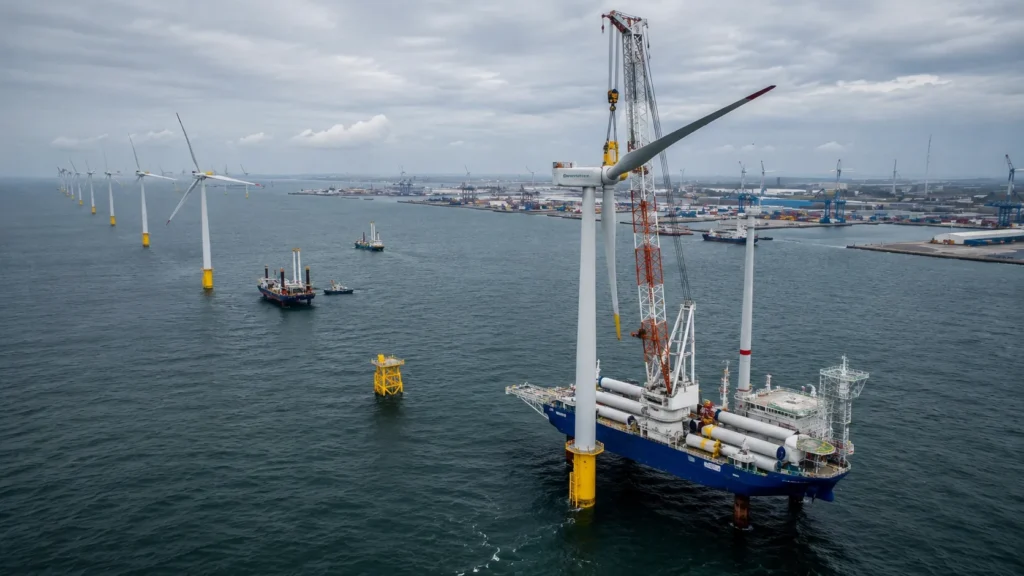
European offshore wind energy faces an estimated 40 GW deficit against the target of 120 GW of installed capacity planned for 2030, a gap that is beginning to generate concern among both project developers and the manufacturing industry associated with the sector. Delays in new awards, permits, and investment decisions could affect the pace of offshore wind capacity expansion in Europe and put pressure on a supply chain that has made significant investments to meet the energy targets for the next decade.
European Offshore Wind Energy: 40 GW Deficit Threatens Industry
Vinod Philip, head of Siemens Energy’s wind division, the unit until recently known as Siemens Gamesa, warned on June 11, 2026, in Hamburg that the European Union has a 40 gigawatt (GW) deficit against its target of 120 GW of installed offshore capacity by 2030. The executive warned that if governments do not quickly unblock delayed projects, the lack of orders could become an “existential threat” to the manufacturing sector. The central risk is not immediate electricity generation, but the loss of industrial capacity before contracts arrive.
Factories in the sector are currently operating at full capacity, but with a dwindling order book. “It is not yet an existential threat, but it could become one,” Philip stated. If the situation is not corrected, European plants will not close, but “we will probably have to scale them back in terms of resources,” the executive clarified. These cuts would materialize from 2028, when the current rate of contracting no longer feeds production lines.
European Offshore Wind Energy: 16 GW at Risk in Germany
Germany accounts for the largest risk pool: 16 GW of offshore wind energy projects are affected by regulatory delays, according to data cited by Philip to the media in Hamburg. Obstacles range from prolonged approval processes to deferred grid connections, creating financial uncertainty for operators who have already committed capital in early development phases. Several developers have reconsidered their level of activity in the German market for these reasons.
The problem is not exclusive to Germany. WindEurope estimates the cumulative delay across Europe at nearly 40 GW against the collective 2030 targets, with the main bottlenecks being permits and the ability of grid operators to absorb new generation. Adequate asset management in grid infrastructure is a structural factor that conditions the pace at which new farms can connect to the system.
€14 Billion Boost Offshore Supply Chain
In recent years, Europe has allocated billions of euros to strengthen the infrastructure needed to support the expansion of European offshore wind energy. Investments have covered new facilities for the manufacturing of blades, towers, foundations, and specialized components.
The modernization of ports, assembly areas, and logistical capabilities linked to offshore projects is also part of this effort. The goal is to ensure that the supply chain can respond to the sector’s projected growth by the end of the decade.
European Offshore Wind Energy and Industrial Policy
Philip’s public warning coincides with increasing pressure from WindEurope on the European Commission for member states to accelerate authorization procedures. The industry argues that regulatory delays, not technology or cost, are the main obstacle to meeting continental climate targets. A deterioration of the manufacturing industrial base in offshore wind would be difficult to reverse, given the time required to train specialized workers and qualify production facilities. Siemens Energy is holding direct talks with governments to unblock at-risk contracts, and the wind division continues to aim for operational balance in fiscal year 2026. The sector warns that without clear demand signals before 2027, investment decisions in new manufacturing capacity will be indefinitely blocked. This situation demands a coordinated political response at a European scale.