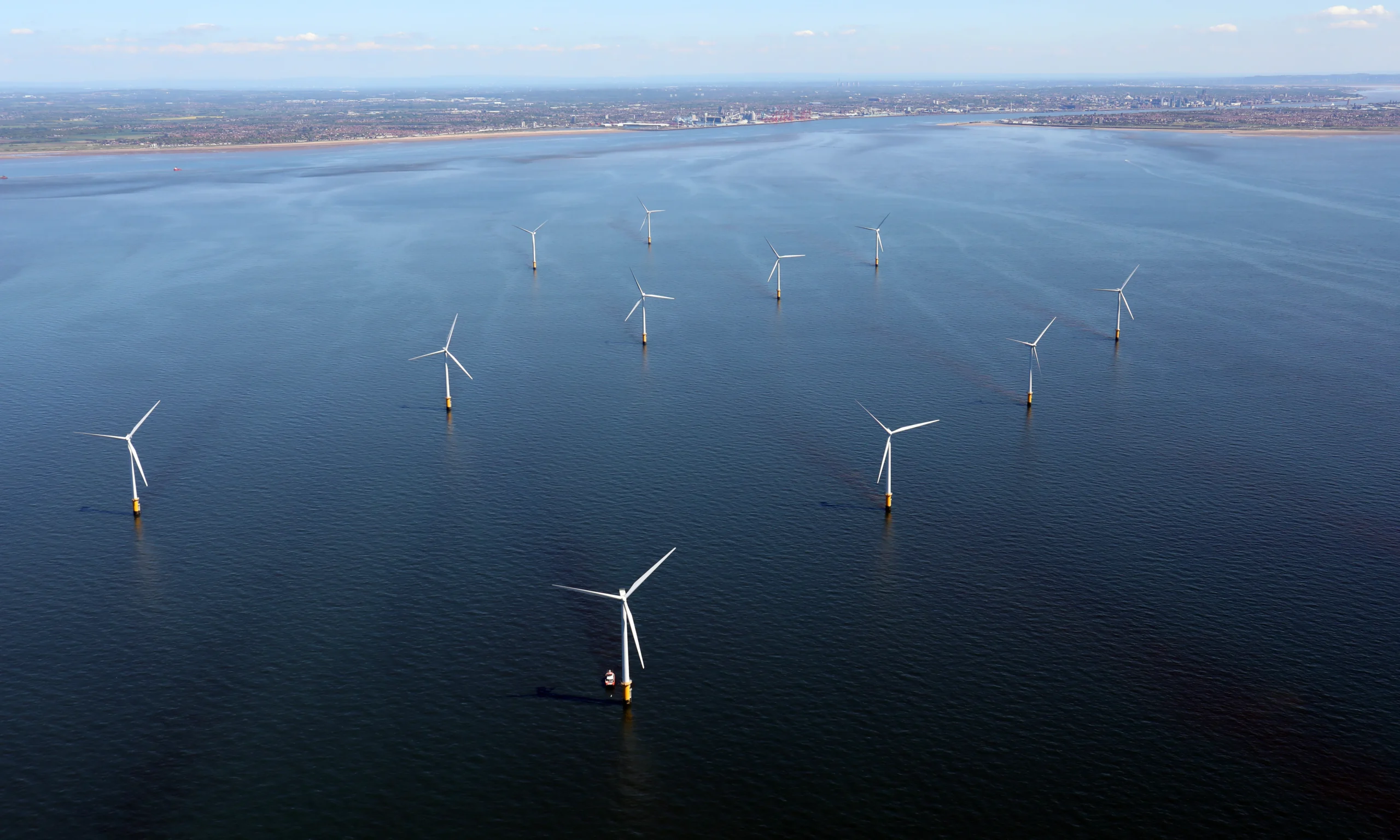
Sumitomo Corporation he joined Gwynt Glas as a partner of EDF power solutions UK & Ireland y ESB, in a offshore wind project up to 1.5 GW.
Sumitomo Corporation acquired a 33.3% stake in the Gwynt Glas floating offshore wind energy project located in the Celtic Sea off the coast of the United Kingdom, the deal makes the Japanese company an equal partner with EDF Power Solutions UK & Ireland and the Electricity Supply Board (ESB).
In this way, the three companies will each control approximately one third of the project, which includes the development, construction and operation of a floating wind farm with a planned capacity of up to 1.5 GW.
For Sumitomo, the operation also represents its first participation in a floating offshore wind energy project, after accumulating experience in the European offshore wind sector since its first investment in 2014.
Gwynt Glas will have up to 1.5 GW of capacity
The Gwynt Glas project is planned about 40 kilometers off the British coast in the Celtic Sea, an area where the depth of the water favors the development of floating wind technology over conventional fixed foundation solutions.
The incorporation of Sumitomo it modifies the shareholding structure of the project, EDF power solutions UK & Ireland, ESB and the Japanese company now have equivalent stakes of 33.3%.
For its part, DP Energy will continue to support the development of Gwynt Glas, including the early stages of implementation and engagement work with local communities.
The project secured a 1.5 GW seabed concession in The Crown Estate’s fifth floating wind energy leasing round. The lease agreement was subsequently signed in October 2025.
The project is progressing in its environmental assessment
While the new business structure is being strengthened, Gwynt Glas continues to move forward with the procedures necessary for its future construction.
In November 2025, the project selected Haskoning to lead the Environmental Impact Assessment (EIA) process. It also brought on NASH Maritime to develop the assessments related to navigation and maritime traffic.
During 2026, the developer submitted the environmental scoping report to the UK Planning Inspectorate, Natural Resources Wales and the Marine Management Organisation.
This procedure will allow defining the aspects that the environmental assessment must cover before moving forward with the application for the Development Consent Order (DCO) and the corresponding maritime licenses.
Furthermore, the project is planned as a Nationally Important Infrastructure Project, a condition associated with major energy and infrastructure developments in the United Kingdom.
Sumitomo enters floating offshore wind for the first time
The investment in Gwynt Glas expands Sumitomo’s presence in the offshore wind market, the company has been involved in European projects since 2014, although this operation represents its first direct entry into a development based on floating wind platforms.
The technology allows wind turbines to be installed in areas with deeper waters where structures fixed directly to the seabed present greater technical limitations.
Furthermore, Sumitomo considers the United Kingdom a strategic market within its energy business, in 2025, the company signed a memorandum of understanding with the British Investment Office to promote investment in the country.
The acquisition of the stake in Gwynt Glas is part of the initiatives linked to that agreement and to Sumitomo’s strategy to allocate resources to growth areas within its energy solutions business.
Gwynt Glas aims to operate in the late 2030
The development still needs to complete various environmental, technical, and regulatory phases before construction can begin. According to the schedule released by Sumitomo, consent applications are expected to start in 2028. Commercial operation of the floating wind farm it is expected by the end of the 2030s.
Likewise, the next stages will focus on field studies, public consultations, environmental assessment and the documentation required to obtain the permits.
With a projected capacity of up to 1.5 GW, Gwynt Glas is part of the development of floating offshore wind energy in British waters and plans to harness wind resources located in deep sea areas.
Fountain: OffshoreWIND
Foto: Shutterstock