Navitas Petroleum maintains the development of Sea Lion project and plans to begin drilling in 2027 with the goal of achieving first oil production during the first half of 2028.
The offshore project continues to progress toward production despite increased political tensions related to the Falkland Islands. According to Navitas Petroleum, recent events should not alter the planned development schedule for the field.
The company operates Sea Lion together with Rockhopper Exploration in the North Falkland Basin, the project contemplates a total estimated investment of $2.1 million until its development is complete.
Following the final investment decision (FID), the partners also secured the necessary financing to carry out the planned activities. From the FID to first oil production, the estimated investment amounts to approximately $1.8 million.
Navitas is keeping to the Sea Lion project schedule
Navitas it maintains that the operations are carried out under oil licenses granted by the Falkland Islands government and with the backing of the British government.
The company’s position comes after statements by Argentine President Javier Milei regarding hydrocarbon exploitation around the archipelago and Argentina’s historic sovereignty claim.
Despite this scenario, the project partners believe that the political tensions will not have a significant impact on the planned activities.
Argentina maintains its claim of sovereignty over the Falkland Islands, while the United Kingdom continues to administer the archipelago as a British Overseas Territory. This dispute adds a geopolitical dimension to the development of Sea Lion as the project nears its operational phase.
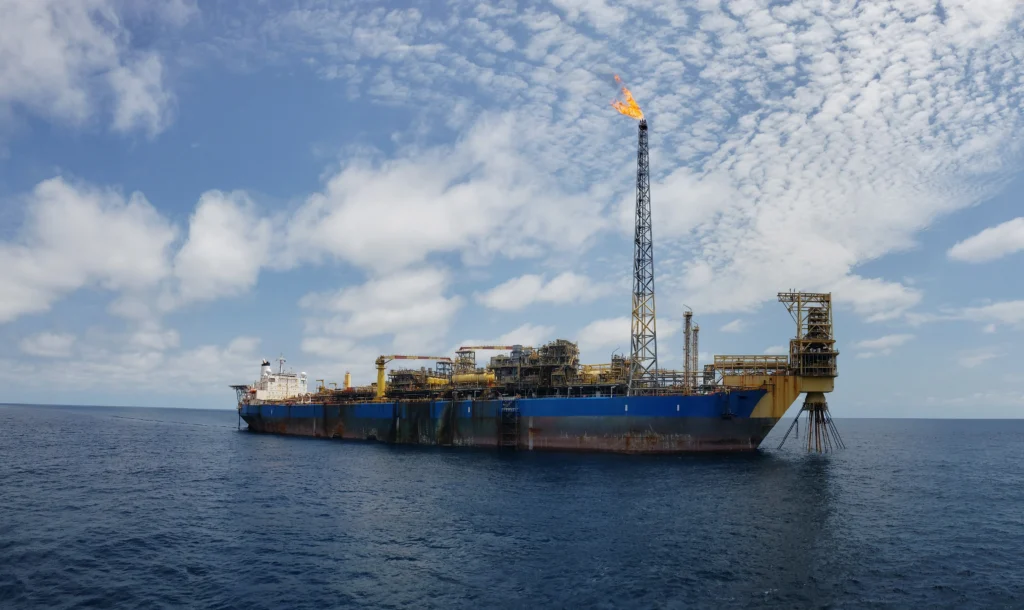
The FPSO Aoka Mizu will produce up to 55,000 barrels per day
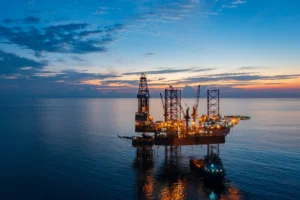
In technical terms, the first two phases of the project will utilize the floating production, storage and offloading unit Aoka Mizu.
The FPSO will have the capacity to produce around 55,000 barrels of oil per day (bpd) and will be one of the main components of Sea Lion’s offshore infrastructure.
Furthermore, the planned location for the Aoka Mizu modernization works was moved from Middle East to Asia due to the conflict in Iran.
This type of unit allows the processing of hydrocarbons extracted from underwater wells and the temporary storage of crude oil before transferring it to oil tankers for transport.
Sea Lion is located approximately 220 kilometers north of the Falkland Islands and its development includes different phases of underwater drilling and production.
A second FPSO would expand Sea Lion capacity
Navitas also seeks to accelerate the next stages of the project by incorporating a second floating production unit. The company initially signed a memorandum of understanding to acquire another FPSO and subsequently exercised an option to purchase the OSX-1.
This unit could add around 125,000 barrels per day production capacity, which would considerably expand the scale of the project in its later phases.
The strategy would allow for additional infrastructure to progressively develop the resources of the field once the first stages of Sea Lion are completed.
The expansion plans are aligned with the long-term potential of the project, the documents analyzed contemplate a phased development and a productive life that could exceed 30 years.
First oil production expected in 2028
The next significant event on the schedule will be the start of drilling, Navitas and Rockhopper plan to begin this work in early 2027, while the first production corresponding to Phase 1 is scheduled for the first half of 2028.
The project has already overcome one of its main financial barriers after reaching the final investment decision and securing the necessary funds to carry out its initial development.
From now on, attention will increasingly focus on infrastructure implementation, the preparation of the floating units, and the drilling of underwater wells.
Tensions between Argentina and the United Kingdom will continue to be part of the political context surrounding Sea Lion. However, Navitas and Rockhopper are maintaining, for now, the technical timeline that should take the project from its current development stage to commercial oil production in 2028.
Source: Offshore Energy
Photo: Shutterstock