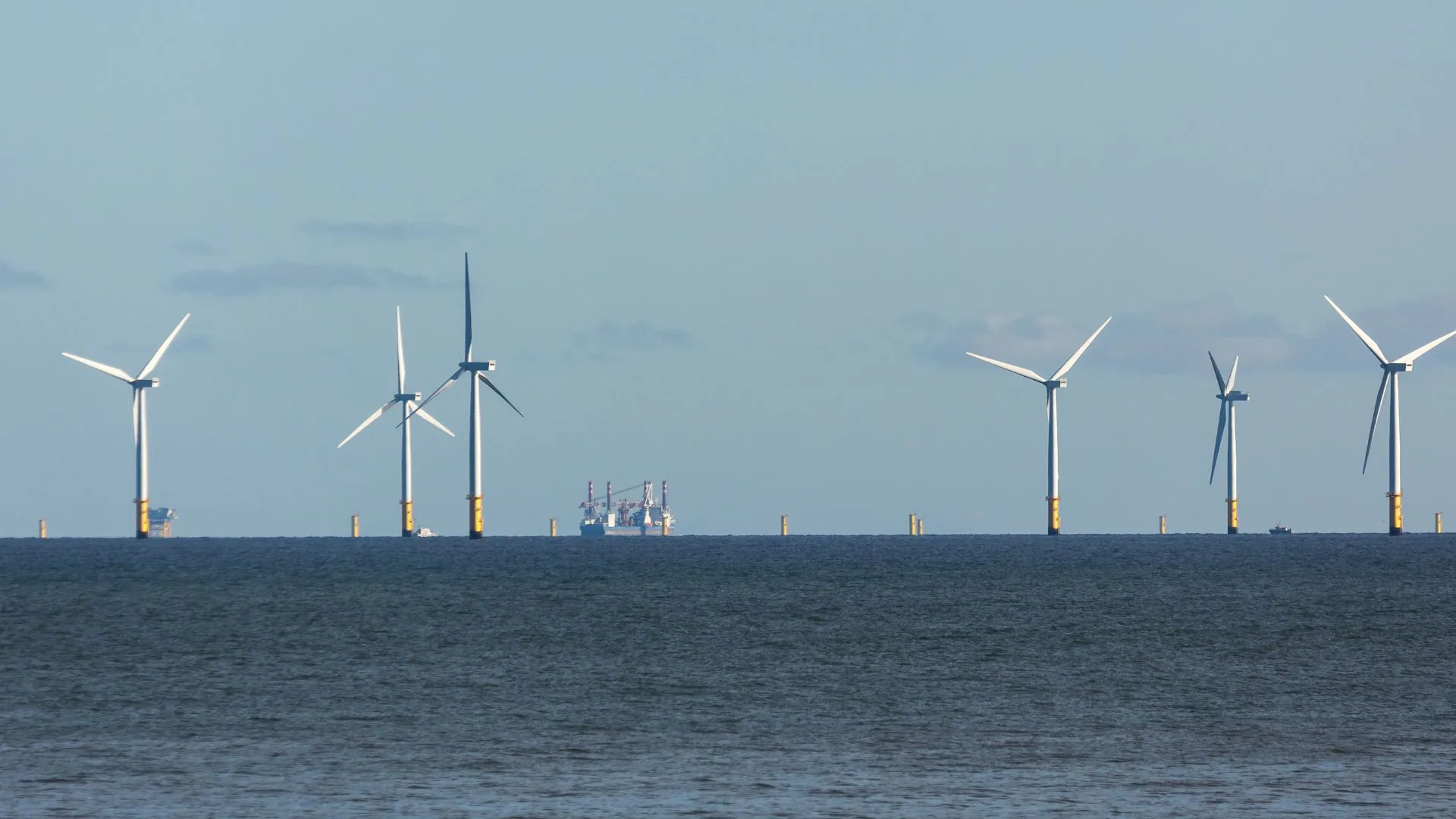
The 2 GW Caledonia offshore wind farm was authorized by the Scottish Government, which granted the marine licenses and necessary permits to develop the Caledonia North and Caledonia South projects. With an installed capacity of up to 2 GW, the complex will be able to supply renewable electricity to nearly two million homes each year.
The approval of the Caledonia North and Caledonia South offshore wind farms marks a new milestone for offshore wind energy development in Scotland. Both projects, promoted by Ocean Winds, will be located in the Moray Firth and will occupy an approximate area of 429 km² with a combined maximum of 140 wind turbines. According to the authorizations granted by the Scottish Government, each installation will have a planned capacity of 1 GW, which will enable a total capacity of 2 GW aimed at strengthening renewable electricity generation and supporting the country’s decarbonization objectives.
Investment to Strengthen the Supply Chain
In addition to the energy impact, Ocean Winds announced an investment of £1.7 billion in Scotland through its Supply Chain Development Statement.
The investment will boost engineering activities, manufacturing, port infrastructure, and maritime operations. It will also promote the creation of permanent jobs linked to the operation and maintenance of the wind farms once they become operational.
Caledonia South Will Incorporate Floating Wind Technology
The Caledonia South project will combine fixed foundations with floating structures. Up to 39 of its wind turbines may be installed using floating technology, a solution that expands the possibilities for harnessing wind resources in deeper waters.
This configuration will contribute to the development of the floating wind industry and strengthen Scotland’s positioning within one of the fastest-growing segments in the energy transition.
Environmental Protection Will Be a Requirement to Proceed
The authorizations include environmental conditions that Ocean Winds must fulfill before construction begins. These include the preparation of a specific plan to offset potential impacts on seabirds, as well as measures aimed at minimizing effects on the ecosystem and other users of the maritime space. These plans must receive approval from Scottish ministers before the final development of Caledonia North and Caledonia South.
Scottish Government Highlights Contribution to Energy Transition
Scotland’s First Minister, John Swinney, stated that the authorization represents an important step toward achieving net-zero emissions and strengthening the national renewable energy sector.
He also noted that the Government will continue to collaborate with Ocean Winds, the fishing sector, and conservation organizations to balance the development of offshore wind energy with the protection of the marine environment and the interests of coastal communities.
Caledonia Offshore Wind Farm Infrastructure
Caledonia North will be located approximately 28 kilometers off the coast of Wick and 48 kilometers from Banff. It will feature up to 77 fixed-foundation wind turbines and a planned capacity of 1 GW. Caledonia South will be situated approximately 45 kilometers from Wick and 35 kilometers from Banff. It will incorporate a combination of fixed-foundation and floating wind turbines with up to 78 units, not exceeding a combined total of 140 turbines between both developments.
The applications were supported by environmental impact studies and public consultation processes conducted in accordance with current regulations. With this decision, Caledonia North and Caledonia South become the second set of projects from the ScotWind program to obtain marine authorization from the Scottish Government. The information is consistent with the official communication from the Scottish Government and the technical documentation of the project developed for Ocean Winds.
Source: Scottish Government
Photo: Shutterstock


