Table of Contents
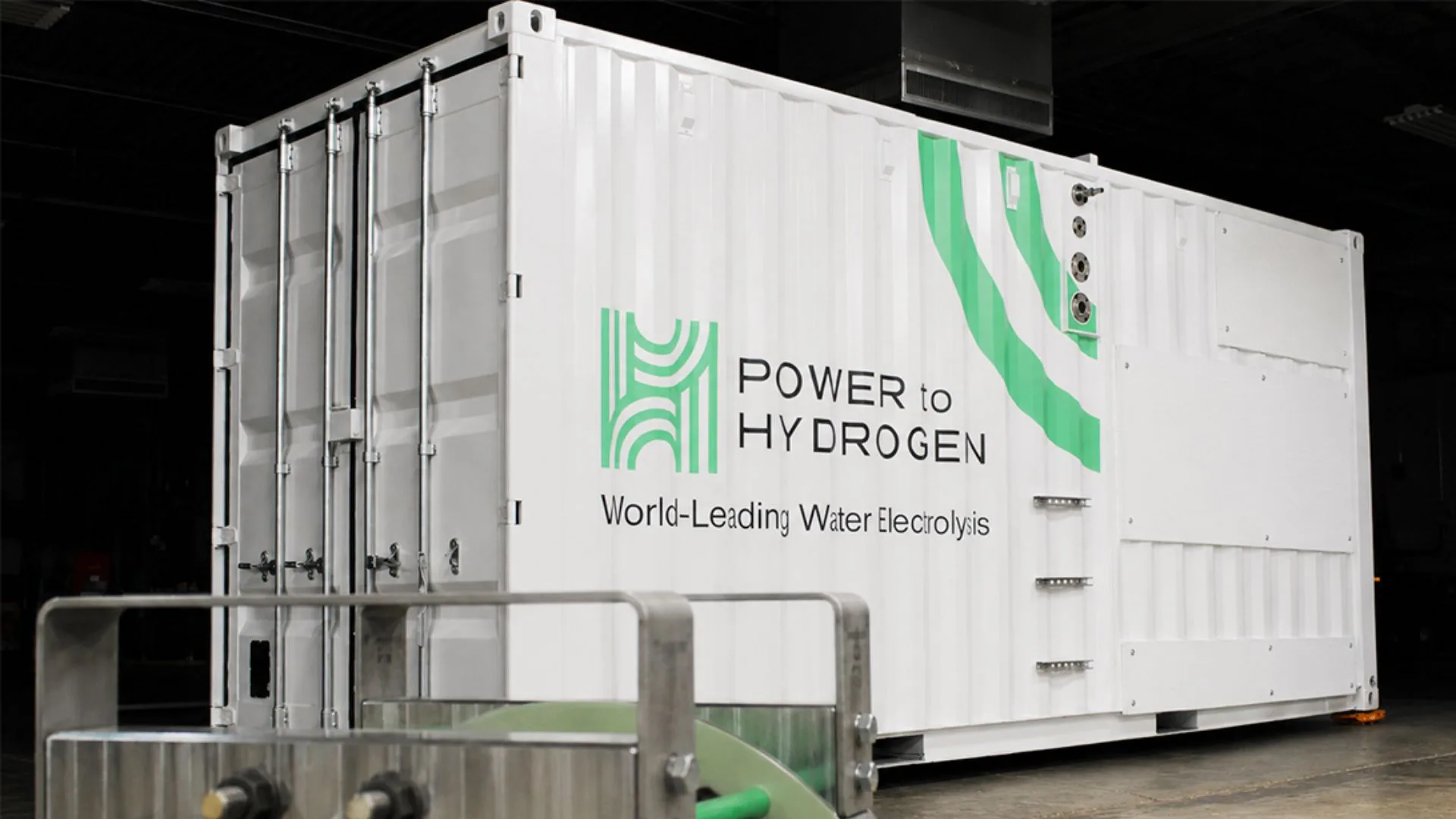
Energy company Repsol and technology firm Power to Hydrogen have completed validation of a commercial-scale AEM electrolyzer following trials at the All4Zero innovation center. Consequently, the equipment exceeded 1,250 hours of parametric and durability testing under simulated load profiles.
Technical Evaluation of AEM Electrolysis at the All4Zero Center
Measurements recorded irreversible degradation of approximately 2 mV/kHr during the test period, maintaining cell voltage practically constant. Thus, technical projections estimate a service life exceeding 50,000 hours, a figure that surpasses current AEM technology standards by five to ten times.
Likewise, the stack generated hydrogen with purity up to 99.9% at 30 bar operating pressure directly. This system demonstrated high dynamic flexibility through continuous cycles between 40% and 100% load, while maintaining total resilience to unscheduled electrical interruptions.
Consequently, projections based on the U.S. Department of Energy’s H2A-Lite framework place the levelized cost of hydrogen at €3.86/kg. This figure represents an approximate 16% reduction compared to conventional electrolysis systems.
Additionally, in optimized scenarios with hybrid renewable supply, production cost could be reduced to €2.82/kg. This value brings the technology closer to the economic competitiveness levels necessary for mass adoption in industrial sectors.
The electrolyzer architecture is notable for being free of iridium and PFAS substances. Therefore, the technology eliminates dependence on critical minerals and reduces regulatory restrictions associated with proton exchange membrane systems.
Consequently, the results obtained pave the way for larger-scale demonstration projects, projected between 500 kW and several megawatts. This advancement is critical to Repsol’s goal of achieving between 600 and 800 MW of renewable hydrogen capacity by 2030.
Furthermore, Dr. Paul Matter, founder of Power to Hydrogen, mentioned that the tests confirm performance comparable to PEM technology with a lower cost structure. Complementarily, Berta Moreno, scientist at Repsol, noted that the data validate the progress necessary for industrial deployment of renewable hydrogen.
In this way, the technology firm is advancing implementation of commercial-scale projects at the Port of Antwerp-Bruges and at the SINTEF center in Norway.
Source and photo: Power to Hydrogen