Table of Contents
- Wind energy in South Africa drives a new generation of hybrid renewable projects
- The first phase features next-generation wind technology
- The complex will reach 900 MW of renewable capacity
- Mining is accelerating South Africa's energy transition
- Wind energy in South Africa strengthens the country's energy transition
Wind energy in South Africa continues to gain momentum as one of the country’s key pillars for the energy transition. The growing need to strengthen electricity security, reduce dependence on thermal power generation, and meet the increasing demand from energy-intensive industries is driving the development of large-scale renewable projects that combine wind power, solar energy, and battery storage.
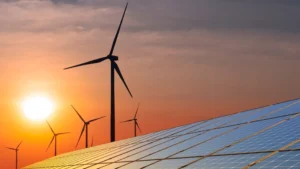
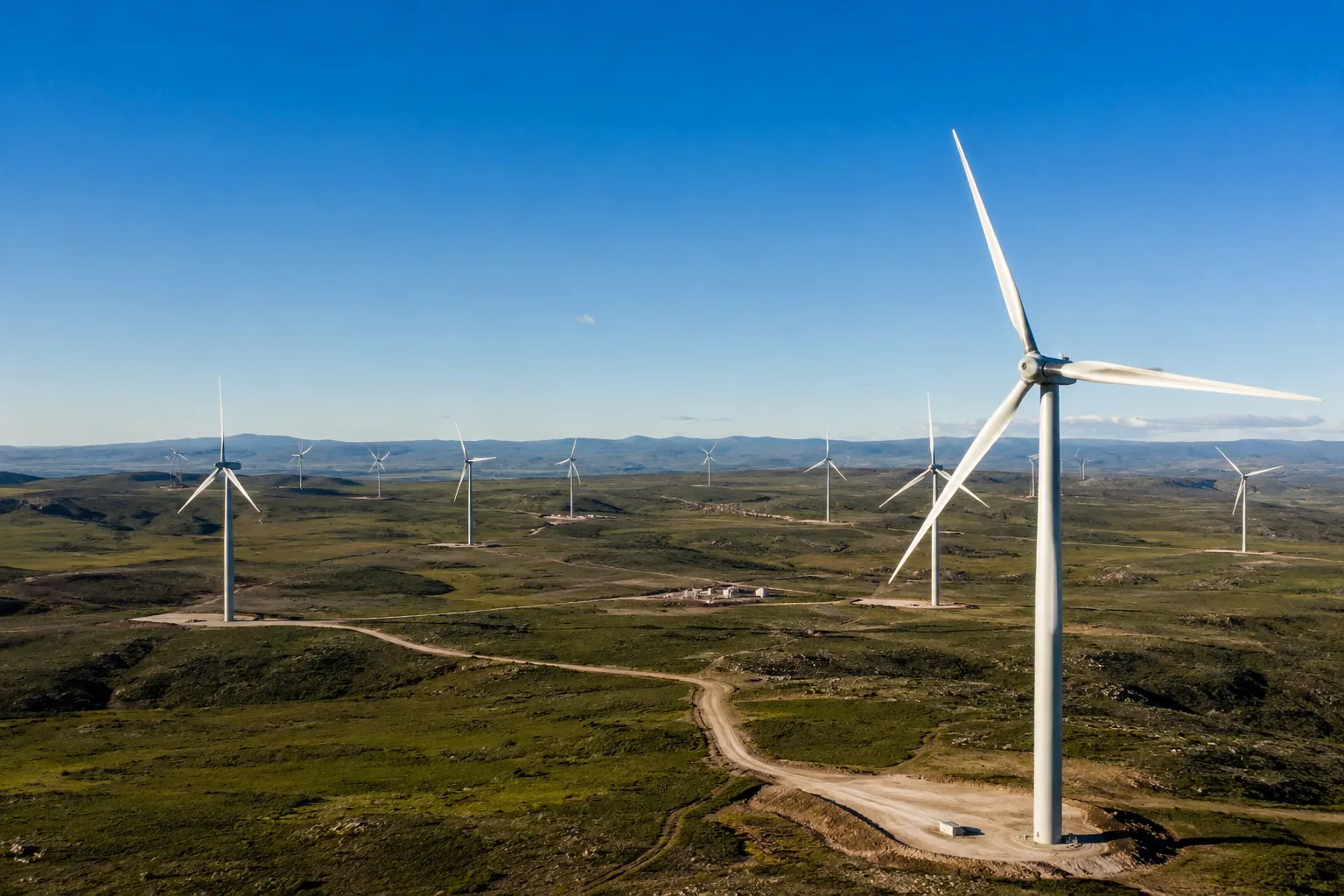
In this context, the first phase of the Ummbila Emoyeni Wind Farm has entered commercial operation. With an installed capacity of 155 MW, it marks the beginning of the largest wind energy cluster developed in South Africa to date. The facility is part of a 900-MW hybrid renewable complex promoted by Seriti Green, which will integrate 750 MW of wind power, 150 MW of solar generation, and 800 MWh of energy storage, making it one of the largest renewable energy investments on the African continent.
Wind energy in South Africa drives a new generation of hybrid renewable projects
South Africa’s renewable energy market is evolving toward projects capable of integrating multiple generation technologies within a single energy infrastructure. This model is designed to improve supply reliability, maximize the use of natural resources, and reduce the variability typically associated with renewable energy sources.
The incorporation of battery energy storage systems complements both wind and solar generation, providing greater operational flexibility and improving the ability to respond to fluctuations in electricity demand.
The Ummbila Emoyeni complex represents this new trend by combining renewable generation and energy storage within a single energy platform designed to deliver a stable electricity supply to one of South Africa’s most important industrial sectors.
The first phase features next-generation wind technology
The initial phase of the project was developed by Seriti Green, the renewable energy division of Seriti Resources, and is located in Mpumalanga Province.
The facility is equipped with 25 Goldwind GWH182-6.2 MW wind turbines, featuring 183.5-meter rotor diameters, a configuration designed to maximize energy capture under varying wind conditions.
The first phase is expected to generate approximately 480,000 MWh of electricity per year, enough to supply the annual electricity demand of around 500,000 households.
However, the electricity generated will primarily support Seriti’s coal mining operations through a wheeling agreement with South Africa’s national utility Eskom, allowing renewable electricity to be transmitted through the existing grid directly to the company’s industrial facilities.
The complex will reach 900 MW of renewable capacity
The commissioning of the first phase marks only the beginning of the full development of the Ummbila Emoyeni complex.
Once completed, the project will include:
- 750 MW of wind generation
- 150 MW of solar photovoltaic capacity
- 800 MWh of battery energy storage
Construction of the second and third phases is currently underway, with full completion scheduled for 2027.
In addition, Goldwind confirmed the signing of a new cooperation agreement to develop the fourth phase of the project, further expanding the technological partnership between the two companies.
The combination of renewable generation and battery storage will optimize the use of the electrical infrastructure while improving energy availability throughout different operating periods.
Mining is accelerating South Africa’s energy transition
One of the project’s most significant aspects is the role of the mining sector as a driver of new renewable energy investments.
Mining remains one of the largest industries of electricity-consuming in South Africa, where limitations in the national power system and rising energy costs have encouraged many companies to develop their own clean energy generation projects.
This approach enables mining companies to reduce exposure to power supply interruptions, lower operating costs, and advance their decarbonization objectives without compromising business continuity.
Wheeling agreements through Eskom’s transmission network are also becoming an increasingly important mechanism for enabling renewable electricity supply between independent power producers and large industrial consumers.
Wind energy in South Africa strengthens the country’s energy transition
The commissioning of the first phase of Ummbila Emoyeni highlights the transformation taking place within South Africa’s energy system, where renewable developments are evolving into hybrid complexes capable of integrating wind power, solar generation, and battery storage within a single infrastructure.
Beyond expanding renewable generation capacity, projects of this type strengthen energy security, support the decarbonization of strategic industrial sectors, and demonstrate the growing importance of private electricity supply agreements in accelerating the energy transition.
With additional phases currently under construction and a planned total capacity of 900 MW, Ummbila Emoyeni is emerging as one of Africa’s most significant renewable energy projects and a benchmark for future hybrid developments designed to supply large industrial consumers with low-carbon electricity.
Sources: Renewables Now