Continuous monitoring: the evolution of corrosion management in industry
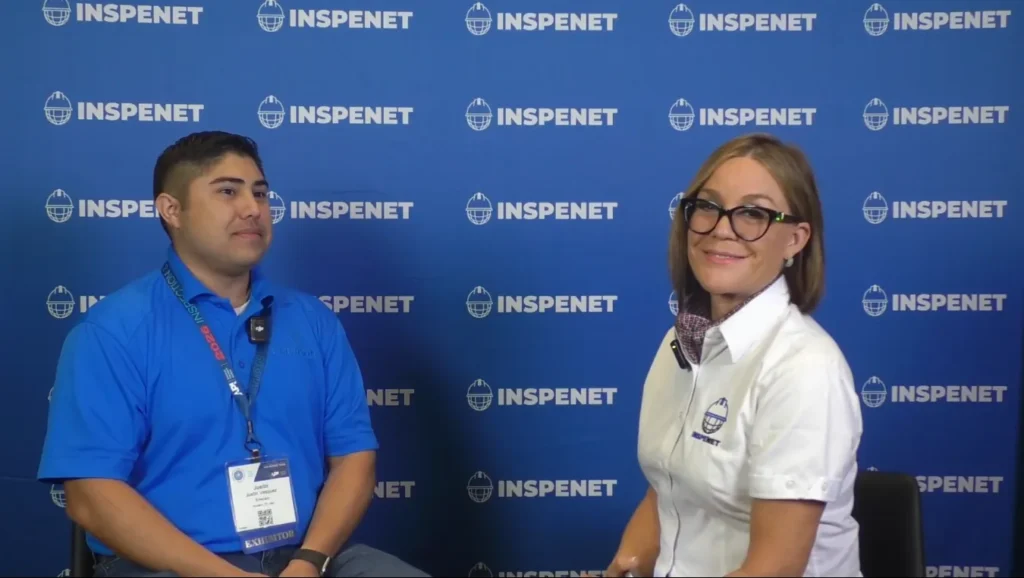
Continuous monitoring is playing an increasingly important role in managing the integrity of industrial assets. In an environment where facility availability and operational safety are top priorities, having constant access to information on the condition of pipelines and equipment allows for more informed decision-making and optimized inspection programs. During API Summit 2026, Justin Vazquez, Senior Business Development Manager at Emerson, explained how the combination of measurement technologies, advanced analytics, and artificial intelligence is changing the way the industry approaches corrosion control.
Continuous monitoring transforms asset management
Corrosion remains a major challenge for the oil and gas, petrochemical, and process industries. Detecting pipe wall thinning early can prevent unplanned interventions, reduce maintenance costs, and improve facility reliability.
In this scenario, continuous monitoring provides constant data on the condition of assets instead of relying solely on periodic inspections. As Vazquez explained, this approach makes it easier to understand how corrosion processes evolve and provides a much more comprehensive view for assessing the risks associated with each installation.
Emerson develops instrumentation and measurement technologies designed to help operators better understand their processes. Their offerings include flow instrumentation, corrosion monitoring, and analytics platforms that transform large volumes of data into actionable insights for decision-making.
Ultrasonic sensors to determine the actual condition of the pipes
One of the highlights of the interview was the role of non-intrusive ultrasonic sensors in continuously monitoring pipe thickness.
Unlike other technologies, these sensors remain installed on the outer surface of the pipe and take continuous measurements without requiring direct intervention in the process. This configuration allows for highly accurate monitoring of material loss.
Justin Vazquez pointed out that current systems are capable of detecting variations on the order of one micron. To achieve this level of resolution, the technology is not limited to measuring the thickness of the metal. It also analyzes parameters such as temperature and the shape of the ultrasonic wave, factors that allow for differentiating changes caused by corrosion from other variations inherent to operating conditions.
This processing of information improves the quality of measurements and provides a more reliable representation of the actual state of the infrastructure.
The combination of technologies offers a more complete view
The conversation also addressed the importance of using different monitoring methods together.
Intrusive technologies allow for the determination of the aggressiveness of the process fluid using probes installed in direct contact with the medium. Non-intrusive ultrasonic systems, on the other hand, show how the pipe wall thickness actually changes over time.
Far from competing with each other, both solutions provide complementary information; while one helps to understand the behavior of the process from a chemical point of view, the other confirms what the effect is on the physical asset.
This combination provides a more complete picture of the corrosion phenomenon and makes it easier for integrity managers to validate predictive models with data obtained directly in the field.
Continuous monitoring strengthens RBI strategies
Another key message of the interview was the relationship between continuous monitoring and Risk Based Inspection (RBI) methodologies.
Vazquez explained that the installation of permanent sensors should be based on a prior risk analysis. It is not necessary to monitor every point of an installation continuously. The greatest value is obtained when sensors are placed in areas where a loss of thickness would have the greatest impact on safety, availability, or operating costs.
This approach allows for better use of resources allocated to inspection and maintenance. Furthermore, the information obtained continuously can be incorporated into the RBI models to update risk assessments with real data instead of relying solely on estimates.
As a result, organizations can review their inspection plans more frequently and adapt their strategies as operating conditions evolve.
From data to decision through advanced analytics
The integration of permanent sensors generates an increasing amount of data. Without the right tools, converting that data into useful knowledge can be a challenge for technical teams.
For this reason, Emerson is committed to integrating predictive analytics capabilities that allow it to identify trends, detect anomalies, and present information in a way that is understandable to the specialists in charge of asset management.
The goal is not only to store measurements, but to offer indicators that facilitate decision-making regarding inspections, maintenance, or component replacement before more significant problems arise.
This approach also helps to reduce the uncertainty associated with the evolution of corrosion and improves the planning of interventions.
Artificial intelligence will be an ally for specialists.
The development of artificial intelligence was another topic addressed during the interview.
As Justin Vazquez explained, these tools will play an increasingly important role in interpreting the large volumes of data generated by continuous monitoring. However, he believes their primary function will be to assist professionals and accelerate data analysis, while always maintaining oversight by experienced specialists.
Artificial intelligence can identify complex patterns, detect anomalous behavior, and prioritize situations requiring immediate attention. This gives engineers more time to evaluate scenarios and define the most appropriate actions for each installation.
This model of collaboration between people and intelligent systems will allow for better use of available information without replacing the technical knowledge accumulated by integrity teams.
A new way of managing industrial integrity
Continuous monitoring technologies are progressively changing how companies manage corrosion and plan their inspection programs. The availability of constant information, combined with intrusive and non-intrusive sensors, provides a more accurate view of asset condition and facilitates data-driven decision-making.
Justin Vazquez's statements during API Summit 2026 reflect a trend that is gaining traction in the sector: integrating advanced instrumentation, analytics, and artificial intelligence to better understand the behavior of facilities throughout their lifecycle.
As these tools continue to evolve, Emerson believes that continuous monitoring will continue to solidify its position as an essential element for improving asset integrity management, optimizing risk-based inspection strategies, and providing higher-quality information to address the industry's operational challenges.
For more content about API Summit 2026, visit our LinkedIn profile.
Source: Inspenet.