Table of Contents
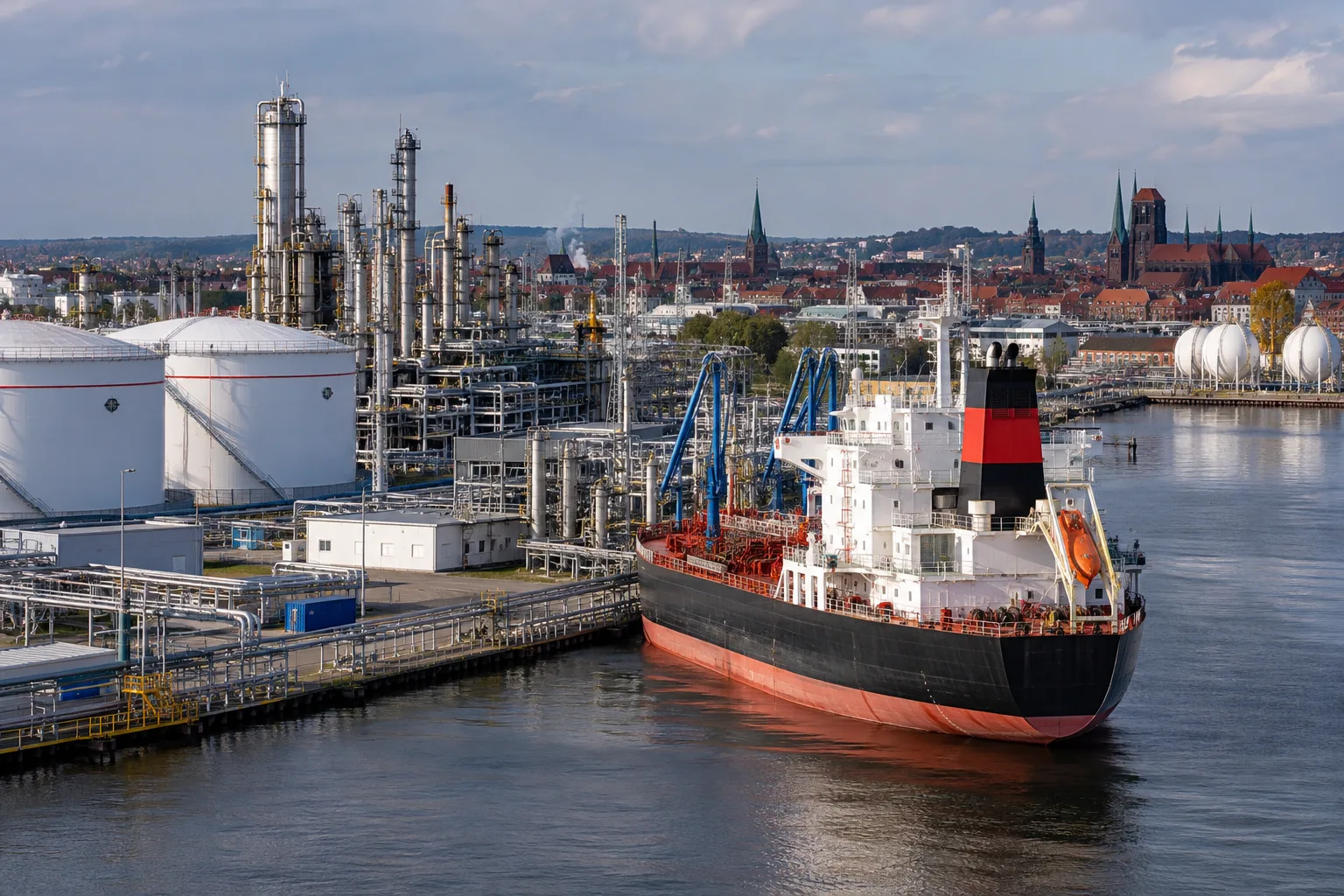
ORLEN’s transshipment terminal has officially commenced operations alongside the company’s refinery in Gdańsk, Poland, marking another milestone in the modernization of the group’s energy infrastructure. The new facility will enable the direct loading and unloading of feedstocks and refined petroleum products between vessels and the refinery, eliminating the need for intermediate transportation while improving the overall logistics efficiency of the industrial complex.
Beyond the commissioning of a new port facility, the project highlights the growing strategic importance of specialized terminals within Europe’s energy supply chain. At a time when refineries are seeking to reduce costs, increase operational flexibility, and adapt to a more diversified energy mix, this type of infrastructure is becoming a key asset for maintaining the sector’s competitiveness.
ORLEN’s transshipment terminal optimizes the supply chain
For decades, a significant share of the logistics operations at many refineries relied on systems requiring multiple transportation stages between marine terminals, storage facilities, and processing plants. Every additional transfer resulted in longer operating times, higher logistics costs, and increased risks associated with handling crude oil and refined petroleum products.
The new ORLEN transshipment terminal changes this model by directly connecting maritime operations with the Gdańsk refinery. Thanks to this integration, the complex will reduce intermediate handling, streamline the movement of feedstocks and finished products, strengthen operational continuity, and improve the efficiency of the entire supply chain.
The facility was initially designed to handle approximately 500,000 tonnes of products during its first year of operation, while its maximum annual throughput capacity is expected to reach between 1.8 and 2 million tonnes, making it one of the group’s key logistics hubs.
Gdańsk expands its capacity for fuels and biofuels
The terminal features a 380-meter quay equipped with two berths capable of simultaneously handling vessels of up to 10,000 deadweight tonnes (DWT). Each berth has a transfer capacity of approximately 500 cubic meters per hour, enabling a high operational throughput for a wide range of products.
Planned exports include Group I and Group II base oils, used in the production of industrial and automotive lubricants; low-sulfur marine gas oil for the maritime sector; and xylene for chemical applications.
Conversely, the infrastructure will facilitate the import of feedstocks used in the production of lower-carbon fuels, including FAME, UCOME, ethanol, MTBE, and ETBE, all of which are widely used in the formulation of biofuels and higher-octane gasoline blends.
This ability to simultaneously handle petroleum products and renewable feedstocks reflects the evolution of modern refineries, which no longer operate exclusively as fossil fuel processing facilities but also serve as integrated platforms for both conventional and lower-carbon fuels.
The investment strengthens ORLEN’s industrial competitiveness
The project required an investment of nearly PLN 500 million, equivalent to approximately USD 134 million, and involved significant participation from Polish companies throughout its development.
In addition to reducing logistics costs, the new infrastructure provides greater flexibility to respond to changes in fuel demand and facilitates the planning of imports and exports without relying on additional internal transportation processes.
Optimizing these operations also helps improve the utilization of the refinery’s installed capacity, reduce vessel turnaround times, and increase the overall efficiency of the industrial complex.
In an energy market characterized by high volatility, having infrastructure capable of accelerating the movement of products represents a competitive advantage for both operators and customers.
ORLEN combines energy infrastructure with the renewable transition
The inauguration of the terminal coincides with another strategic initiative announced by ORLEN: the acquisition of a 216 MW hybrid renewable energy project that will combine solar and wind generation in the Polish municipality of Kazimierz Biskupi.
The development includes the construction of a 180 MW solar photovoltaic farm and a 36 MW wind farm, both of which are scheduled to begin commercial operations in 2028.
Together, these projects reflect the company’s strategy of maintaining investments in both liquid fuels infrastructure and renewable energy assets, reinforcing a more diversified energy portfolio.
The combination of solar and wind facilities will enable more efficient use of the grid connection infrastructure, reduce variability associated with weather conditions, and improve the stability of electricity supply.
ORLEN’s transshipment terminal reinforces Gdańsk’s strategic role
The commissioning of this new infrastructure confirms that investments in logistics continue to play a fundamental role in the evolution of energy sector of Europe. Beyond the continued growth of renewable energy, refineries will still require systems capable of moving large volumes of feedstocks and refined products efficiently, safely, and competitively.
ORLEN’s transshipment terminal demonstrates how the modernization of port infrastructure can improve operational efficiency, reduce logistics costs, and strengthen supply chain resilience. At the same time, combining this investment with new renewable energy projects illustrates how energy companies are advancing toward business models in which traditional infrastructure and the energy transition evolve in a complementary manner, reinforcing long-term energy security and industrial competitiveness.