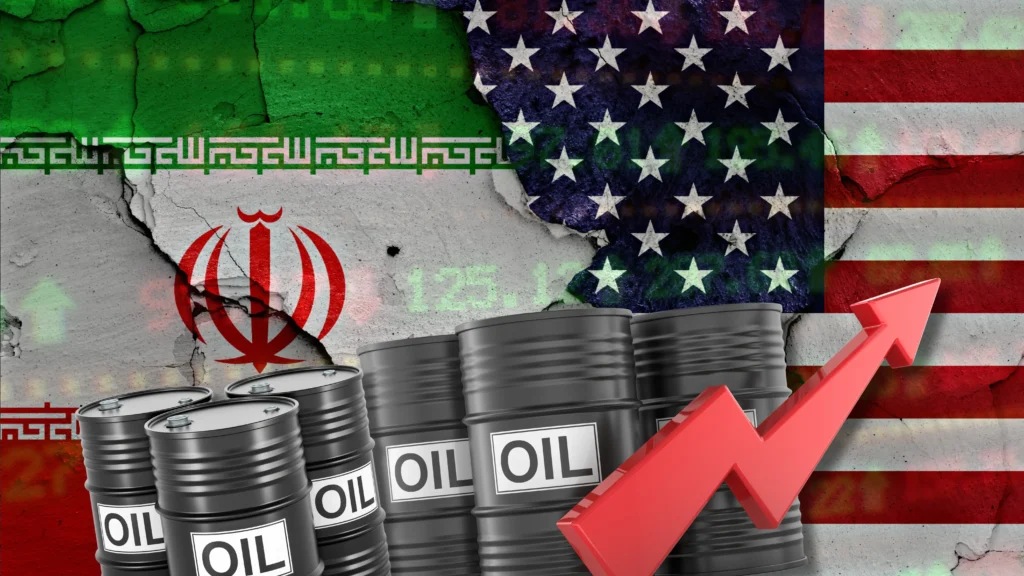
Oil pricesThey maintained their advance during Wednesday’s Asian operations amid continued hostilities between the United States and Iran and increased threats to crucial maritime routes for energy trade.
Brent crude oil it was trading at $92.44 per barrel, up 1.57%, while the West Texas intermediate reached $85.51, a gain of 1.39%. Both benchmarks were at five-week highs after maintaining an upward trend since the beginning of July.
Military operations increase pressure on crude oil
First, the market reacted to another day of US attacks on Iranian targets, the strikes marked eleven consecutive nights of military action and kept the focus on Iran’s ability to disrupt commercial shipping.
According to U.S. Central Command, U.S. forces targeted military operations centers, maritime assets, hangars, drone depots, and logistical infrastructure. The stated objective was to reduce Iran’s ability to threaten ships transiting the region.
For its part, CENTCOM maintains that Iran has attacked more than 30 commercial vessels in the last three months. Although the agency asserts that shipping routes remain open, operators and insurers are closely monitoring the actual risk to oil tankers.
Hormuz and Bab el-Mandeb concentrate the maritime risk
Furthermore, the Strait of Hormuz it remains one of the main sources of tension; the area represents a strategic route for exports from Gulf producers, and any reduction in traffic could raise logistics costs, insurance premiums, and the price of a barrel of oil.
At the same time, attention shifted towards Bab el-Mandeb the Houthi movement in Yemen, backed by Iran, threatened to attack ships carrying Saudi oil through this passage that connects the Red Sea with the Gulf of Aden.
Saudi Arabia has increasingly turned to Red Sea routes due to the risks in the Strait of Hormuz, a simultaneous disruption in both corridors would limit the available alternatives for transporting crude oil from the Gulf to Europe and other markets.
As a sign of caution, three Saudi oil tankers changed course in the Red Sea after the Houthis announced a blockade against the kingdom’s oil shipments crossing Bab el-Mandeb.
Oil prices on alert due to lack of dialogue
Likewise, the political statements reduced expectations of an immediate détente, the President Donald Trump he indicated that military operations could intensify and stated that the United States has no interest at this time in resuming negotiations.
The lack of a clear diplomatic solution is maintaining a risk premium on oil futures, for the market, the effect depends not only on an actual supply disruption, but also on the possibility of further attacks, changes in shipping routes, and increased marine insurance costs.
Therefore, prices may continue to react strongly to news from Hormuz, Yemen, the Red Sea and other energy transit points.
US inventories offer mixed signals
On the other hand, the latest data from American Petroleum Institute they showed an increase in crude oil and distillate stocks in the United States. Gasoline reserves decreased during the same period.
This behavior offers a mixed reading for the physical market; an increase in crude oil inventories may limit some of the upward pressure, while a gasoline price drop may reflect a stronger demand.
Official figures from the Energy Information Administration will allow for a more accurate assessment of the balance between supply and consumption in the United States.
As long as hostilities continue and the risk to shipping lanes persists, oil prices will remain sensitive to any military, diplomatic, or logistical changes in the Middle East.
Source: Sg.finance.yahoo
Photo: Shutterstock