LNG investments are redefining the strategy of the world’s leading energy and maritime companies. Beyond acquiring new LNG carriers or expanding liquefaction terminals, companies are increasingly seeking direct participation across the entire liquefied natural gas value chain, integrating production, marketing, and transportation to strengthen supply security and respond to an increasingly diversified global demand.
This trend is reflected in the decision by Japanese shipping company NYK Line to become an investor in MidOcean Energy, a United Kingdom-based LNG company managed by the U.S. investment firm EIG. The transaction, which also includes a strategic partnership for LNG marine transportation, illustrates how industry players are building more integrated business models to navigate an energy market shaped by geopolitical uncertainty, expanding international trade, and the transition toward lower-carbon energy systems.
LNG investments expand the value chain
Over the past decade, the liquefied natural gas market has evolved from a business model centered primarily on supply agreements to an ecosystem in which participants seek to control multiple stages of the value chain. Producers, marketers, logistics providers, and shipping companies are increasing their presence in strategic assets to reduce risk, secure transportation capacity, and enhance the competitiveness of their portfolios.
In this context, LNG investments are no longer limited to production and liquefaction projects. They also include port infrastructure, export and import terminals, LNG bunkering services, LNG carriers, and companies specializing in the international marketing of liquefied natural gas.
This vertical integration allows companies to optimize coordination across the supply chain, providing greater flexibility to respond to regional demand shifts and fluctuations in the global energy market.
NYK strengthens its strategy with MidOcean Energy
As part of this strategy, NYK announced its participation in an investment in MidOcean Energy, a United Kingdom-based LNG company established and managed by EIG, one of the world’s leading institutional investors specializing in energy and infrastructure.
The investment will be made through Diamond Gas MidOcean Limited (DGMO), a company established by Mitsubishi Corporation in 2023. Following the completion of the transaction and the required regulatory approvals, DGMO is expected to be jointly operated by Mitsubishi Corporation and NYK.
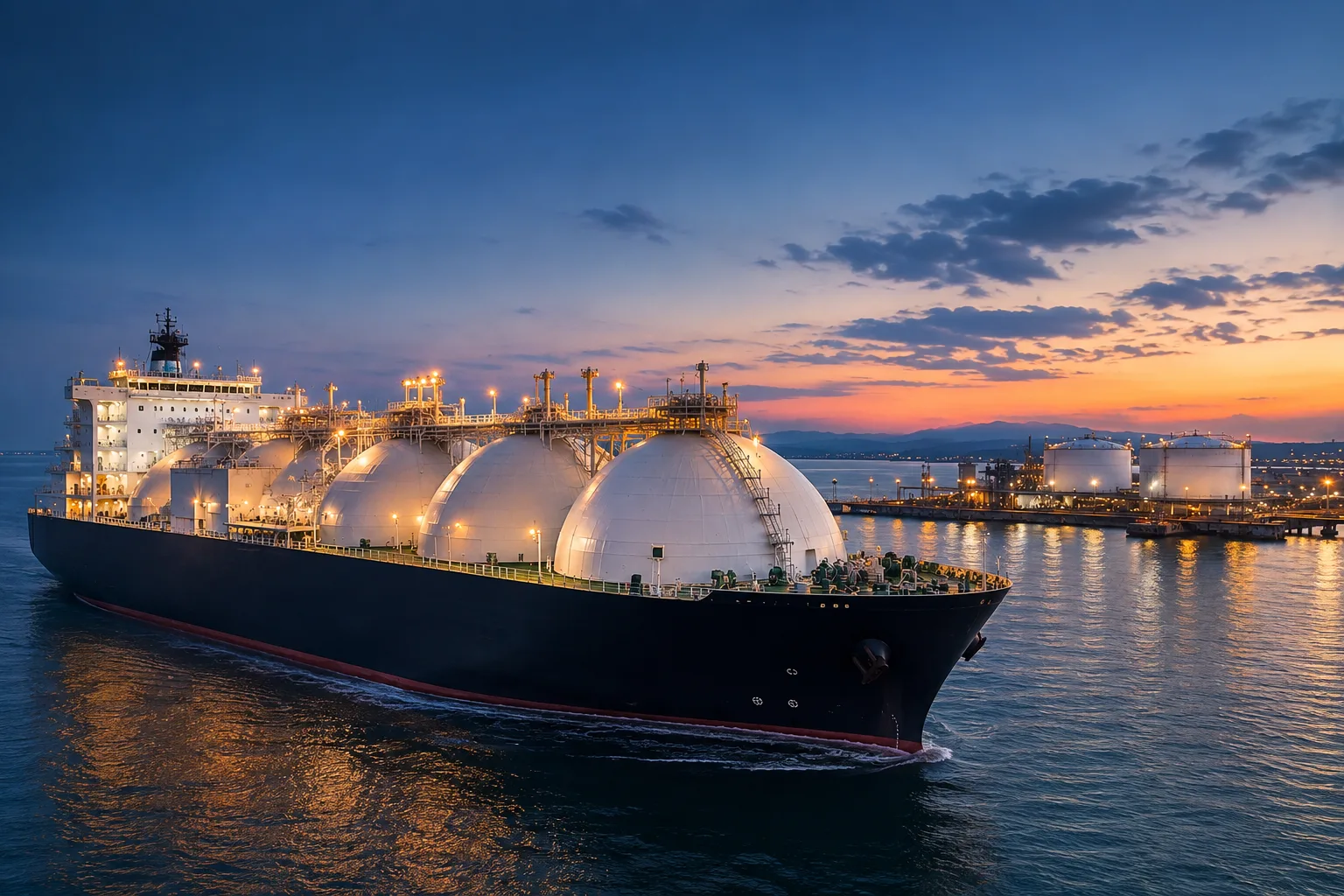
Beyond the equity investment, the companies also plan to establish a strategic partnership in LNG marine transportation. NYK will contribute decades of experience in operating LNG carriers and managing international liquefied natural gas logistics, while MidOcean Energy will continue expanding its presence across global LNG production and marketing projects.
The EIG-managed company currently holds interests in internationally significant LNG assets, including Gorgon LNG, Pluto LNG, QCLNG, LNG Canada, and Peru LNG, creating a diversified portfolio across several major producing regions.
Marine transportation becomes increasingly strategic
The continued growth of global LNG trade has made marine transportation one of the most important components of international energy security. The ability to transport large volumes of natural gas between producing and consuming regions enables markets to respond more effectively to supply disruptions, seasonal demand fluctuations, and geopolitical events affecting traditional energy routes.
In this environment, specialized shipping companies are no longer acting solely as logistics providers. They are becoming strategic participants within the LNG market itself. Direct investments in production and marketing projects provide greater visibility into future fuel availability while supporting long-term planning for fleet expansion, port infrastructure, and more efficient transportation technologies.
The operational expertise accumulated by companies such as NYK also plays a significant role in optimizing the deployment of next-generation LNG carriers, improving transportation efficiency, and contributing to lower emissions across the liquefied natural gas supply chain.
LNG continues to play a strategic role in the energy transition
Although renewable energy deployment continues to accelerate worldwide, many countries consider liquefied natural gas to remain an essential transition fuel capable of supporting increasingly renewable-based power systems while ensuring reliable electricity supply.
This outlook has encouraged growing investment in LNG infrastructure, production projects, and international supply networks. At the same time, specialized investment firms and energy companies are building diversified portfolios designed to respond to evolving demand across Asia, Europe, and other emerging markets.
In this context, NYK’s decision to invest in MidOcean Energy goes beyond a single financial transaction. It demonstrates how LNG investments are increasingly focused on integrated business models that combine production, marketing, and marine transportation to strengthen supply chain resilience.
As global liquefied natural gas trade continues to expand, partnerships of this kind are expected to play an increasingly important role in ensuring reliable energy supply, improving operators’ competitiveness, and supporting global energy security during the ongoing transformation of the international energy system.
Sources: NYK Line