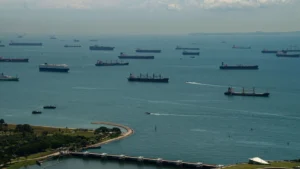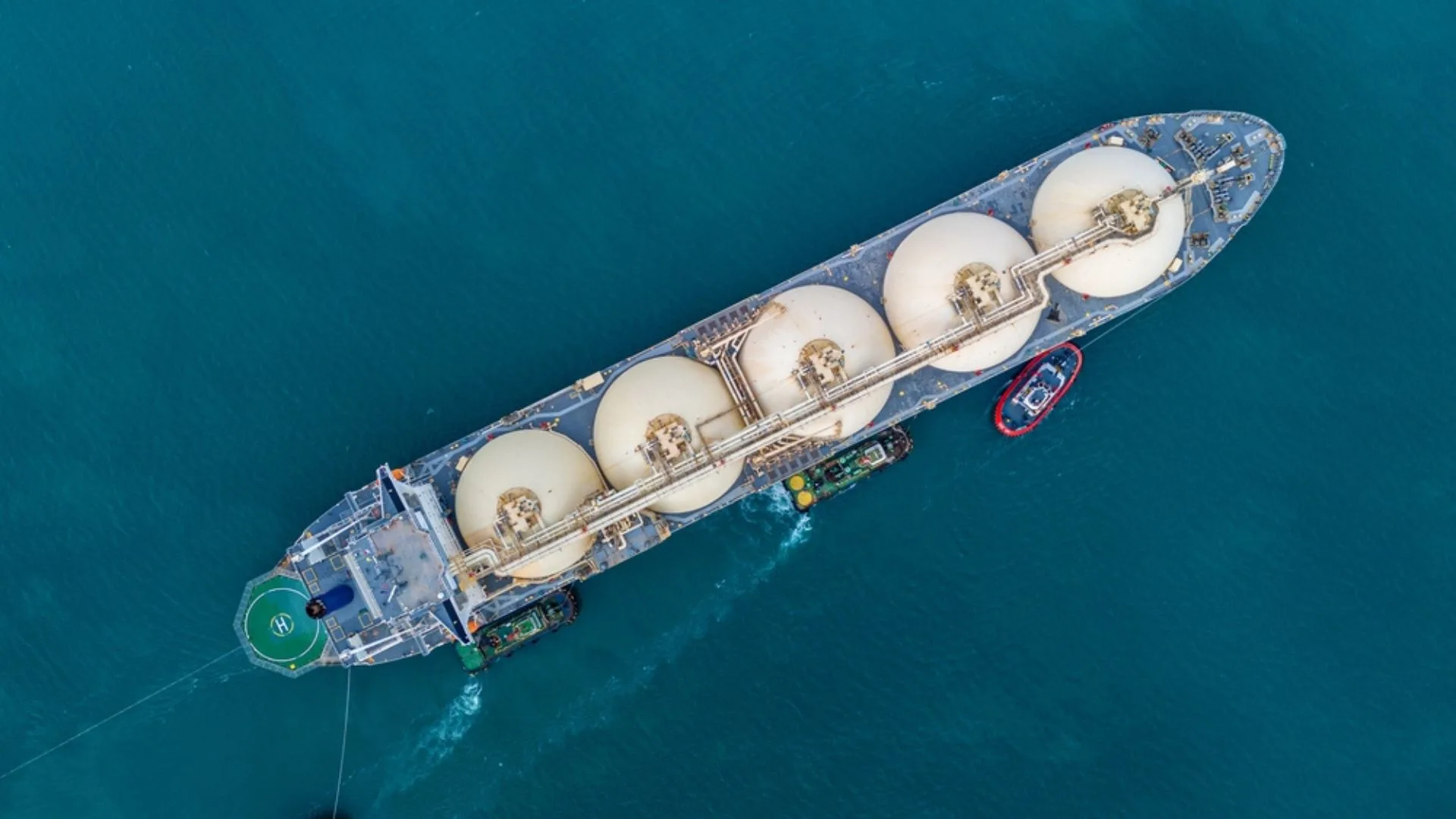
At least five LNG carriers entered the Strait of Hormuz in recent days despite renewed risk to commercial navigation in the Persian Gulf.
The movements show a cautious recovery of liquefied natural gas transit through one of the world’s most sensitive energy routes. The passage connects several of the Gulf’s main exporters with markets in Asia and Europe.
According to maritime tracking data from Kpler and LSEG, the five vessels were sailing in ballast. Four are linked to QatarEnergy while the fifth belongs to the fleet operated by Greek shipping company GasLog.
QatarEnergy and GasLog LNG Carriers Resume Transit Through Hormuz
The identified LNG carriers are Al Samriya, Al Dafna, Al Gattara, Al Rayyan, and GasLog Shanghai.
According to available data, GasLog Shanghai and Al Rayyan entered the strait after remaining near the waterway. The other three vessels related to QatarEnergy had been observed weeks earlier off the western coast of India.
The presence of these vessels in the Strait of Hormuz reflects a partial shift in shipping companies’ operational decisions. During periods of heightened tension, several vessels reduced their speed, awaited instructions, or temporarily modified their route.
However, the return of LNG carriers does not represent a complete normalization of traffic. Companies continue to evaluate security information, crew exposure, insurance availability, and possible disruptions to commercial routes.
Vessels Linked to Japan Leave the Persian Gulf
Meanwhile, 22 vessels linked to Japan left the Gulf through the strait between July 7 and 9 according to information from the Japanese Ministry of Transport.
Among them were six large oil tankers. Following these movements, four vessels related to Japan remained within the Gulf.
The Japanese maritime presence in the area decreased from 45 vessels with approximately 1,100 crew members at the start of the conflict to four vessels with around 100 people on board according to the Japanese Shipowners’ Association.
Japanese authorities avoided disclosing the specific measures employed to protect the vessels due to security considerations.
LNG Transit Remains Exposed to Regional Tensions
The Strait of Hormuz maintains central importance for global transport of oil and liquefied natural gas. Any prolonged disruption can affect delivery times, freight costs, and vessel availability.
Furthermore, a sustained reduction in traffic could place pressure on Qatar’s LNG exports and on supplies shipped from other Gulf terminals.
Likewise, shipping companies may choose to keep vessels outside the strait until receiving new risk assessments. This strategy reduces immediate exposure but can generate congestion near terminals and delays in cargo scheduling.
The entry of the five LNG carriers indicates that some operators consider it possible to maintain transit under controlled conditions. Even so, LNG routes through Hormuz will continue to be conditioned by military developments and by the security decisions adopted by each company.
Source: Oil Price
Photo: Shutterstock