Table of Contents
With the deadline stipulated by the Ministry of Justice of Kazakhstan having expired, the government has initiated enforcement proceedings against the North Caspian Operating Company (NCOC). The governmental entity demands the disbursement of 2.3 trillion tenge, an amount equivalent to approximately $4.92 billion, due to alleged infringements of authorized limits for sulfur storage at the offshore Kashagan field.
The Legal Escalation in the NCOC Oil Industry
The controversy represents an increase in contractual tensions between the Central Asian nation’s authorities and Western energy corporations. The state administration has maintained recurrent claims regarding compliance with ecological protection regulations and the operational transparency of extractive projects in the Caspian Sea region.
According to official sources and judicial documents, the Ministry of Justice issued a formal warning to Giancarlo Ruiu, the operating company’s general director. The official statement specifies the initiation of administrative and criminal liability proceedings should the refusal to pay Kazakh tax requirements persist.
Additionally, authorities warned of the application of a supplementary surcharge of 10% on the total amount recovered if enforcement is carried out through forced seizure mechanisms. The measure seeks to pressure the voluntary settlement of the financial commitment derived from environmental controls conducted in 2023.
For its part, the consortium comprising Shell, Eni, TotalEnergies, and ExxonMobil emphatically rejected the accusations regarding excess sulfur accumulated at the facilities. The corporate representation maintains that the sanction lacks executive validity as long as the international arbitration process initiated by the investors remains open.
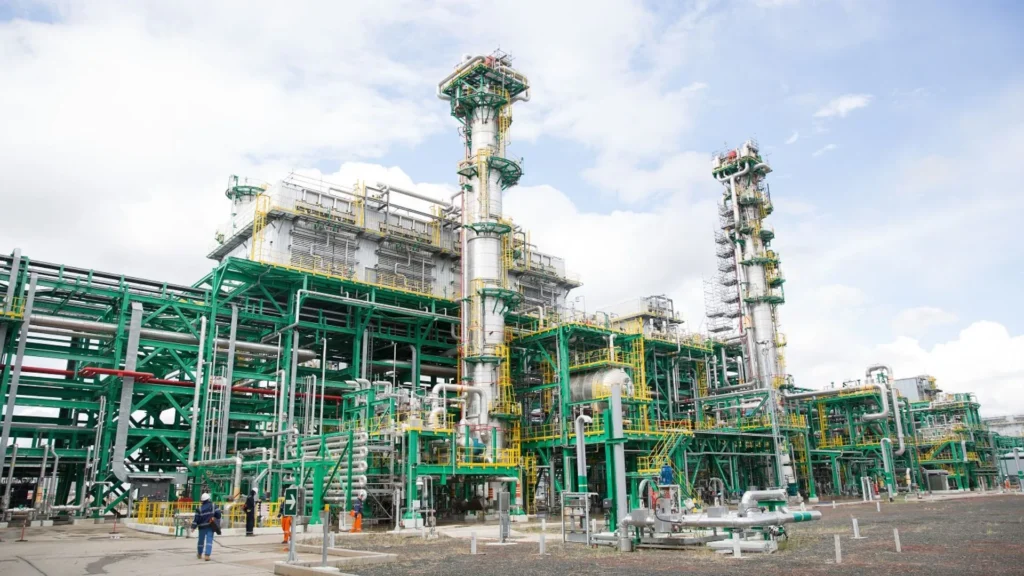
Likewise, the alliance of companies emphasizes that sulfur is an inevitable byproduct of crude oil processing at this field and that temporary storage adheres to operational safety technical parameters. For this reason, the legal defense appeals to investment protection agreements to halt the imposition of charges ruled by the local administrative route.
The legal uncertainty generates concern in the international market due to the volume of production concentrated by the Kashagan field, which contributes between 430,000 and 450,000 barrels of oil per day. This figure positions the asset as the second most relevant extraction center within the nation’s energy infrastructure.
Finally, various sector analysts indicate that state actions reflect a stance aimed at strengthening sovereignty over strategic natural resources. Although the public administration dismisses any bias toward economic nationalism, the resolution of the conflict will define the investment climate for future energy developments in the Caspian basin.
Source and photo: NCOC