Indonesian President Prabowo Subianto launched a package of 14 solar energy projects with a combined capacity close to 5,3 GW the initiative opens a new stage of the program with which the Government seeks to develop 100 GW of photovoltaic capacity by 2029.
The portfolio includes projects in different stages of development, two plants are already operational, six are under construction, and another six will be offered to investors, opening up space for greater capital participation in the country’s solar deployment.
Indonesia mobilizes investment to expand its solar capacity
On the other hand, the estimated investment for the 14 projects reaches 135 trillion rupees, equivalent to about 7.62 billion dollars, according to Eniya Listiani Dewi, an official at the Ministry of Energy.
The developments are distributed across West Java, Central Java, East Java, Bali, the Bangka Belitung Islands, and the Riau Islands. In this way, the program seeks to extend the photovoltaic generation through different regions of the archipelago.
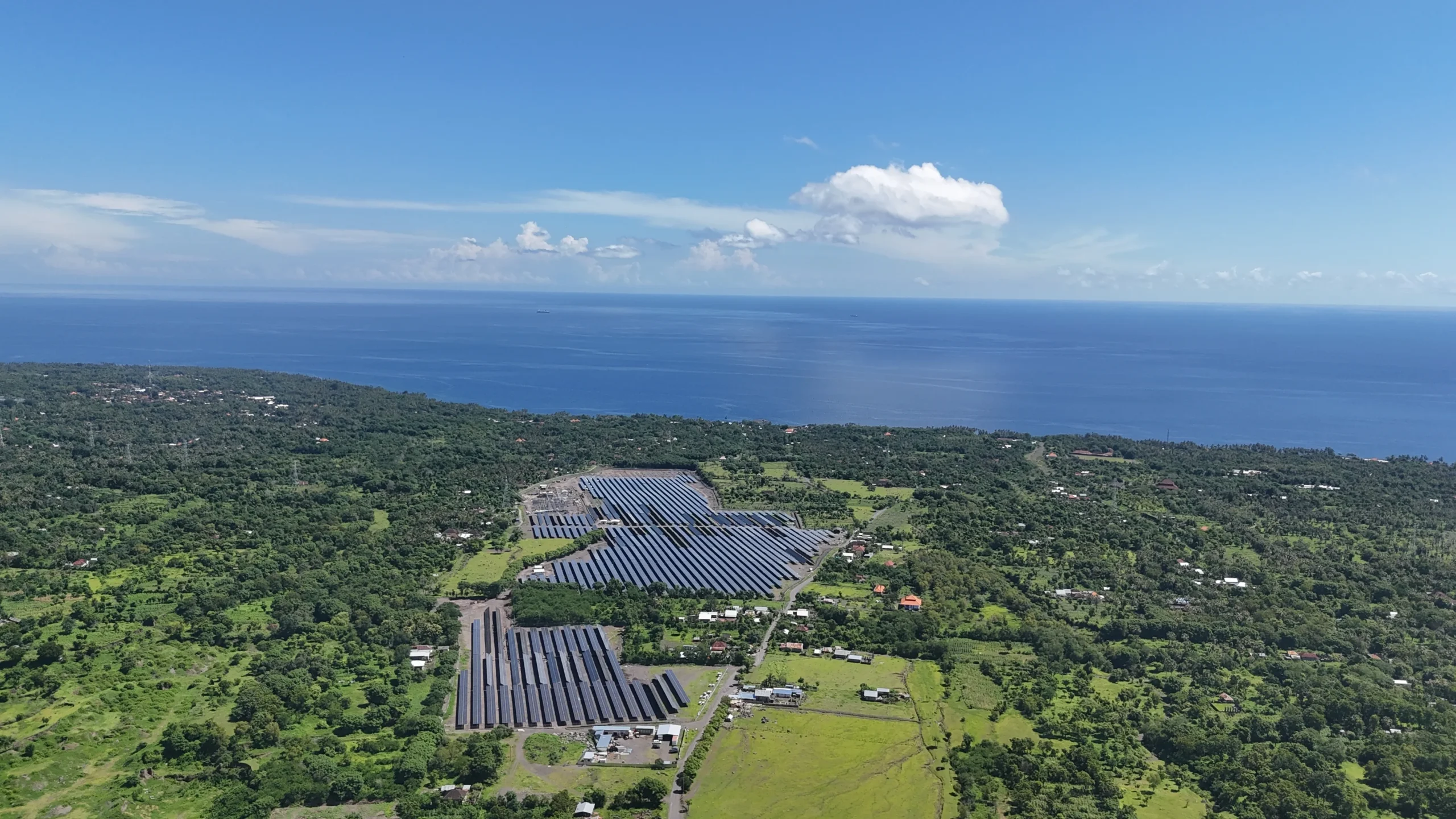
Among the facilities, the following stand out Gilimanuk solar plant in Bali, with a planned capacity of 300 MWp this project could produce up to 470 GWh of electricity per year and reduce fuel consumption by about 151 million liters annually.
The solar energy program aims for 100 GW by 2029
Furthermore, the Indonesian government aims to accelerate the construction of renewable energy capacity over the next three years. The overall objective includes developing 100 GW south solar energy between 2026 and 2029.
To achieve this capacity, authorities estimate an investment exceeding 1.14 trillion rupiah, the required capital volume reflects the scale of the program and the intention to rapidly increase the share of photovoltaic energy in the national electricity system. By 2026, Indonesia plans to develop approximately 30 GWp of solar capacity as the first major phase of the plan.
The program also incorporates battery energy storage systems as part of the infrastructure intended to support the expansion of photovoltaic plants and improve the management of the electricity produced.
Indonesia wants to replace 13 GW of diesel power plants
In turn, the deployment of solar power is linked to reducing the use of fossil fuels in electricity generation, the government intends to retire approximately 13 GW of diesel-powered plants and replace that capacity with renewable sources.
This transformation could have a significant economic impact, authorities estimate that the new solar plants would reduce electricity costs by about 73.9 trillion rupees per year due to lower production costs.
Therefore, these 14 projects serve as the starting point for a much broader energy program, the combination of photovoltaic generation, energy storage, and the gradual retirement of diesel power plants aims to transform the structure of Indonesia’s electricity system over the coming years.
The challenge will be to mobilize the necessary investments and implement tens of gigawatts of new capacity in a relatively short period. If the planned schedule is maintained, Indonesia will have one of the largest solar energy expansions currently underway in Southeast Asia.
Source: Reuters
Photo: Shutterstock