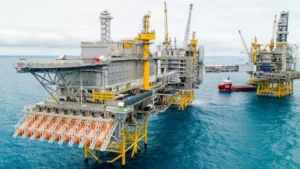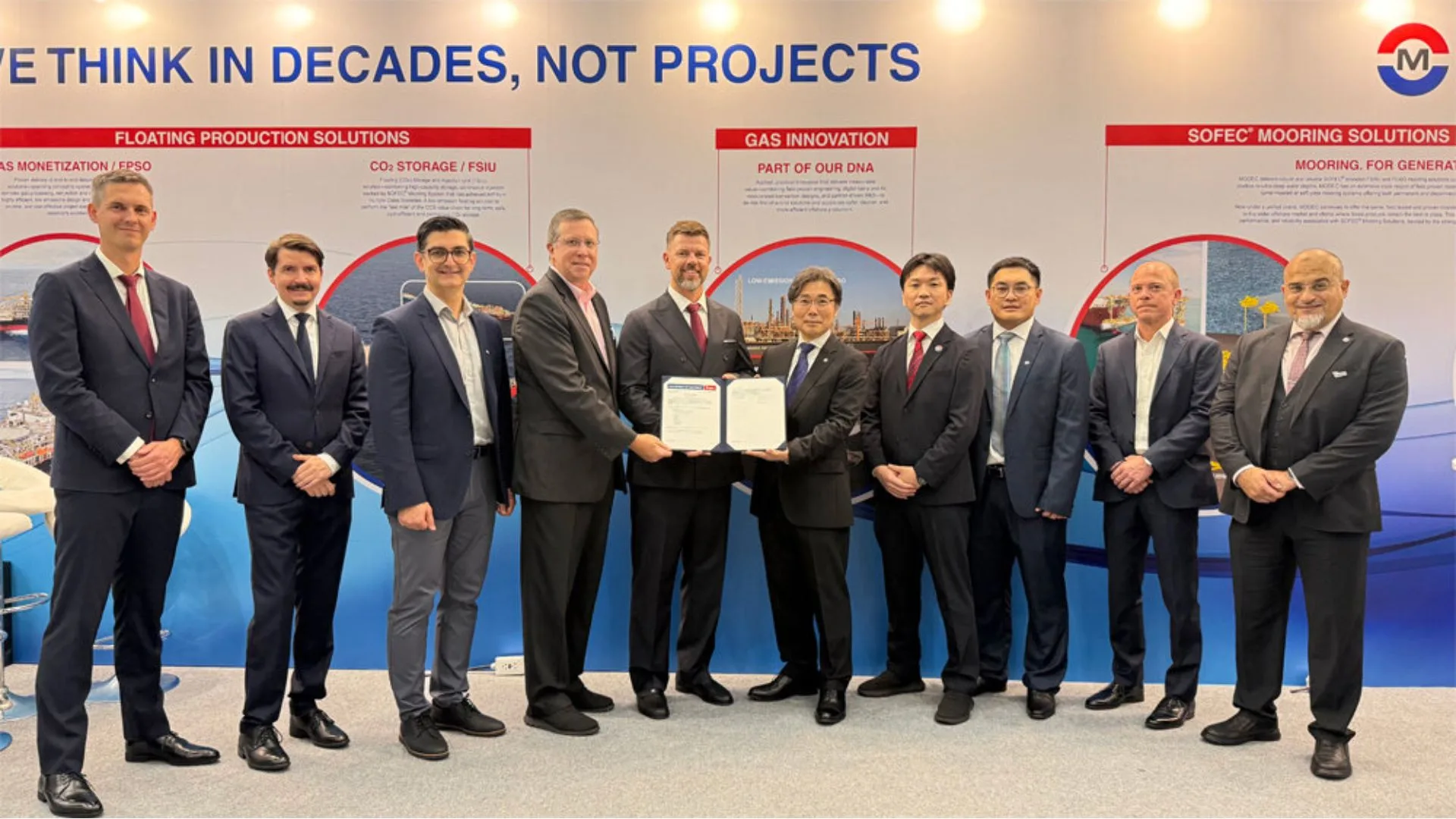
MODEC and Eld Energy completed the technological feasibility and proof-of-concept verification stage of ABS’s New Technology Qualification (NTQ) process to apply solid oxide fuel cell (SOFC) systems on floating production, storage and offloading (FPSO) units.
The progress enables development to move toward a future offshore test using produced gas under real operating conditions. The technology aims to deliver high-efficiency, low-emissions power generation for offshore production facilities.
The assessment conducted within the ABS process addresses safety, reliability, and regulatory compliance before moving toward installing the system on an FPSO.
A 40 kW SOFC module will be deployed on an operating FPSO
Specifically, the development is based on Eld Energy’s 40 kW Eld Power Module. It is an SOFC system designed to run on gas produced by an FPSO and on low-emissions alternative fuels.
MODEC plans to integrate the module into a unit currently in operation to observe its performance using real produced gas under offshore conditions. However, installation will depend on successfully completing the next NTQ prototype validation stage and the corresponding ABS engineering reviews.
In this way, the pilot campaign will move the technology from the assessment and verification phases into an operating environment, where variables associated with system performance and operation can be analyzed.
SOFC system efficiency could approach 70%
Another key technical point is the expected efficiency. The power generation system is designed to use both gas produced on FPSOs and hydrogen-rich gas recycled from an integrated carbon capture system.
According to project data, the overall efficiency of the energy system could reach approximately 70%.
This configuration directly links the solid oxide fuel cells with another planned development line: CO₂ capture. The high fuel efficiency of SOFCs and their compatibility with these systems are part of the strategy to reduce emissions associated with power generation at offshore facilities.
Koichi Matsumiya, MODEC’s Technology Director, said the company is seeking to develop with Eld Energy a compact, low-emissions system that expands power supply alternatives for offshore production facilities.
ABS assesses risks ahead of the offshore test
The development has also undergone various risk assessments before moving toward the pilot test. These include HAZID, HAZOP, and FMEA analyses, as well as an independent review conducted by ABS.
The NTQ process provides a pathway to assess new technologies before commercial application. In this case, the goal is to confirm that the SOFC system can operate as intended and that its risks can be identified and managed before taking it into the offshore environment.
Matt Tremblay, ABS Senior Vice President of Global Offshore Markets, noted that SOFC technology has the potential to change the emissions profile associated with FPSO power generation.
For Eld Energy, the assessment also supports progress in adapting its technology to the offshore industry’s safety requirements.
From 40 kW to multi-megawatt SOFC systems
Building on the pilot test, MODEC and Eld Energy are considering a progressive scale-up pathway.
The first phase uses the 40 kW module. The results will serve as the basis for moving toward a 120 kW unit designed to integrate with carbon capture systems.
Subsequently, the program targets multi-megawatt solutions capable of meeting higher power generation needs on floating facilities.
This evolution builds on prior work by both companies. MODEC cites as project references the development of an integrated 120 kW system with CO₂ capture and an agreement to advance toward a 1.2 MW solution intended for future FPSOs.
Therefore, testing the 40 kW module will play a key technical role, as it will provide operating data using produced gas before expanding system capacity and moving toward larger-scale applications.
Source and photo: MODEC