Denmark has launched Greensand, the European Union’s first large-scale permanent CO2 storage facility, with an initial capacity of up to 400,000 tonnes per year.
King Frederik X officially inaugurated the facility on September 18, 2026, at the port of Esbjerg. The project is led by INEOS Energy together with Harbour Energy and the Danish North Sea Fund, known as Nordsøfonden.
Greensand begins its commercial phase in the North Sea
The opening marks the start of commercial operations for Greensand Future, the first phase of the carbon capture and storage project developed off the Danish coast.
The infrastructure also enables completion of a CCS chain covering capture, liquefaction, maritime transport, and permanent injection of CO2 into a subsea geological formation.
The project plans to store up to 400,000 tonnes of CO2 per year during its first commercial stage. At full capacity, its developers estimate potential of between 4 and 8 million tonnes per year.
The initiative began its regulatory development in December 2022, when it obtained a permit to carry out exploration and injection activities at the Nini West reservoir.
Subsequently, on March 8, 2023, the first CO2 injection in the North Sea was carried out as part of the project’s demonstration phase.
In December 2024, INEOS Energy and its partners approved the final investment decision for Greensand Future. A year later, the Danish Energy Agency granted the authorization required to move toward large-scale commercial storage.
CO2 will travel from Esbjerg to the Nini West reservoir
In the first stage, INEOS will source much of the CO2 from Danish biomethane plants. Once captured, the carbon dioxide will be liquefied and transported by road to a specialized terminal located at the port of Esbjerg.
From there, it will be loaded onto the Carbon Destroyer 1, a vessel purpose-built to transport CO2, before heading to the Nini West field.
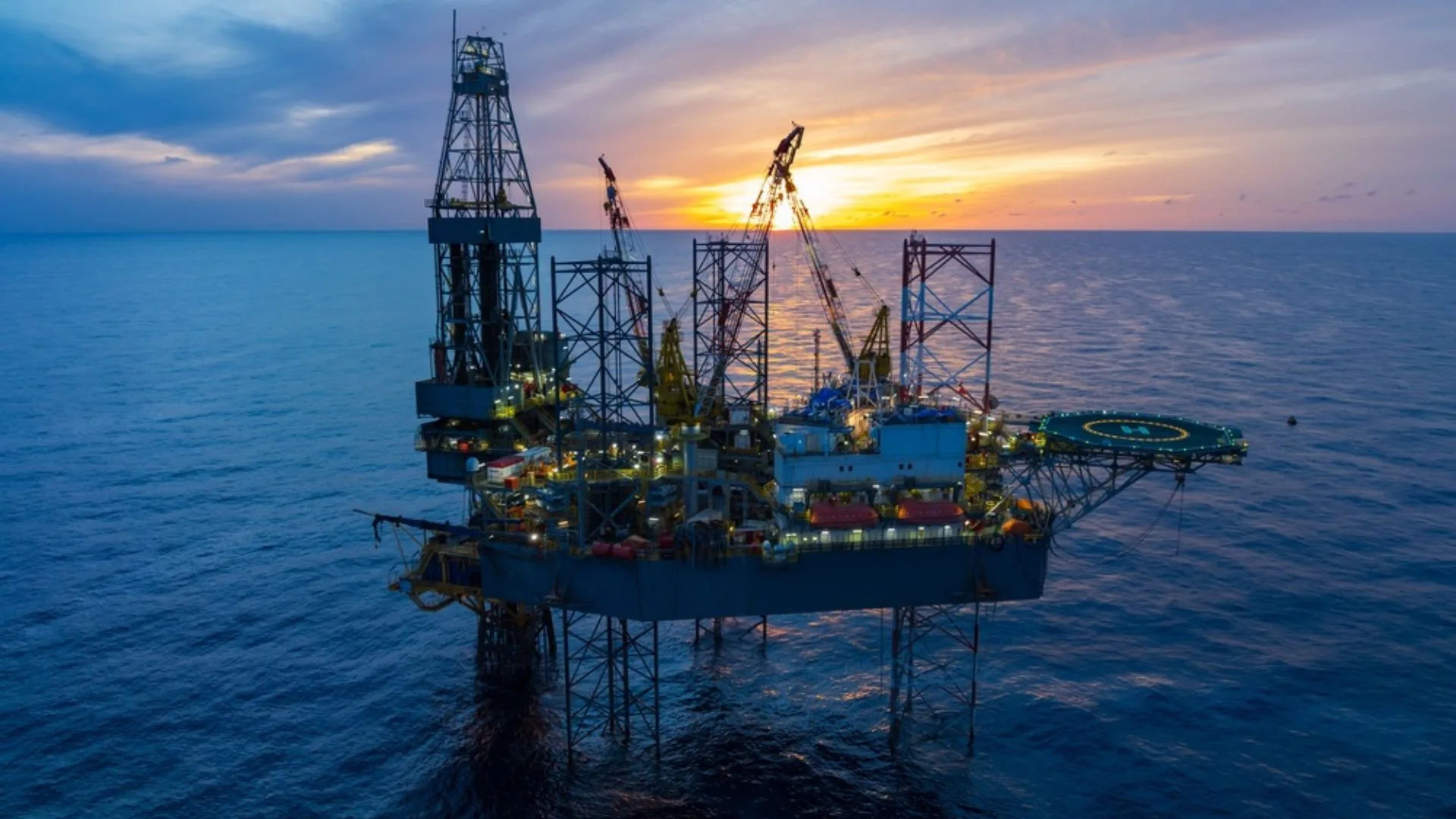
The reservoir is located about 250 km off Denmark’s coast and approximately 1,800 m below the seabed.
Nini West is a depleted former oil field that will be used as a geological reservoir to store carbon permanently.
This model enables reuse of infrastructure and formations historically associated with the North Sea oil and gas industry to develop new carbon storage capacity.
INEOS expects to receive CO2 from other European countries
Although Greensand will start by using mainly biogenic CO2, its operators plan to progressively expand the system to receive emissions captured by industries in different European countries.
Mads Gade, CEO of INEOS Energy Europe, said the project is ready to increase capacity and receive CO2 from industrial facilities across the continent.
The expansion could make Denmark one of the offshore storage hubs linked to the development of a future European carbon capture and storage network.
In addition, industries such as cement, steel, and chemicals are among the sectors that could use this type of infrastructure to manage process emissions that are difficult to eliminate through electrification.
The EU raises its CO2 storage targets
Greensand’s start-up comes as the European Union pushes new carbon capture and storage capacity as part of its industrial and climate strategies.
European targets include reaching at least 50 million tonnes per year of CO2 injection capacity by 2030 and increasing that volume to around 250 or 280 million tonnes per year in 2040.
During the inauguration, European Commissioner for Energy and Housing Dan Jørgensen said the facility represents the shift from demonstration projects to the commercial rollout of carbon storage.
With Greensand now operational, the North Sea is beginning to consolidate its position as a relevant area for permanent CO2 storage from European industrial activity.
Source: Offshore Energy
Photo: Shutterstock