The European oil market is beginning to show a new supply dynamic as the availability of crude from the Persian Gulf increases. The gradual recovery of seaborne flows and the increase in supply are easing pressure on the alternative barrels that supplied refineries during the weeks of heightened geopolitical tension, marking a new stage for the physical oil trade.
In recent months, the conflict in the Middle East disrupted cargo availability and intensified competition for crudes bound for Europe. In that context, grades produced in the Caspian region gained greater prominence by offering an alternative for refiners seeking to secure supplies amid uncertainty over transit through the Strait of Hormuz.
With tensions easing and maritime traffic in the Gulf partially recovering, the balance is beginning to shift again. The increase in available supply reduces the need to pay high premiums for certain crude grades and restores greater flexibility to refiners’ and traders’ purchasing decisions.
European oil market adjusts the balance of the physical market
The physical oil market often reacts quickly when logistical or geopolitical conditions change. Unlike financial markets, where contracts and derivative instruments dominate, physical transactions respond directly to cargo availability, delivery times, shipping routes, and refining capacity.
In this scenario, the increase in supply from the Gulf is supporting a normalization process in the trading differentials used to price different crude types against Brent. The exceptional premiums seen during periods of heightened uncertainty are beginning to ease as more supply options emerge for European buyers.
This adjustment does not imply a structural decline in oil’s value, but rather a reshaping of competitive conditions among different crude qualities participating in the international market.
Caspian crude loses prominence amid rising supply
Producers in the Caspian region had strengthened their commercial position while logistical constraints associated with the regional conflict persisted. However, the greater availability of barrels from the Gulf is once again increasing competition among exporters supplying Europe.
The evolution of differentials reflects precisely that change in the landscape. As supply increases, refiners and traders have a broader range of options to optimize costs, crude quality, and delivery times.
At the same time, higher production and export volumes from some producing regions help reinforce global oil availability, creating a more competitive environment for the various grades traded in the physical market.
New energy flows redefine refiners’ and operators’ decisions
Beyond daily price movements, the current shift shows how geopolitics continues to influence oil trade routes. Every change in maritime corridors or supply availability forces refiners, logistics operators, and trading companies to review purchasing strategies, cargo scheduling, and inventory management.
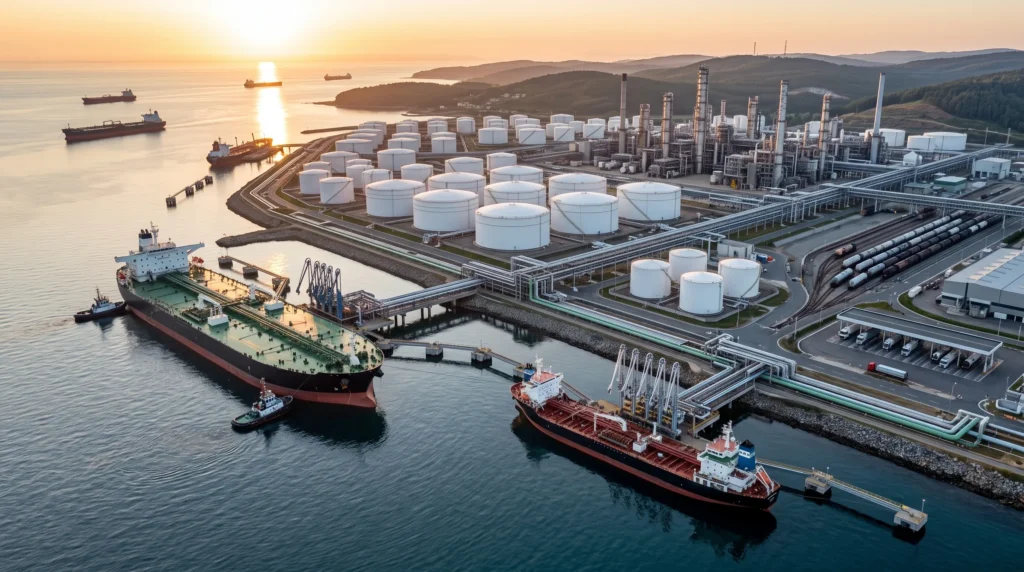
For the energy industry, this process also serves as a reminder of the importance of critical infrastructure such as port terminals, pipelines, storage hubs, and international maritime corridors in ensuring continuity of supply.
As the market assesses the stability of the new landscape, Europe is once again operating with a more diversified and competitive supply. The evolution of flows from the Gulf and the response of other exporters will determine whether this rebalancing consolidates over the coming months or whether new geopolitical factors once again reshape the global oil trade map.
Source: Pipeline & Gas Journal