Iraq’s oil exports are entering a new phase of logistical diversification following the decision to expand crude and naphtha shipments through Syria, a strategy driven by disruptions caused by the conflict with Iran and the temporary closure of the Strait of Hormuz. The initiative seeks to reduce dependence on Persian Gulf terminals and strengthen the export resilience of OPEC’s second-largest producer.
Even if maritime transit through Hormuz returns to normal, Baghdad has confirmed that it will maintain the Syrian route as part of a permanent strategy aimed at diversifying energy corridors and ensuring greater commercial flexibility in the face of future regional disruptions.
Iraq’s oil exports to reach 50,000 bpd
Iraq is finalizing preparations to begin crude oil exports through Syria starting in July, expanding a scheme that has already allowed for the transport of fuel oil to the Mediterranean port of Baniyas. Oil Ministry officials indicated that initial volumes could reach approximately 50,000 barrels per day once the new loading and unloading facilities become operational.
The measure is part of a policy approved by the Iraqi government to reduce dependence on a single export route. Prior to the disruptions generated by the regional conflict, the majority of the 3.6 million barrels per day exported by Iraq left through the terminals in Basra, in the south of the country.
Syria expands operational capacity of the Port of Baniyas
The growth of Iraqi energy flows is driving infrastructure investments within Syria. Syrian energy authorities have confirmed the addition of new unloading and storage areas in Baniyas to handle larger volumes of crude oil and derivatives.
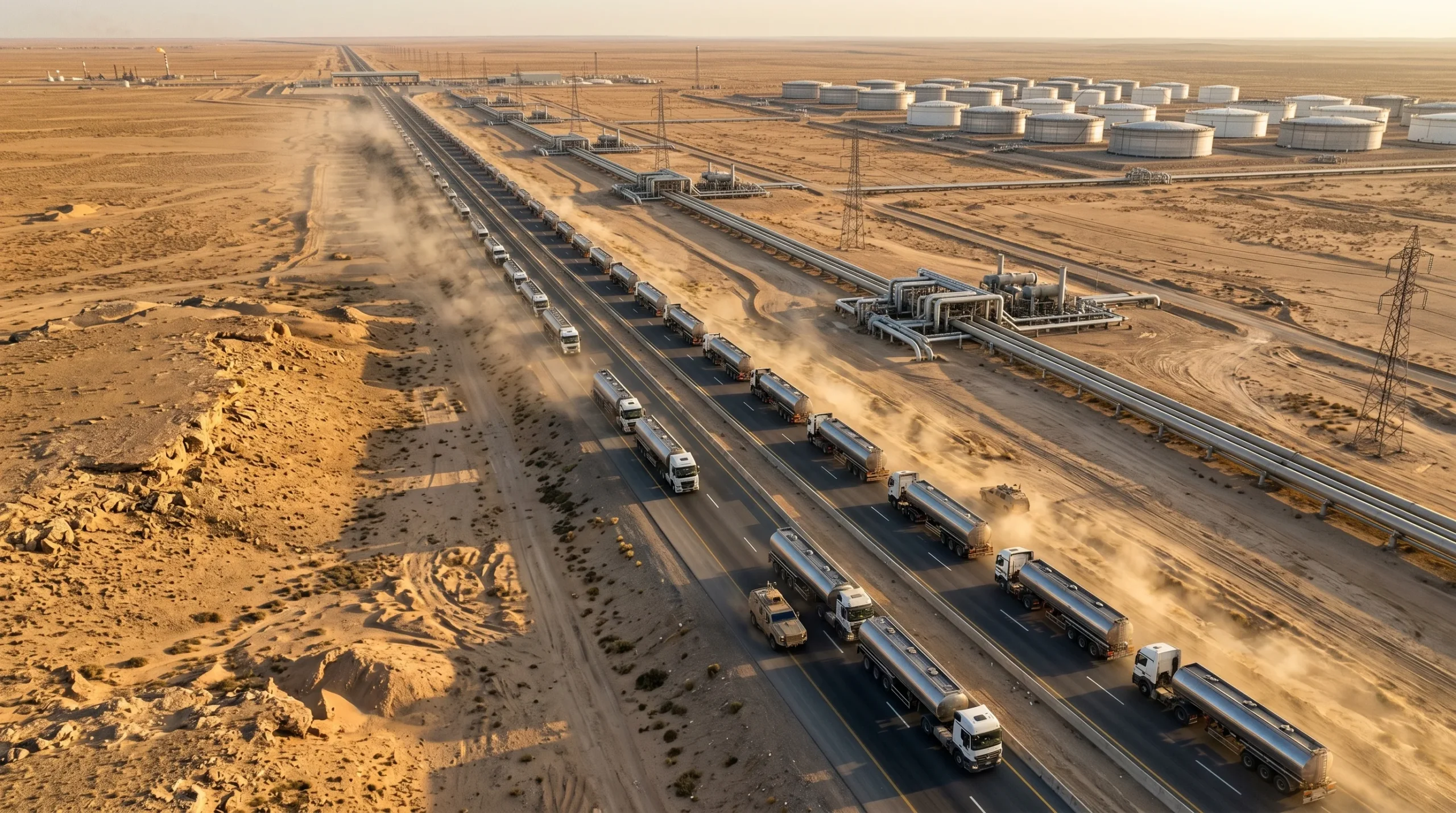
Currently, the facility has the capacity to receive nearly 900 tank trucks per day, a figure that has allowed for the maintenance of land exports initiated during the restrictions in the Strait of Hormuz. Furthermore, the opening of SOMO offices in Baniyas aims to facilitate the logistical and commercial coordination of future shipments.
The expansion turns the Mediterranean port into a strategic point for regional hydrocarbon trade.
The Strait of Hormuz drives changes in regional logistics
Recent experience has highlighted the vulnerability of energy supply chains when they depend on single export corridors. The temporary closure of Hormuz forced Iraq to seek rapid alternatives to avoid inventory buildup and maintain the flow of refined products and fuels to international markets.
The diversification of routes does not only respond to immediate geopolitical contingencies. It is also part of a broader trend observed among OPEC oil producers seeking to increase supply security and reduce operational risks associated with conflicts, sanctions, or maritime disruptions.
In this context, Syria emerges as a complementary corridor that could gain relevance even after the normalization of maritime traffic in the Gulf.
What impact will this strategy have on the oil market?
The consolidation of new export routes strengthens Iraq’s ability to maintain its trade flows in scenarios of regional volatility. For energy markets, this represents greater logistical flexibility and a potential reduction in the risk associated with disruptions at critical points of global oil trade.
The strategy also generates economic benefits for Syria through transit revenues and logistical services, while driving the recovery of energy infrastructure affected by years of conflict. In the long term, the potential rehabilitation of the old Iraq-Syria pipeline, with an estimated capacity of up to 300,000 barrels per day, could transform the Mediterranean corridor into a significant piece of the Middle East energy map.
Source: Reuters