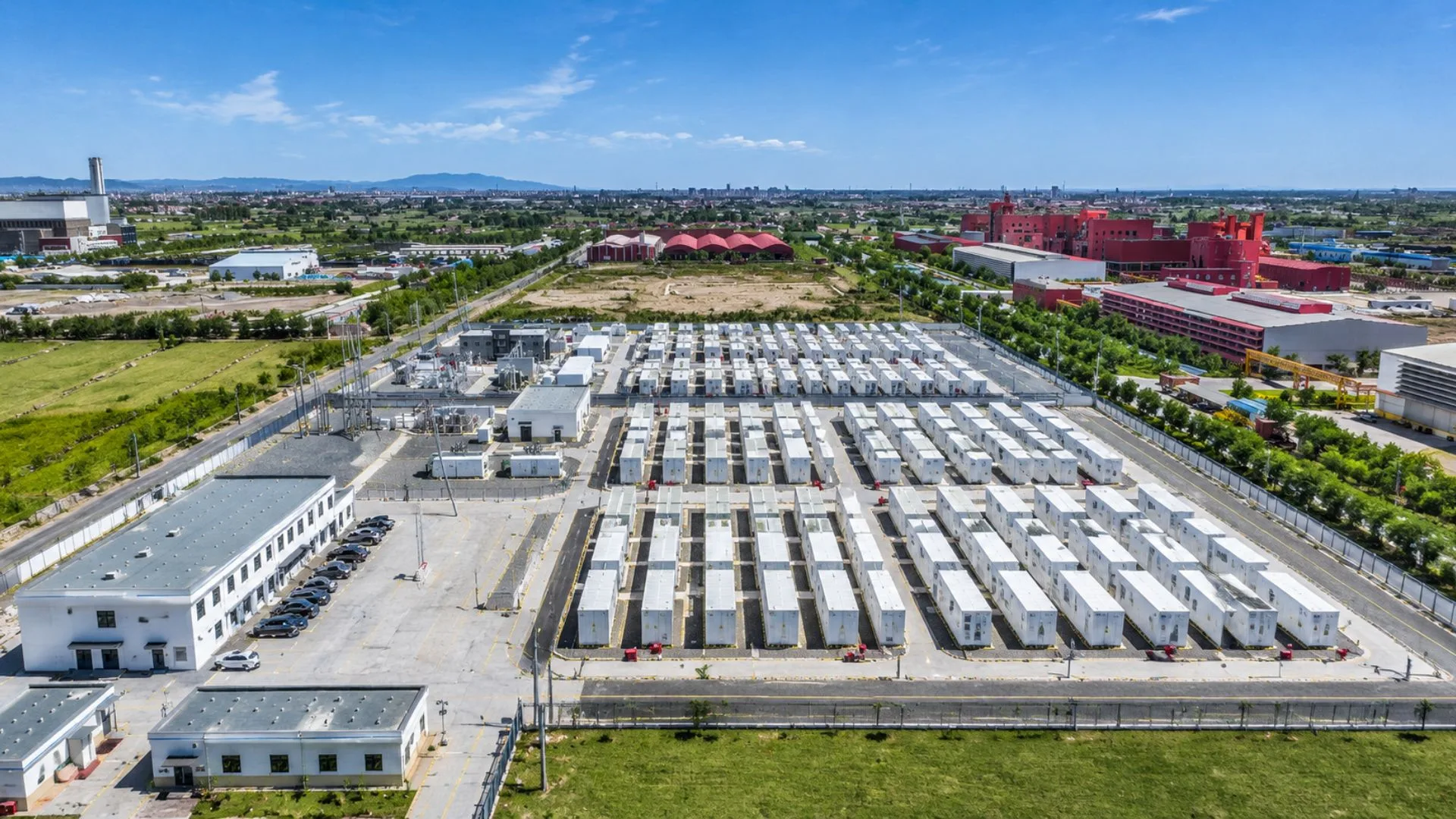
EnerVenue begins mass production at its new battery factory in Changzhou, China, after abandoning the industrial project it had planned to develop in Kentucky, the American company is betting on Changzhou as the initial manufacturing center for its batteries nickel-hydrogen intended for energy storage, while preparing an industrial network with a future presence in various international markets.
The decision places China at the heart of EnerVenue’s initial production strategy, a company specializing in long-life battery-based storage technologies derived from systems originally used in space applications, EnerVenue’s CEO explained to Reuters, Henning Rath the choice of China was mainly related to the availability of specialized technical talent and the extensive industrial supply chain existing in Changzhou.
EnerVenue is betting on Changzhou and its industrial experience
One of the determining factors for EnerVenue is the manufacturing ecosystem developed around the new plant. Changzhou is home to suppliers and specialists in areas such as hydraulics, pneumatics and industrial automation in addition to engineers experienced in rapid adjustments to production processes, the company believes this concentration of capabilities can accelerate the optimization of a manufacturing line that has yet to prove its efficiency at a commercial scale.
Labor costs also represent a significant difference compared to other industrial markets, a plant manager told Reuters that newly graduated engineers receive approximately 12,000 yuan monthly, equivalent to about US$1.792 in addition, EnerVenue highlights the flexibility of some local suppliers, who can develop specialized equipment before receiving final payment while the company evaluates whether those designs will be incorporated into the production process.
From a $264 million plant in Kentucky to manufacturing in China
Before moving its initial production to China, EnerVenue had announced in 2023 a project to build a factory in Kentucky, United States the first phase of the plan envisioned an investment of US$264 million and the creation of approximately 450 jobs, however, the company decided to abandon the project a year later because its technology still required adjustments before moving towards industrial production under the planned conditions.
Rath explained that the experience gained during that period allowed them to identify necessary improvements in both battery design and the factory’s configuration. EnerVenue currently maintains its research and development activities in Fremont, California the company was founded by Yi Cui, professor of materials science at Stanford, and develops nickel-hydrogen batteries inspired by technologies used in space applications.
EnerVenue’s new factory will have 95% automation
Furthermore, the Changzhou facility incorporates a high level of automation, EnerVenue estimates that approximately 95 % of the production process will be automated and expects to have close to 400 workers before the end of the year. Rath did not specify the exact investment allocated to the plant, although he placed the cost within an approximate range of US20 millon US50 million.
According to the executive, the government support received was mainly limited to administrative processes such as permits, certifications and selection of the industrial site, advanced automation is part of EnerVenue’s strategy to increase production capacity while maintaining an efficient and scalable industrial model.
Production will grow to 1 GWh per year by 2027
Meanwhile, EnerVenue expects to reach an annual production capacity of 250 MWh during this year, a volume roughly equivalent to the manufacture of 300 battery cells per day the next phase of the project envisions increasing that capacity to 1 GWh per year during the third quarter of 2027.
To support its expansion, the company raised more than US$300 million in a funding round held in March and led by Full Vision Capital Peter Lee Ka-kit’s family office is among the investors mentioned by Reuters, Saudi Aramco y SLB, companies linked to the global energy sector.
EnerVenue is preparing new factories outside of China
In the long term, Changzhou represents the first step towards an international manufacturing network, EnerVenue plans to develop new facilities in North America, the Middle East, and Europe starting in 2028, the final locations must be established during 2027, taking into account industrial, regulatory and commercial factors.
In the North American market, future location will depend on applicable legislative and regulatory conditions, the evaluation of whether cells manufactured in China can access certain US tax incentives related to energy storage remains open, due to content and ownership restrictions associated with China.
In this way, the Changzhou plant will function as EnerVenue’s first industrial platform to validate the commercial manufacturing of its nickel-hydrogen batteries, while the company prepares a productive expansion into other strategic markets.
Source: Reuters
Photo: Shutterstock