A large part of global energy capital has traditionally been concentrated in the Middle East. However, constant disruptions in maritime transport through the Strait of Hormuz have forced energy corporations in the sector to redefine their commercial strategies. Claudio Descalzi, CEO of the Italian firm Eni S.p.A., stated before a parliamentary commission that geopolitical instability in this region will persist for a long time, limiting the supply capacity of key players such as Russia and Iran. Consequently, the industry is seeking to diversify its geographical risks.
Structural change in the global investment map
Likewise, future commercial agreements will differ from the planned schemes when these traditional suppliers attempt to normalize their positioning. Given this scenario, alternative basins acquire critical relevance to guarantee international energy security.
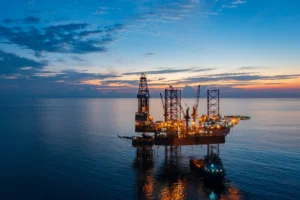
Regarding new development hubs, Southeast Asia is seeing a substantial increase in final investment decisions for natural gas extraction. This dynamism projects an estimated 18% increase in the total production of the geographical region. Specifically, corporations such as Eni and the Malaysian PETRONAS have consolidated a strategic alliance through the creation of Searah, an equally owned joint venture that manages 19 exploration assets.
The new focus of energy corporations
Additionally, the main activities of this business coalition are concentrated in the fields located in the Kutei Basin, off the coast of East Kalimantan. The projects named North Hub and South Hub constitute the fundamental pillars for accelerating resource extraction and supplying expanding Asian markets.
On the other hand, South America is undergoing a profound structural transformation driven by the injection of tens of billions of dollars. Argentina and Guyana are currently emerging as the main drivers of this regional hydrocarbon expansion. In the Argentine case, transnational cooperation between Eni and the Emirati firm XRG is driving the ARGLNG export complex in the province of Río Negro, an infrastructure valued at approximately $30 billion.
To conclude, the viability of these operations is complemented by the construction of a 527-kilometer trunk pipeline that will connect the prolific Neuquén Basin with the Atlantic coast. This project, which requires an investment of $1.2 billion, will optimize distribution logistics and consolidate the continent’s position in the international energy market.
Source: OilPrice
Photo: Shutterstock