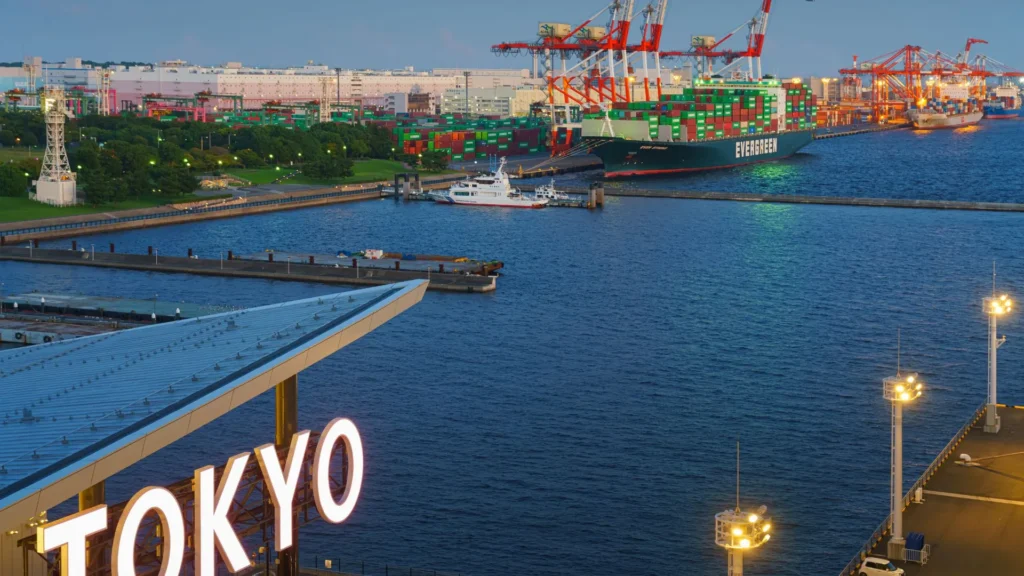
Oi Container Terminals they will become a key component of the Port of Tokyo’s transformation by 2035, the Tokyo Metropolitan Government presented a vision focused on increasing operational capacity, incorporating advanced technologies, and reducing the environmental impact of port activities. The initiative responds to the changes facing international maritime transport, such as the growth of global trade, the integration of artificial intelligence, and the need to develop more efficient and interconnected logistics chains.
Oi’s container terminals are moving towards port automation
One of the main objectives of the modernization will be to promote the digital transformation of the terminal through advanced technologies. The project includes the incorporation of automated container handling equipment, such as ASC automated stacking cranes. Likewise, the initiative includes digital systems to coordinate truck access, logistics management platforms, and artificial intelligence-based tools designed to optimize movements within the terminal. These solutions will improve operational planning, reduce waiting times, and increase the efficiency of cargo transfer between maritime and land transport.
Greater capacity to receive large container ships
The renewal of the Container Terminals oi also envisions an expansion of its facilities, incorporating nearby land to increase the available operational area by approximately 40%. Furthermore, the port infrastructure will be adapted to accommodate large container ships of up to 150,000 DWT, a capacity aligned with the evolution of international fleets. The increasing size of vessels is driving global ports to improve their docks, cargo handling systems, and logistics processes to maintain competitive connections within international shipping routes.
Tokyo promotes a terminal with a lower environmental impact
Another key element of the 2035 vision is reducing emissions associated with port operations, the strategy includes electrifying cargo handling equipment and using electricity from renewable sources. With these measures, Oi Container Terminals aims to reduce emissions by more than 90%, CO₂ generated during cargo handling activities, the incorporation of solar installations will complement this process and allow progress towards a port model with less environmental impact.
The maritime logistics of the future requires smart ports
The development of Oi’s Container Terminals occurs in a context where maritime operators are analyzing larger capacity vessels and new strategies to improve operational efficiency. In response to this evolution, ports need to combine greater physical capacity with digital technologies to meet the new demands of the global supply chain. Tokyo’s vision for 2035 envisions a terminal prepared for a more automated, connected, and sustainable maritime industry.
Source: Tokyo
Photo: Shutterstock