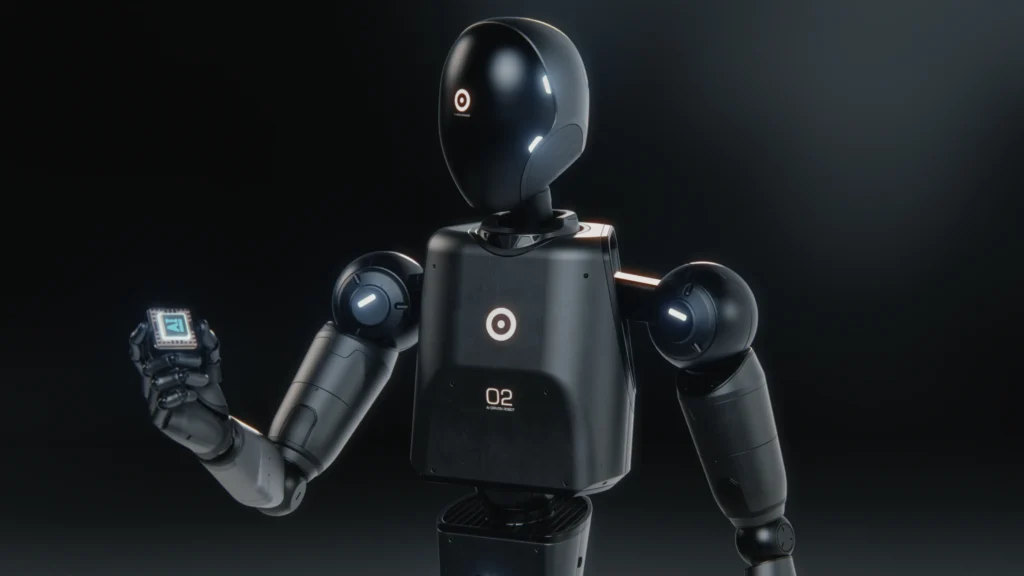
Japan will study the use of humanoid robots equipped with physical artificial intelligence within its Self-Defense Forces. The initiative seeks to evaluate these machines for patrol, logistics, reconnaissance, and rescue tasks, in a context marked by difficulties in incorporating new personnel.
According to government sources and the ruling Liberal Democratic Party cited by Kyodo News, the initial priority will be on non-combat applications. These include base surveillance and logistical support, areas where automation could reduce the number of personnel required for certain operations.
Humanoid robots with physical AI to support staff
The technology that Japan intends to study is based on so-called physical artificial intelligence, an approach that allows the robots interpret information from sensors and cameras and use that data to perform different tasks.
In this process, the Procurement, Technology, and Logistics Agency (ATLA) would play a central role in the research. Plans also include organizing a competition where private companies and universities can demonstrate the capabilities of their humanoid robots.
A senior official from the Ministry of Defense indicated that artificial intelligence could replace or complement certain activities currently performed by a limited number of personnel.
The humanoid form also offers some practical advantages, as this type of robot can move around in buildings, corridors, and other facilities originally designed for people.
Japan is already promoting the development of robots with physical AI
Japan it already has initiatives aimed at advancing this type of technology, a recently presented government program brought together prototypes developed by six startups and a machine tool manufacturer.
Some of these humanoid robots, still without legs, are capable of replicating arm and hand movements performed by an operator. During the demonstrations, the machines performed tasks such as transferring food and drinks between containers and nailing objects.
The developers are looking to later incorporate physical AI systems that will allow robots to make decisions during the execution of these activities.
For now, the prototypes are mainly used to collect motion data that will be used to train systems capable of operating increasingly autonomously in different environments.
Reconnaissance and rescue are among the future applications
Looking ahead, Japanese authorities are also considering using humanoid robots in reconnaissance and rescue operations. These functions would broaden their scope beyond facility surveillance and logistical support, especially in scenarios where the use of machines could reduce staff exposure to hazardous environments.
However, there are greater reservations about the potential direct involvement of these systems in combat. Among the concerns mentioned is the ability of artificial intelligence to accurately distinguish between allies and enemies, as well as between combatants and civilians.
A senior official on the Liberal Democratic Party’s security panel also pointed to the lack of clear international standards for such technologies and stated that, for the time being, there are no plans to use armed humanoid robots in combat.
Artificial intelligence is gaining ground in Japanese defense
The Japanese government plans to review several key defense and security documents by the end of 2026. As part of this process, it is considering expanding the use of artificial intelligence in various defense capabilities of the country.
The Ministry of Defense also included AI-related projects in its budget request for the next fiscal year, these include its integration into the command structure of the Self-Defense Forces.
Another project involves testing a so-called tactical AI satellite, designed to process large volumes of information obtained from space and support functions related to missile guidance.
For now, the study of humanoid robots is mainly focused on determining in what areas they can complement the personnel of the Self-Defense Forces.
Future tests will allow us to assess the extent to which physical AI and autonomous robotics can take over logistics, surveillance, reconnaissance, and rescue tasks within Japanese defense operations.
Source: JapanToday
Photo: Shutterstock