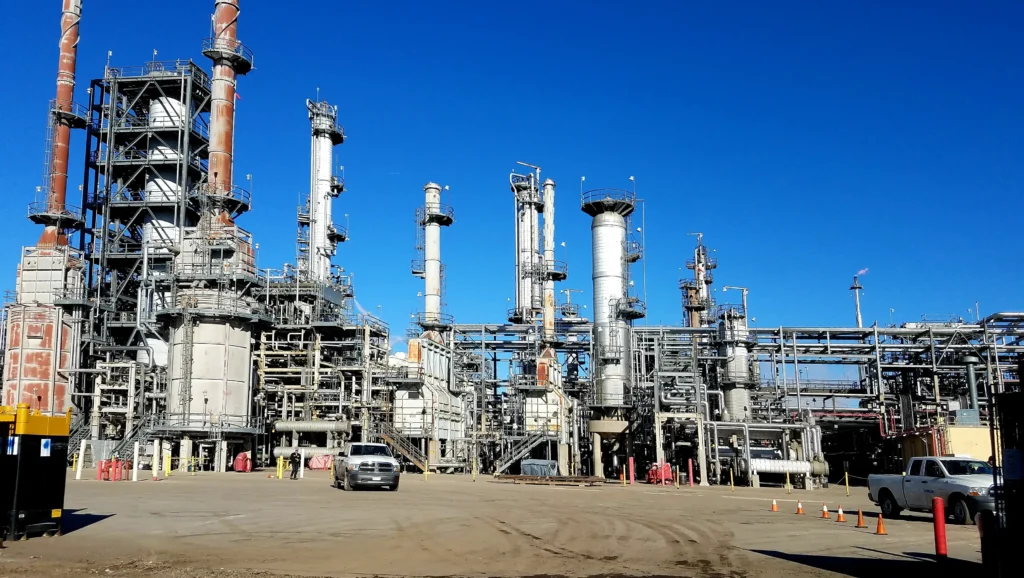
The Pakistani refinery Cnergyico increased its purchases of US crude oil as part of a strategy to diversify its energy supply sources and reduce exposure to disruptions in Gulf oil routes.
The company, considered Pakistan’s largest refiner, began purchasing US oil in 2025 and is evaluating expanding these operations based on factors such as price, reliability, and security of supply. This move responds to the pressure generated by the country’s historical dependence on suppliers from Pakistan Middle East.
Pakistan seeks to reduce its dependence on the Strait of Hormuz
For years, Pakistan concentrated a large part of its imports of oil and liquefied natural gas in Saudi Arabia and the United Arab Emirates. Before the recent regional disruptions, approximately 90% of these supplies transited through the Strait of Hormuz one of the main maritime routes for global energy trade.
Furthermore, the disruption of this trade route exposed the risks associated with relying on a single energy corridor. Faced with this scenario, Islamabad began promoting alternatives to guarantee crude oil supplies and limit the impact of future geopolitical disruptions.
Cnergyico increases oil purchases from the US.
Cnergyico imported approximately 8.1 million barrels of US crude oil over nine months, including about 7.1 million barrels during the last fiscal year, with an estimated value of $750 million.
The increase in these purchases made the refinery one of the main drivers of growth in Pakistani imports from the United States. According to central bank data, the country’s payments for US products increased by $914 million to reach $3.27 billion during that period.
The company is also considering combining long-term supply contracts with spot purchases, a strategy that would allow it to adjust its acquisitions according to international oil market conditions.
New financial mechanisms could expand imports
The refinery indicated that it could increase its purchases of US crude oil if a trade finance proposal backed by Pakistan’s EXIM Bank moves forward.
This mechanism would allow Pakistani buyers to defer payments to US exporters for up to three years, facilitating new energy import deals.
In addition to the goal of strengthening security of supply, Pakistan seeks to increase purchases from the United States to reduce its trade surplus and improve the tariff conditions applied by Washington.
Cnergyico is preparing an expansion of its oil infrastructure
As part of a $1.2 billion modernization program, Cnergyico is considering building a second offshore mooring platform connected to its storage facilities.
The infrastructure would allow operations with large oil tankers away from the congested ports of Karachi and improve logistical capacity to import crude oil and export refined products.
The project also includes adapting the refinery to Euro V standards, reducing fuel oil production, and increasing processing capacity to around 200,000 barrels per day.
Energy diversification is gaining importance in Asia
Energy market specialists believe that disruptions in the Middle East have reinforced the need for multiple oil routes and suppliers.
Using large oil tankers to transport US crude could reduce transportation costs by 25% to 30%, while new maritime facilities would expedite the arrival of ships and improve operational efficiency.
With this strategy, Cnergyico seeks to strengthen the resilience of its supply chain and position US crude as a relevant alternative within the Pakistani energy market.
Source: Reuters
Photo: Shutterstock