
Equinor will reinforce electrical monitoring of the Dudgeon wind farm
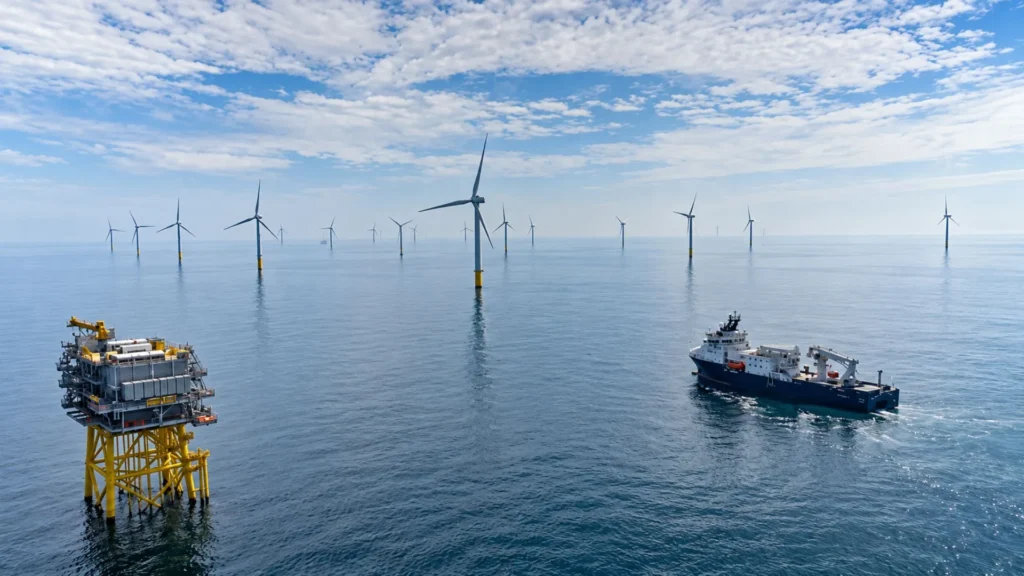
Equinor will incorporate a new electrical monitoring system at its 402 MW Dudgeon offshore wind farm in the UK. The Norwegian energy company awarded Proserv a contract to install technology designed to continuously monitor the condition of the cables and their terminations. Deployment will begin in 2027.
Specifically, the project aims to improve the monitoring of an infrastructure that has been operational since the end of 2017. The system will allow for obtaining more information about the behavior of the electrical grid and detecting problems while they are still developing.
Equinor will incorporate Proserv technology in Dudgeon
Under the agreement, Proserv's ECG unit will install its monitoring system to provide continuous information on the condition of electrical cables and their terminations. The goal is to identify signs of deterioration before they can cause interruptions or production losses.
Distributed Electrical Sensing (DES) technology . This system leverages the existing fiber optic infrastructure and uses passive detection to measure current and voltage at different points in the network.
This will allow Equinor to gain a broader understanding of the operation of its electrical assets in an environment located approximately 32 kilometers off the north coast of Norfolk. The distance and offshore conditions mean that having continuous data can reduce the need for on-site inspections.
Monitoring submarine cables will allow for the anticipation of failures.
Monitoring submarine cables is especially important due to the impact a fault can have on the availability of an offshore wind farm . A failure in the electrical infrastructure can prevent some of the generated electricity from reaching the grid.
Therefore, ECG and DES are designed to identify changes in electrical behavior before problems escalate into more widespread failures. The combination will allow monitoring of both the physical condition of the cables and various electrical parameters of the network.
Furthermore, earlier detection can facilitate more targeted interventions; Equinor would thus have the possibility of planning work based on the actual condition of the assets instead of relying solely on periodic inspections or responding after a breakdown.
This approach aligns with a broader trend in the monitoring of electrical networks ; continuous monitoring systems allow for the detection of progressive signs of wear and tear and enable maintenance to be planned before an outage occurs.
Dudgeon will move towards data-driven maintenance
Starting in 2027, data obtained through Proserv's systems will allow Equinor to gain a more detailed understanding of the performance of Dudgeon's electrical infrastructure. This can help reduce unplanned outages and limit generation losses associated with cable or termination issues.
At the same time, the information will allow operations and maintenance tasks to be focused on the components that truly need attention. The expected result is a reduction in unnecessary offshore interventions and improved work planning.
In this regard, Proserv views the installation as a transition from a model that responds to breakdowns to a more proactive approach to asset management. The company believes that having continuous data can improve the reliability of the infrastructure throughout the park's operational life.
Furthermore, Dudgeon will expand the use of ECG technology within projects related to Equinor. Offshore Magazine notes that this system has also been used or selected at facilities such as Hywind Scotland and Dogger Bank .
The Dudgeon offshore wind farm has been operating since 2017
Currently, Dudgeon has an installed capacity of 402 MW and consists of 67 turbines of 6 MW each . The park began producing electricity after its completion at the end of 2017.
The facility also generates enough renewable electricity to power over 430,000 UK homes. Its location off Norfolk necessitates managing a large electrical infrastructure in a challenging access environment.
Finally, Dudgeon belongs to Dudgeon Offshore Wind Limited , the joint venture is made up of Equinor as operator along with Masdar and China Resources.
With nearly a decade of operation when the planned deployment begins in 2027, the addition of continuous monitoring systems will allow Equinor to have more information on the condition of the electrical components. This measure aims to extend the reliability of Dudgeon and reduce the risks associated with failures that could affect its generation.
News of additional interest
Floating wind turbines could power oil platforms
Flotation Energy and Harbour Energy will assess the use of floating offshore wind power to supply electricity to oil and gas facilities in the North Sea. The companies signed a memorandum to study the technical, commercial, and regulatory options for this integration. Harbour has a significant presence off the coast of Scotland and is involved in fields such as Solan, Clair, and Schiehallion.
The agreement focuses on Green Volt and Cenos, two floating wind farms being developed by Flotation Energy in partnership with Vårgrønn. Together, they have a planned capacity of approximately 1.9 GW. Green Volt will have up to 560 MW and could begin generating electricity in 2029. Cenos will reach 1.4 GW and is slated to start operations in 2031. These projects are part of the Scottish INTOG program, created to facilitate the supply of wind energy to offshore oil and gas installations.
Galp and TotalEnergies reorganize their assets in Namibia
Galp and TotalEnergies have completed a stake swap that modifies their holdings in three Namibian offshore licenses. The Portuguese company will retain a 40% stake in PEL 83, which contains the Mopane discovery, but will transfer its operation to TotalEnergies, which will also hold a 40% stake. In return, Galp acquires a 10% stake in PEL 56, which hosts the Venus field, and approximately 9.4% in PEL 91.
The closing also triggers an agreement that will cover 50% of Galp's investments in the initial development of Mopane. The companies are now preparing their next steps: Venus is moving toward a final investment decision, while Mopane will undergo a new exploration and evaluation campaign. Galp anticipates that drilling in the latter area will begin during the fourth quarter.
Real-time data changes decisions at sea
Offshore operations still rely on forecasts and crew judgment to determine when it is safe to work. The problem arises when actual conditions differ from the forecast. Real-time measurement of waves, currents, wind, and vessel movements allows for precise knowledge of sea conditions at the exact location of an operation. This can improve decisions regarding hoisting, personnel deployment, and dynamic positioning.
The lack of local data can also lead to unnecessary shutdowns or the continuation of operations when conditions are already hazardous. In addition to the risk to people and equipment, every decision can impact project costs and timelines. Maintaining records of actual conditions also provides evidence for incidents, audits, or disputes, and allows for comparison of which situations facilitated safe operations or caused cancellations.
Bellrock defines where it will bring its energy to the ground.
Nadara has chosen Cowie, north of Stonehaven in Scotland, as the land-based point for the electricity generated by its Bellrock floating wind farm. The decision was made following environmental and technical studies, as well as consultations with local communities. The project will have a planned capacity of 1.8 GW and could install up to 120 wind turbines approximately 120 kilometers off the coast of Aberdeenshire.
The company also submitted environmental documentation to the Marine Directorate to move forward with permits for its offshore transmission infrastructure. The process will study its potential impacts on protected areas and other environmental elements. Nadara hopes to apply for authorization for this infrastructure before the end of 2027, while the license for the park itself, submitted in April 2026, remains under evaluation.