Table of Contents
- Duane Arnold nuclear plant could restore 615 MW to the grid
- Why does Google need energy from the Duane Arnold nuclear plant?
- Artificial intelligence changes the strategic value of nuclear energy
- Restarting a closed nuclear plant remains a challenge
- Duane Arnold could become a benchmark for new nuclear restarts
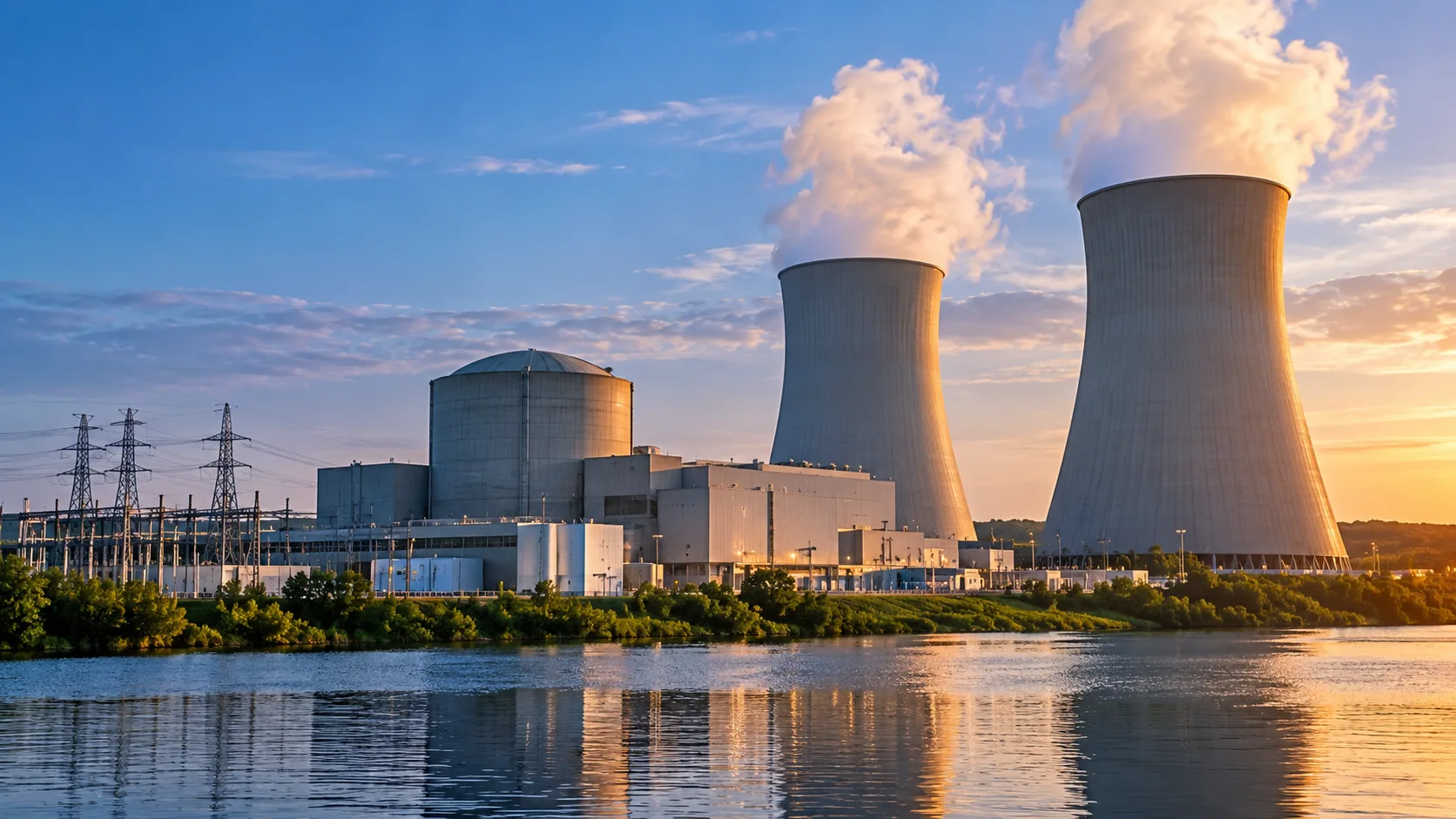
The Duane Arnold nuclear plant in Iowa has taken another step toward restarting after NextEra Energy closed a loan of up to US$1.9 billion with the U.S. Department of Energy (DOE). The project aims to restore 615 MW of nuclear generation at a time when the growth of data centers and artificial intelligence is increasing demand for firm, continuous electricity in the United States.
The recovery of shuttered nuclear capacity is beginning to take on new significance within the U.S. power system. While building new generation requires lengthy investment, permitting, and infrastructure cycles, existing assets such as Duane Arnold offer the possibility of recovering hundreds of megawatts of generation available around the clock.
In this case, the plant’s return is also directly linked to the technology sector. Google and NextEra Energy signed a 25-year power supply agreement in 2025 as part of a collaboration aimed at using nuclear energy to meet the growth in demand associated with artificial intelligence.
The initiative makes Duane Arnold an example of a broader trend: the expansion of digital infrastructure is creating new economic incentives to preserve, extend, and even restore existing nuclear assets.
Duane Arnold nuclear plant could restore 615 MW to the grid
Located in Linn County, Iowa, the plant ceased operations in 2020 after more than four decades of service. NextEra Energy intends to return it to operation no later than the first quarter of 2029, although the process remains subject to the corresponding regulatory approvals.
Its restart would return 615 MW of baseload nuclear generation to the power system. According to the DOE, that capacity is equivalent to the electricity consumption of approximately 500,000 homes. The agency also estimates that the work could generate around 1,500 jobs during the construction phase and more than 450 jobs during operations.
The federal loan of up to US$1.9 billion will help finance precisely that recovery process. It is not simply a matter of restarting a reactor. After several years out of service, the asset must undergo a process that includes inspections, engineering assessments, operational readiness activities, and licensing requirements under the oversight of the U.S. Nuclear Regulatory Commission (NRC) and other authorities.
NextEra reported that the Iowa Utilities Commission had already issued a certificate in June authorizing the construction and operation of Duane Arnold, another step along the regulatory path toward its return.
Why does Google need energy from the Duane Arnold nuclear plant?
Data centers, and particularly the infrastructure used for artificial intelligence, require large amounts of electricity and high levels of availability. This is increasing the strategic value of technologies capable of providing continuous generation.
Through its agreement with NextEra, Google secured the power associated with Duane Arnold for 25 years. The two companies also agreed to explore additional opportunities to deploy nuclear generation in the United States.
INSPENET had already analyzed this strategy when the alliance between the two companies was announced. The collaboration between Google and NextEra to advance nuclear energy explicitly linked Duane Arnold’s return with the growth of digital infrastructure and the need for reliable long-term energy supplies.
Now, federal financing brings the project closer to its next stage. The phenomenon is not limited to Google either. The development of large technology complexes is driving projects in which generation and computing infrastructure are beginning to be planned together. In Texas, for example, Fermi is developing energy infrastructure for artificial intelligence through a project that combines different generation sources to serve large-scale data center loads.
Artificial intelligence changes the strategic value of nuclear energy
The growth of AI is introducing a different variable into energy planning: it is not only increasing the volume of electricity required, but also the need to supply it continuously.
Data centers can concentrate large loads in specific locations. When numerous projects connect within the same region, the availability of generation and transmission can become a limiting factor for their expansion. This transformation is already reshaping the relationship between energy, artificial intelligence, and Big Data infrastructure, driven by the rapid growth of computing capacity and its electricity requirements.
Reuters notes that rising electricity demand, including demand from AI data centers, is putting pressure on U.S. power grids and increasing interest both in extending the operating life of existing nuclear plants and in bringing reactors that had ceased operations back online.
This is where one of nuclear generation’s operational advantages emerges: it can provide large blocks of power continuously and with low operational carbon emissions, complementing other sources within an electricity mix that must serve increasingly large loads.
For technology companies, this characteristic can be particularly relevant when energy contracts extend over decades.
Restarting a closed nuclear plant remains a challenge
Financing and the existence of a long-term electricity buyer reduce two significant obstacles, but they do not eliminate the technical and regulatory challenges.
Duane Arnold will have to demonstrate that its systems, structures, and components meet the requirements necessary to return to service after remaining closed since 2020. The inspection and engineering assessment program therefore takes on critical importance before the plant can once again reach operational conditions.
There is also a precedent that calls for caution regarding timelines. The United States currently has efforts underway to restore three closed nuclear facilities, but Reuters notes that no retired U.S. nuclear power plant has yet completed a restart process and returned to operation.
Therefore, the planned 2029 date represents a target and should not yet be interpreted as a guaranteed operational date.
Duane Arnold could become a benchmark for new nuclear restarts
The Duane Arnold nuclear plant brings together three elements that are redefining part of the U.S. electricity market: existing nuclear infrastructure, public financial support, and long-term contracted technology-sector demand.
If the project successfully completes its regulatory and technical process, Iowa will recover 615 MW of nuclear capacity that has remained out of service since 2020. At the same time, the project could demonstrate the extent to which growing electricity demand from the digital economy can alter the economic viability of assets that had previously been retired.
Duane Arnold’s significance, therefore, extends beyond its 615 MW. Its return could become a benchmark for evaluating other closed nuclear facilities as the United States seeks to rapidly increase its generation capacity. In that scenario, artificial intelligence would not only be creating a new generation of data centers: it could also help redefine which energy assets become strategic once again for the U.S. power grid.
Sources: Reuters / U.S. Department of Energy