Pressure on the international oil market is pushing Asian buyers to look more strongly toward the United States. A wave of empty supertankers has left Asia for the US coast to load crude, in a move that reflects the deterioration of supply from the Middle East and the logistical tension caused by restrictions in the Strait of Hormuz.
Furthermore, the shift is not just a response to a commercial opportunity. The lower availability of barrels from the Persian Gulf is forcing Asian refineries to reorganize their purchases in record time. In this new map, US crude is gaining space as an immediate alternative to cover part of the deficit left by the region.
An unprecedented line of vessels heading to the United States
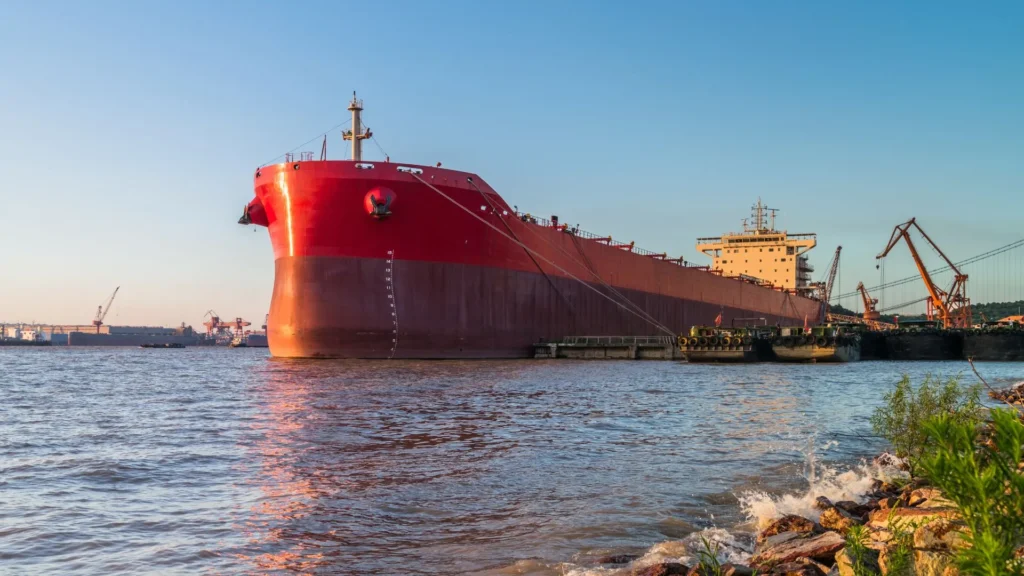
According to market data and reports cited by maritime tracking firms, the number of large tankers heading to the United States to load oil is among the highest observed on these types of routes. The image is that of a long line of VLCCs—supertankers with the capacity to move around 2 million barrels per trip—sailing toward US terminals to pick up cargoes destined for Asia and other stressed markets.
On one hand, this dynamic confirms a clear increase in demand for US crude. On the other, it shows that the interruption of the usual flow from the Middle East is already modifying routes, costs, and delivery times throughout the commercial chain.
The Strait of Hormuz strains the global balance once again
Meanwhile, the main underlying factor remains the difficulty of moving crude through the Strait of Hormuz. The reduced exit capacity from that waterway has cut the supply available to Asia, a region that relies heavily on Middle Eastern producers to feed its refineries.
Likewise, the diversion of vessels around the Cape of Good Hope adds complexity to the outlook. That route avoids the most sensitive area but adds days of navigation, makes logistics more expensive, and delays the arrival of oil to consumption centers. For buyers, securing barrels today has become as important as ensuring those barrels arrive on time.
Asian refineries accelerate US crude purchases
Faced with this scenario, Asian refineries are increasing their purchases of US crude as a rapid response to the shortage. The partial substitution of Middle Eastern supplies with barrels from the US Gulf is already beginning to be reflected in trade flows and port activity.
Additionally, the preference for North American crude also responds to operational criteria. In an environment of high geopolitical volatility, buyers prioritize origins with greater logistical predictability, export availability, and commercial responsiveness. The United States currently meets these three conditions, strengthening its role as a backup supplier for Asia and Europe.
The market enters a new phase of reconfiguration
In the short term, the change in routes may alleviate part of the immediate shortage. However, it also opens a stage of greater competition for cargoes, pressure on freight rates, and potential volatility in the differentials between international benchmarks.
In fact, the situation points to a broader reconfiguration of global crude trade. If flows from the Middle East remain limited, Asia could consolidate a greater dependence on US oil over the coming weeks, while Europe continues to adjust its import mix to protect inventories and refining margins.
The United States gains weight as a swing supplier
In this context, the US coast is becoming a key point for balancing the market. The massive arrival of empty vessels confirms that international buyers perceive the United States as an available source to respond quickly when traditional supply fails.
Finally, the movement of this tanker fleet summarizes the current market moment: fewer barrels leaving the Middle East normally, more pressure on Asia, and a greater centrality of US crude in global energy security.
Source: Oil Price