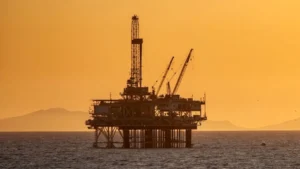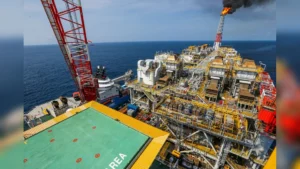
Chevron began the precautionary shutdown of its Petronius platform in the Gulf of Mexico as Tropical Depression Two advanced. The company also moved all personnel associated with the facility to shore to reduce exposure to weather conditions.
In addition, the oil company withdrew non-essential workers from the Tubular Bells and Blind Faith platforms. Chevron’s other operated facilities in the region were maintaining normal production levels at the time of the announcement.
The measure is part of the usual safety protocols applied by offshore companies when a tropical system approaches areas with production, transportation, and processing infrastructure for hydrocarbons.
The depression could become Tropical Storm Bertha
Separately, the system could strengthen and become Tropical Storm Bertha. The National Hurricane Center issued a tropical storm watch from the Ochlockonee River in Florida to the boundary between Jefferson and Plaquemines parishes in Louisiana.
Forecasts anticipate gradual strengthening over the next two days. Rainfall totals of 2 to 4 inches are also expected along the Gulf Coast from western Florida to central Texas.
In isolated areas, rainfall could reach nearly 8 inches, equivalent to 20.3 centimeters. These conditions increase the risk of flooding, power outages, and temporary restrictions on coastal industrial operations.
Gulf oil production faces potential losses
Likewise, an Earth Science Associates model estimates that the storm’s passage could affect around 2 million barrels of oil in the Gulf of Mexico.
The figure far exceeds the roughly 10,000 barrels affected by Tropical Storm Arthur the previous month. According to the consultancy, the current system is approaching several platforms with high production levels.
The federal deepwater region produced nearly 2 million barrels per day of crude in March. That volume represents about 14% of total U.S. oil production.
Major deepwater operators include Chevron, Shell, BP, and Occidental Petroleum. For this reason, any prolonged suspension could affect crude flows and the scheduling of some refineries.
The refining corridor remains under watch
Meanwhile, the industrial corridor between Corpus Christi, Texas, and Pascagoula, Mississippi, accounts for nearly half of U.S. refining capacity.
The country’s total capacity is around 18.4 million barrels per day. Although the Petronius shutdown is precautionary, the evolution of the tropical system will be decisive in determining the extent of disruptions in production and hydrocarbon processing.
CenterPoint Energy also activated its Emergency Operations Center amid the possibility that the storm could reach the Houston metropolitan area. The utility said its crews are prepared to respond to potential outages and restore service safely.
Chevron prioritizes the safety of its offshore operations
Chevron Corporation maintains a broad presence in the U.S. oil industry and operates strategic deepwater assets. The company traces its origins to Standard Oil of California, formed after the breakup of the Standard Oil group in the early 20th century.
The oil company will now continue to assess the storm’s track before fully resuming activities at Petronius. The return of personnel and the recovery of production will depend on sea conditions and the safety inspections carried out after the system passes.
Source: Reuters
Photo: Shutterstock