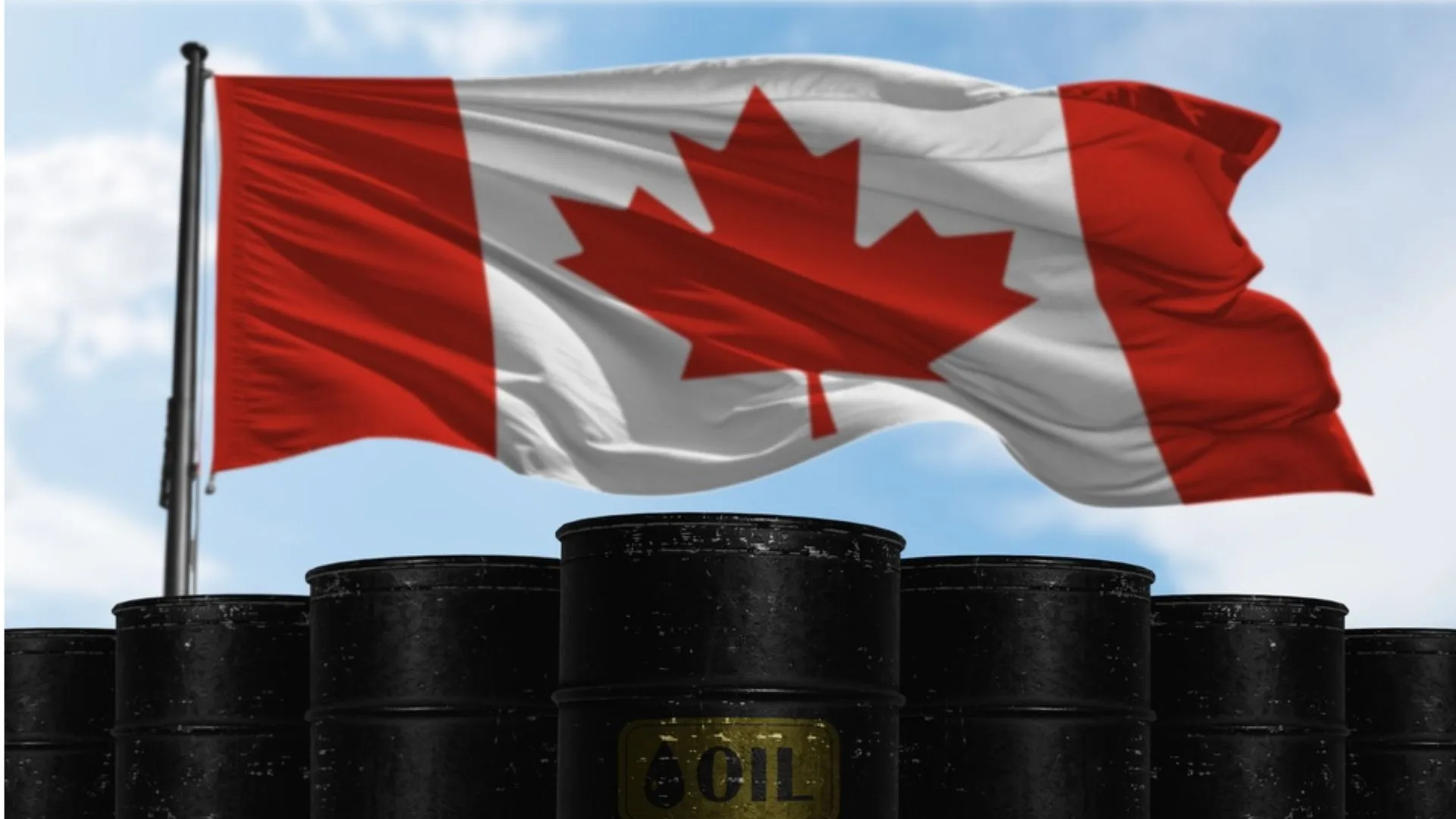
The Canadian government believes that the new regulatory framework provides the oil sector with the necessary conditions to increase production and supply future pipelines.
Canada opens up space to increase oil production
Canada is preparing a new scenario to promote the production of its oil sands energy Secretary Tim Hodgson argues that producers now have the necessary federal policies in place to increase extraction and supply the additional transportation capacity planned for the coming years.
Specifically, Ottawa announced changes aimed at reducing federal environmental assessments applied to certain energy projects. The measure includes oil pipelines, gas pipelines, natural gas plants, and oil sands-related developments.
These changes are part of a broader policy promoted by Prime Minister Mark Carney’s government to expedite the approval of energy projects. The government seeks to move towards a regulatory system based on the principle of “one project, one review.”
For the Canadian oil industry, this new approach could reduce one of the main obstacles that has limited investment in large projects for more than a decade.
More than 2 million barrels per day in new capacity
On the other hand, Canada plans to add more than 2 million barrels per day of capacity oil pipelines for export over the next decade. The figure is significant when compared to current domestic production, which slightly exceeds 5 million barrels of oil per day.
Among the projects under consideration is an oil pipeline with an approximate capacity of 1 million barrels per day to the coast of British Columbia. The infrastructure project has political support from both the Alberta government and the federal government.
Thus, the objective is not limited to expanding domestic transport capacity, Canada also seeks to strengthen its oil exports to Asian markets and reduce its heavy reliance on the United States as its main crude oil buyer. This strategy has gained importance amidst growing trade tensions between the two countries.
Tim Hodgson anticipates sufficient production for the new pipelines
In this context, Hodgson stated that the sector has the necessary conditions to produce the volume of oil that the new infrastructure will require. According to the minister, companies continue to operate with various incentives and support mechanisms while the government promotes new transportation projects.
The scenario represents a change from previous years, for a long period, several companies in the sector questioned the environmental policies implemented under Justin Trudeau’s government and avoided committing large investments in new expansions.
Now, Carney’s strategy seeks to change that dynamic through more flexible regulations and faster approval processes. The Canadian government considers the energy sector a key component of its economic policy. Its aim is to expand the country’s production capacity and strengthen Canada’s image as an international energy supplier.
The trade war is accelerating regulatory change
Furthermore, tensions with USA these factors appear to explain the new pace of regulatory changes, Hodgson noted that Canada needs to act more quickly in the face of the current trade environment. At the same time, he asserted that the acceleration of permits must remain within environmental criteria and guarantee the participation of Indigenous peoples.
In this way, Ottawa is trying to balance three objectives: accelerating investments, maintaining environmental controls, and expanding Canada’s capacity to compete in international markets.
The next challenge will be to ensure that this regulatory flexibility translates into new investment decisions by producers.
Carbon capture would accompany the expansion of the tar sands
Meanwhile, Canada and Alberta continue to negotiate a carbon capture and storage project with the five major tar sands producers.
The conversations involve Canadian Natural Resources, Suncor Energy, Cenovus Energy, ConocoPhillips Canada e Imperial Oil.
Among the topics being analyzed are potential incentives for new production facilities and financing for the infrastructure needed to capture and store carbon emissions. Estimates from specialists and industry representatives place the combined cost of these initiatives at over 100.000 million Canadian dollars.
In addition, the Carney government has reduced the target price for industrial carbon and eliminated the carbon tax applied to consumers.
With this new framework, Canada seeks to increase production from its oil sands, expand its pipeline network, and open new markets for its oil. Now, the response from the companies will determine how much of that projected capacity actually translates into production.
Source: EnergyNow
Photo: Shutterstock