
L&T wins EPCIC contract for ONGC offshore projects
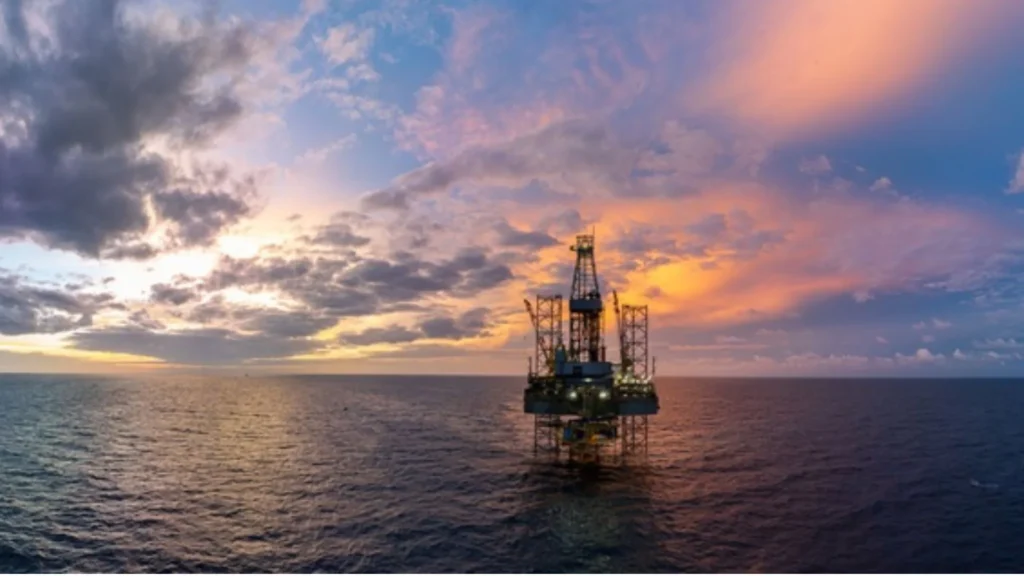
L&T Energy Hydrocarbon Offshore (LTEH Offshore), a subsidiary of Larsen & Toubro, won an EPCIC contract from Oil and Natural Gas Corporation (ONGC) to expand energy infrastructure off the west coast of India.
Specifically, the contract covers work related to the Ratna-I (ADR I) and NLM-14 projects. The works will incorporate new facilities and modifications to existing marine assets.
In addition, the project seeks to increase production and support the development of ONGC's offshore assets in this region of India.
The EPCIC contract covers Ratna-I and NLM-14
For its part, LTEH Offshore will assume the engineering, acquisition, construction, installation and commissioning of the infrastructure contemplated in the EPCIC contract.
Specifically, the scope includes three new wellhead platforms for Ratna-I (ADR I) and NLM-14. It also includes a lifting platform, various subsea pipeline segments, and submarine cables.
Larsen & Toubro will also be required to make modifications to existing offshore facilities. In this way, the offshore contract combines the addition of new infrastructure with work on assets that are already part of ONGC's operations.
Larsen & Toubro will work on operational facilities
In turn, combining new construction with modifications to existing facilities adds coordination requirements to the project. LTEH Offshore will have to integrate the works within an environment where ONGC already has operations.
According to Parthasarathi Chatterjee, senior vice president and director of LTEH Offshore, the work requires detailed planning and precise integration of the different engineering areas.
Furthermore, the executive noted that the ADR-I and NLM-14 projects expand India's marine energy infrastructure and reflect investment aimed at improving production from already established offshore fields.
The order reaches up to 5,000 crore of rupees
In economic terms, Larsen & Toubro classified the award as a large order. According to the company's classification, this type of contract is valued between 2,500 and 5,000 crore rupees.
Therefore, the economic dimension of the EPCIC contract accompanies a technical scope that includes platforms, pipelines, submarine cables and modifications to existing facilities.
ONGC seeks to increase its offshore production
At the same time, the purpose of the offshore projects goes beyond simply installing new infrastructure. ONGC aims to increase production and continue developing its marine assets off the west coast of India.
In this regard, Ratna-I and NLM-14 are part of the work aimed at strengthening facilities linked to fields that are already active. The strategy allows for combining new capacity with improvements to existing infrastructure.
Furthermore, this approach explains the variety of work awarded to LTEH Offshore; the wellhead platforms will allow for the expansion of the facilities, while the underwater pipelines and cables will facilitate their integration with the rest of the marine systems.
LTEH Offshore will assume full responsibility for the execution of the project
Finally, LTEH Offshore will draw on its experience in EPCIC projects to execute the various stages of the contract. The Larsen & Toubro subsidiary will be responsible for the entire process, from engineering and procurement to installation and commissioning.
This offshore contract strengthens Larsen & Toubro's involvement in the development of India's marine energy infrastructure . For ONGC, the projects at Ratna-I and NLM-14 will enable them to advance their production plans through new facilities and upgrades to existing assets.
News of additional interest
Germany is confident in its gas despite low reserves
The German government believes it does not need to intervene to increase gas reserves before next winter. The Ministry of Economics estimates that starting the cold season with storage at 60% to 70% capacity would be sufficient to meet demand. Germany also has pipelines and liquefied natural gas terminals to supplement its supply.
The position comes as storage facilities are showing unusually low levels. As of September 1, they were at 53% of capacity, the lowest level recorded in 15 years, according to the INES association. Furthermore, the war in Iran has driven up gas prices and reduced the incentive to store it during the summer. Berlin acknowledges that this situation could lead to significant price fluctuations, although it distinguishes this risk from a physical shortage of fuel.
Hanwha prepares its FPSO for two large markets
Hanwha Ocean received basic design review certification from ABS for a standardized FPSO intended for deep-water projects in South America and West Africa. The assessment covered the initial engineering phase and included essential elements such as the hull, surface production facilities, and mooring system. With this review, ABS confirms that the design meets the planned technical standards to move forward with its development.
ABS also granted approval in principle for sustainability aspects included in the FPSO. Furthermore, it reviewed Hanwha Ocean's plan to integrate these requirements into the project's engineering, responsibilities, and verification. The South Korean company had already conducted preliminary studies to adapt this type of platform for deepwater oil and gas fields off the coast of West Africa.
France fills its reserves, but gas will remain expensive
85% of its gas storage capacity by the end of October , the level set by its national regulations. Currently, reserves stand at 75%, according to France Gaz. This puts the country ahead of Germany, where storage is estimated to reach 77% by November 1st. The European average is 66.9%.
Having more gas in storage reduces the risk of supply problems during the winter, but it doesn't prevent price pressure. France Gaz anticipates another six months of high prices due to the conflict between the United States and Iran and difficulties with energy transit through the Strait of Hormuz. This is compounded by Europe's preparations to stop receiving Russian gas. Unlike in 2022, France now has more diverse suppliers and more reliable flows through European pipelines.
Vallourec and Aramco strengthen a 64-year alliance
Vallourec and Aramco expanded their business relationship, which began in 1962, with a new agreement to supply tubular products to the oil industry. The signing took place during the Franco-Saudi Investment Roundtable in Paris. The French company thus seeks to maintain its role as a supplier of pipes and fittings used in the Saudi energy company's operations.
The collaboration has grown over more than six decades. Vallourec opened a plant in Dammam in 2011 to process pipes and manufacture premium fittings locally. In 2022, the two companies signed a long-term contract to supply premium OCTG pipes produced in Saudi Arabia. The new agreement further strengthens this strategy of production close to Aramco's operations.