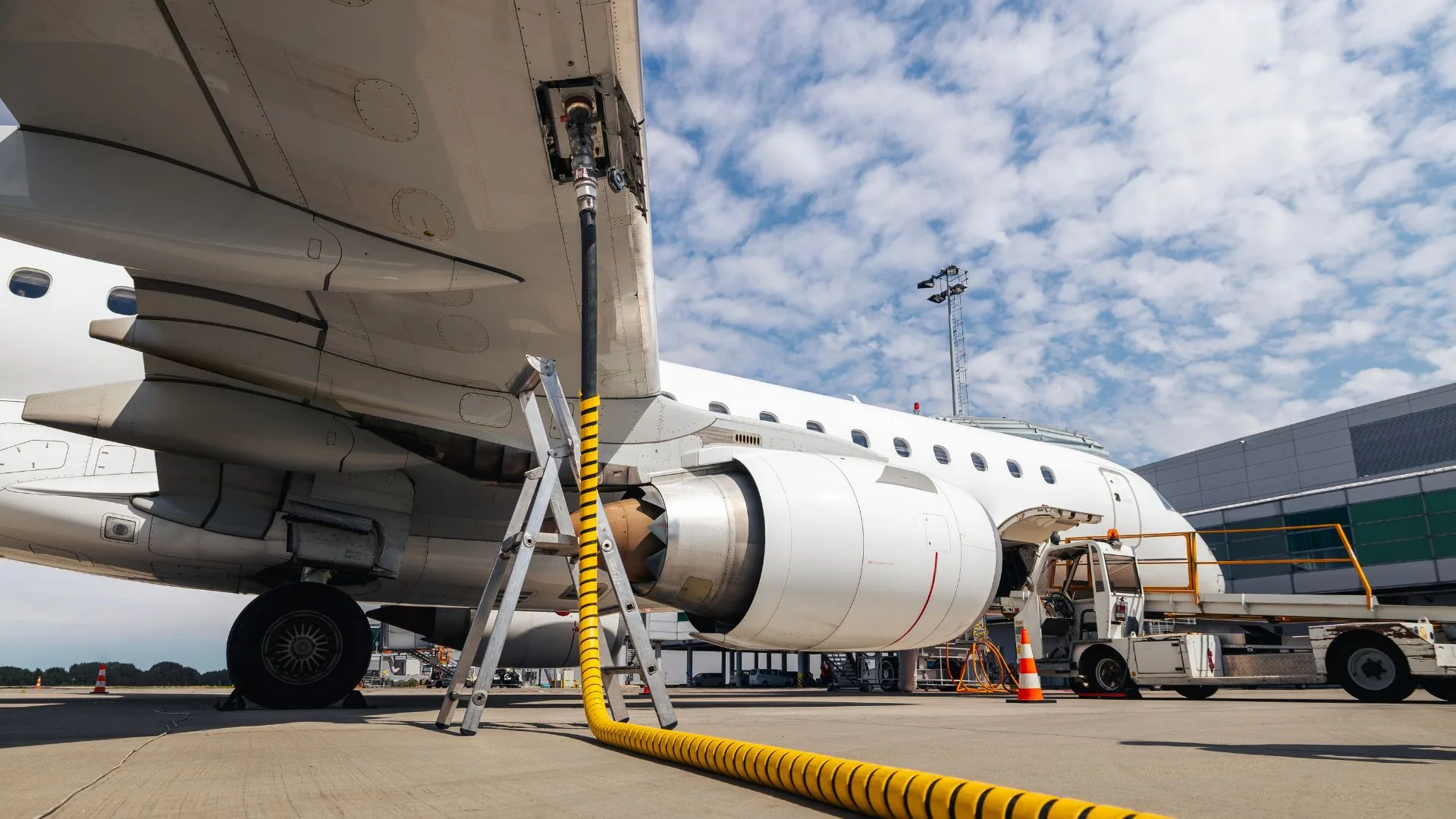
Australia strengthened its energy and agricultural security after securing three shipments of jet fuel from China and 38,500 tonnes of agricultural urea from Brunei. The operation was announced by Anthony Albanese’s Labor government following talks with China, including discussions between the Australian Prime Minister and Chinese Premier Li Qiang.
The fuel shipments total more than 600,000 barrels—equivalent to around 100 million litres—and are expected to arrive in early June. With this measure, the government aims to sustain domestic air operations, freight transport, and connectivity with rural and regional areas amid strained energy markets.
Australia turns to China to strengthen jet fuel supply
The jet fuel purchased in China adds to another 600,000 barrels already secured through the Fuel and Fertiliser Security Mechanism. According to the Australian government, these shipments represent a first step in a broader strategy to maintain the flow of essential fuels, including diesel, petrol, and jet fuel.
In addition, the decision comes at a sensitive time for Australia’s supply system. Although the country is a major producer of natural gas and LNG, it relies on imports to meet much of its transport fuel demand. That vulnerability has been heightened by disruptions in the refining sector and by the effects of the conflict in the Middle East on global energy supply chains.
More agricultural urea to protect food production
Likewise, the government secured an additional 38,500 tonnes of agricultural-grade urea from Brunei. This fertiliser is critical for farmers, producers, and food and fibre production systems, as it supplies nitrogen to crops and enables planting to be planned with greater certainty.
The new batch adds to the nearly 125,000 tonnes of agricultural urea obtained through the Fuel and Fertiliser Security Mechanism, as well as the 250,000 tonnes secured in Indonesia with support from Incitec Pivot. With this, Australia seeks to reduce risks to its domestic food security and to Indo-Pacific markets to which it exports agricultural products.
A A$7.5 billion fund for transport and agriculture
The Fuel and Fertiliser Security Fund, valued at A$7.5 billion, was designed to support the agricultural and transport sectors against the impacts of the crisis in the Middle East. Its goal is to secure critical inputs while keeping national supply chains operational.
Anthony Albanese stated that the additional barrels will help keep Australia moving and that the fertiliser will provide greater certainty for farmers. Penny Wong, for her part, highlighted cooperation with countries in the region to sustain the flow of essential fuels amid an unprecedented global shock.
Impact on aviation, tourism, and exports
Strengthening jet fuel supply also aims to protect tourism and logistics activity. Don Farrell noted that the additional jet fuel will help maintain travel to Australian destinations and facilitate the transport of goods within the country and to international markets.
Meanwhile, Catherine King indicated that ensuring aviation fuel is a central part of joint work with industry to keep people and products moving. For the agricultural sector, Julie Collins stressed that access to fertilisers is essential to sustain production and regional food security.
Australia seeks to safeguard its energy security
Chris Bowen said the government is working to secure more fuel in the short term while preparing the country to face future crises. In that vein, the shipments from China and Brunei are part of a policy aimed at strengthening energy security, protecting aviation, and providing stability for Australian agriculture.
The measure reflects a strategy of regional procurement and economic diplomacy to cushion market volatility. With more jet fuel and fertilisers on the way, Australia is seeking greater operational leeway in an international environment marked by logistical disruptions, pressure on refineries, and increased competition for essential inputs.
Source: Australian Government
Photo: Shutterstock